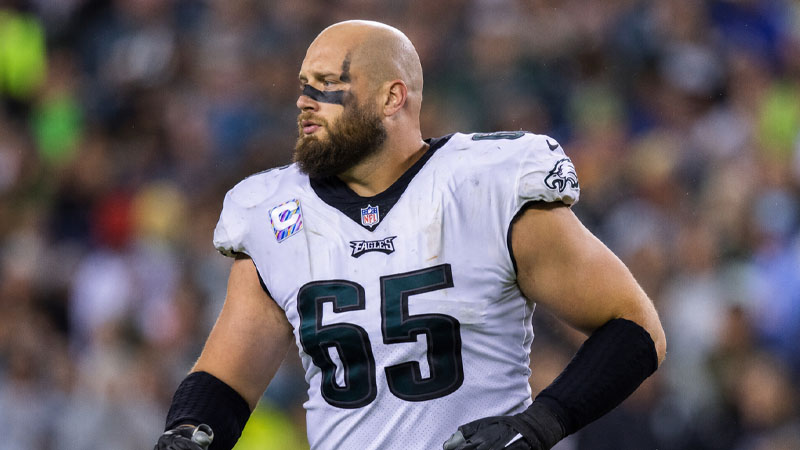
In 2016, Philadelphia Eagles offensive tackle Lane Johnson tested positive for a banned peptide, a performance-enhancing substance.
Because it was his second violation of the NFL’s policy on performance-enhancing substances, he was suspended for 10 games. The suspension voided $7.74 million in remaining base salary guarantees and the final year of his contract.
Johnson said the positive test came from a contaminated amino acid supplement he bought online, which he had checked with an app provided by the NFL Players Association. The suspension was upheld anyway on October 11, 2016. His first violation, in 2014, had cost him four games.
What Caused Lane Johnson’s 2016 Peptide Violation?
The 2016 suspension was one of the most debated drug cases of its time.
The Chemical Breakdown: What are Banned Peptides?
Peptides are short chains of amino acids that serve as the building blocks of proteins. In professional athletics, specific synthetic peptides are banned because they can stimulate the natural production of human growth hormone.
This biochemical stimulation provides recovery advantages, landing them on the league’s banned list. During his high-profile 2016 drug test violation, Johnson tested positive for these substances.
The Supplement App Defense
Johnson maintained that he verified his over-the-counter amino acid supplement before ingestion. He used the Aegis application, which was officially provided by the NFL Players Association for player safety, to scan the product.
According to Johnson, the app showed no problem with the product. The NFLPA later said it does not approve supplements and that players are still responsible for anything they take.
The Unlisted Ingredients and Banned Substances
Johnson’s position was that the supplement contained a banned ingredient that was not listed on the label.
Because these substances were unlisted, a physical bottle inspection could not reveal the contamination, highlighting a major regulatory gap in over-the-counter athletic supplements.
The League Arbitrator’s Final Binding Decision
His appeal was denied on October 11, 2016, under the policy’s strict liability standard.
In November 2016, Johnson filed charges against the NFL and the NFLPA with the National Labor Relations Board, along with a complaint against the union with the Department of Labor.
How Much Did Lane Johnson’s 2016 Suspension Cost Him?
The ten-game suspension in 2016 was costly, both in lost pay and in voided contract protection.
| Financial Component | Estimated Dollar Amount Lost | Direct Cause of Financial Impact |
|---|---|---|
| Voided Contract Guarantees | $7,740,000 | Remaining base salary guarantees voided, along with the final contract year. |
| Forfeited Game Checks | 10 weeks of salary | No pay for the 10 games he missed. |
| Total Direct Losses | More than $7.74 million | Combined cost of the ten-game disciplinary action. |
To fully grasp the magnitude of this penalty, consider the following structural financial details:
- Voided Guarantees: The suspension voided $7.74 million in remaining base salary guarantees and the final year of his six-year, $63 million extension.
- Lost Game Checks: Suspended players are not paid for the games they miss, so Johnson also lost 10 weeks of salary.
- Long-Term Leverage Loss: Beyond the immediate cash losses, losing contract guarantees reduces a player’s leverage in future restructuring negotiations with the franchise.
- Career Earnings Trajectory: A ten-game suspension represents a permanent gap in career earning potential that cannot be recovered, even with subsequent elite play.
A Timeline of Lane Johnson’s Testing History
Over his professional tenure, Johnson has experienced three separate positive test results under distinct league protocols. Each incident carried unique circumstances, defenses, and disciplinary outcomes.
The 2014 Positive Test and Prescription Missteps
In June 2014, it was reported that Johnson had tested positive for a banned substance. He took responsibility, saying it came from a medication prescribed by a family doctor.
He received a four-game suspension and missed the first four games of the 2014 season.
The 2016 Suspension for Banned Peptides
The 2016 peptide infraction served as his second official policy violation under the Performance-Enhancing Substances program.
Due to his repeat-offender status under league rules, the punishment escalated from four games to a massive ten-game suspension. This incident remains the most financially damaging of his career, triggering immense contractual and legal battles.
The 2020 COVID-19 Health and Safety Protocol
On July 29, 2020, the Eagles placed Johnson on the Reserve/COVID-19 list after he tested positive for COVID-19. He announced it himself on Twitter and was activated on August 11, 2020. It was a health matter, not a disciplinary one, so there was no punishment.
Understanding the NFL’s Strict Liability Drug Policy
The outcome of the 2016 appeal highlighted the uncompromising nature of the league’s anti-doping regulations. Under the strict liability doctrine, players are held completely responsible for any banned substance detected in their biological samples.
It is legally irrelevant whether the athlete acted with malicious intent, made an honest mistake, or was actively misled by inaccurate product labels or third-party scanning software.
This framework ensures uniform enforcement across the league but places an extraordinary burden of care on individual players, who must navigate an unregulated supplement market at their own professional and financial peril.
Frequently Asked Questions About Lane Johnson’s Suspension
What exactly did Lane Johnson test positive for in 2016?
He tested positive for banned peptides during his high-profile drug test violation. These are short chains of amino acids that can stimulate the human body to produce more natural growth hormone.
Why was the 2016 suspension 10 games instead of 4 games?
The 2016 incident was Johnson’s second violation of the Performance-Enhancing Substances policy. Under league rules, second-time offenders face an escalated ten-game suspension, compared to the four-game suspension he received for his first infraction in 2014.
How much money did Lane Johnson lose due to his 2016 positive test?
The suspension voided $7.74 million in guaranteed base salary and the final year of his contract, on top of 10 weeks of lost game checks.
Did the Aegis app actually clear Lane Johnson’s supplement?
Johnson said he checked the supplement with an NFLPA-provided app and it showed no problem. The union later said it does not approve supplements, and the suspension stood under strict liability.
Was Lane Johnson suspended for his 2020 positive test?
No, he was not suspended. The 2020 positive test was for the SARS-CoV-2 (COVID-19) virus, which fell under standard health and safety protocols rather than disciplinary drug policies.
Key Takeaways on Athletic Accountability
The case of Lane Johnson’s 2016 suspension underscores the intense professional and financial risks associated with supplement contamination.
Even when utilizing official union-provided verification apps, athletes operate under a strict liability system where excuses are not legally recognized.
Johnson returned in December 2016 and went on to win two Super Bowls, make six Pro Bowls and earn five All-Pro selections before retiring in October 2026.