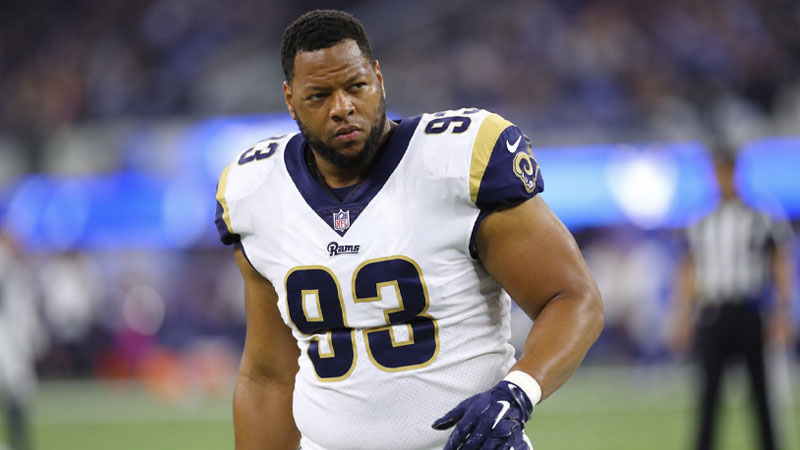
Ndamukong Suh was suspended exactly once during his thirteen-season NFL career, serving a two-game ban in 2011 for stomping on an opponent.
Although the league office initially issued a second, one-game suspension in 2014 for stepping on quarterback Aaron Rodgers, that decision was completely overturned on appeal.
Despite a reputation as one of football’s most aggressive defensive linemen, the league office primarily penalized Suh’s physical play style through substantial monetary fines rather than multi-game suspensions.
In total, he amassed nearly $400,000 in safety fines, reflecting the league’s strict focus on player protection.
Official Timeline of the Suh Suspension History
The disciplinary history of this elite defensive tackle is defined by two high-profile incidents against Green Bay, representing the tension between aggressive play and strict player protection guidelines.
The Infamous 2011 Thanksgiving Day Game Incident
On November 24, 2011, during the Detroit Lions’ annual Thanksgiving game against Green Bay, Suh committed his most notorious on-field infraction.
Following a dead play, he shoved Packers lineman Evan Dietrich-Smith’s face into the ground and intentionally stomped on his arm.
Game officials ejected Suh immediately. The league handed down a two-game suspension without pay, which cost Suh approximately $165,000 in lost game checks.
The Costly Appeal Verdict Upheld by Art Shell
Suh appealed his 2011 ban, but NFL hearing officer Art Shell upheld the two-game suspension. The NFL ruled the arm stomp was a direct violation of Rule 12, which strictly prohibits kicking or striking opponents.
Furthermore, Suh’s initial refusal to apologize—claiming he was merely trying to free himself—was viewed as a complete lack of accountability, solidifying the league’s disciplinary action.
The Overturned Playoff Ban in December 2014
In the 2014 regular-season finale, Suh backed up and stepped on quarterback Aaron Rodgers’ injured calf and ankle. Due to his history as a repeat offender, the league attempted to suspend him for Detroit’s crucial Wild Card playoff matchup.
The NFL argued that standard fines were no longer a sufficient deterrent for Suh’s dangerous on-field habits.
Independent Arbitrator Ted Cottrell’s Appeal Decision
Suh’s defense successfully appealed the playoff suspension just days before the game. Independent arbitrator Ted Cottrell overturned the ban, reducing it to a $70,000 fine.
The defense successfully argued that because Suh was backing up, he could not see where his feet landed, meaning there was insufficient proof of intent to injure.
Analyzing the Financial Toll of NFL Player Fines
While game suspensions were rare, the league office aggressively targeted the defensive tackle’s wallet, utilizing heavy financial penalties to enforce its safety regulations on the field.
| Season | Opponent / Player Involved | On-Field Infraction Type | Financial Impact | Disciplinary Outcome |
|---|---|---|---|---|
| 2010 | Carolina Panthers (Jake Delhomme) | Preseason hit on quarterback | $20,000 | Fine assessed |
| 2010 | Cincinnati Bengals (Andy Dalton) | Regular-season hit on quarterback | $15,000 | Fine assessed |
| 2011 | Green Bay Packers (E. Dietrich-Smith) | Shoving head & arm stomp | $165,000 | Ejection & 2-game suspension |
| 2012 | Houston Texans (Matt Schaub) | Kick to the groin area | $30,000 | Ruled accidental; fine assessed |
| 2013 | Minnesota Vikings (John Sullivan) | Low, illegal block on interception | $100,000 | Career-high fine assessed |
| 2014 | Green Bay Packers (Aaron Rodgers) | Stepping on quarterback’s calf | $70,000 | Overturned suspension; fine assessed |
To understand the scope of these financial penalties, we can analyze the structural patterns of the league’s discipline:
- High-Impact Penalties on Quarterbacks: Suh was repeatedly fined for hits on quarterbacks, including early career fines in 2010 for strikes against Jake Delhomme ($20,000) and Andy Dalton ($15,000).
- The Groin Kick Investigation: In 2012, a controversial kick to Texans quarterback Matt Schaub resulted in a $30,000 penalty, but avoided suspension as the league deemed it accidental.
- The Record-Breaking Sullivan Fine: His largest single fine was a $100,000 assessment in 2013 for a dangerous, low block on Vikings center John Sullivan during an interception return.
- Cumulative Financial Severity: In total, Suh accumulated nearly $400,000 in league-mandated fines for on-field safety infractions throughout his 13 seasons.
Why the NFL Applied Player Safety Rules Differently
The league’s disciplinary decisions regarding Suh were heavily shaped by systemic changes in football governance, rising public scrutiny, and the legal framework of player safety campaigns.
Entering the League During the Player Safety Initiative
Suh entered the NFL in 2010, which coincided exactly with a major, highly publicized campaign to improve player safety. The league faced immense pressure to eliminate dangerous, non-football actions and protect defenseless players from severe injuries.
Because Suh refused to alter his highly aggressive, physical playing style despite early warnings, he became a primary focal point for league-wide disciplinary enforcement.
The Legal Deterrent of the Repeat Offender Clause
Under the NFL’s collective bargaining agreement, the league attempted to use the ‘repeat offender’ designation to escalate Suh’s punishments.
For his 2014 step on Aaron Rodgers, the league pushed for a playoff suspension by arguing that traditional fines had failed to deter his behavior. This highlighted a growing institutional strategy to bench players who repeatedly violated safety protocols.
Lack of On-Field Accountability as a Factor
A key reason the 2011 suspension was upheld on appeal was Suh’s initial reaction to the incident. By denying that he intentionally stomped on Dietrich-Smith—arguing he was merely trying to untangle himself—the league office saw a glaring lack of accountability.
This defensive posture directly influenced the hearing officer’s decision to maintain the strict two-game penalty.
Frequently Asked Questions About Suh’s Discipline Record
How many games did Ndamukong Suh miss due to suspensions?
Suh missed exactly two games due to suspension during his 13-year career. Both games occurred during the 2011 regular season following his Thanksgiving Day ejection. He missed matchups against the New Orleans Saints and the Minnesota Vikings.
Was Ndamukong Suh ever suspended for hitting Aaron Rodgers?
No, he was not suspended. While the league office initially issued a one-game suspension for stepping on Rodgers’ calf in December 2014, Suh won his appeal. An independent arbitrator reduced the penalty to a $70,000 fine, allowing Suh to play.
What was the largest fine Ndamukong Suh ever received?
Suh’s largest career fine was $100,000, which was handed down during the 2013 season. The league penalized him for delivering an illegal, low block on Minnesota Vikings center John Sullivan during an interception return.
Did Ndamukong Suh ever play for teams other than the Detroit Lions?
Yes, though his most famous disciplinary incidents occurred while playing for the Detroit Lions (2010–2014). His 13-year NFL career spanned multiple teams, though his pattern of heavy on-field fines occurred throughout his tenure in the league.
Final Verdict on a Highly Aggressive Football Career
In retrospect, the legacy of Ndamukong Suh is a fascinating case study in how professional sports leagues navigate player discipline and public relations during transitional eras. Suh was widely regarded as one of the most aggressive and polarizing defensive players of his generation.
Yet, the hard data reveals a stark difference between public perception and actual league rulings: he was officially suspended only once.
The NFL’s disciplinary strategy relied heavily on financial consequences, leveraging nearly $400,000 in safety fines to curb his physical style without frequently keeping one of the league’s premier defensive stars off the field.
By understanding the legal processes of the collective bargaining agreement, the role of independent arbitrators, and the intense cultural shift toward safety that began in 2010, fans can see how Suh’s career became a defining benchmark for modern football officiating.