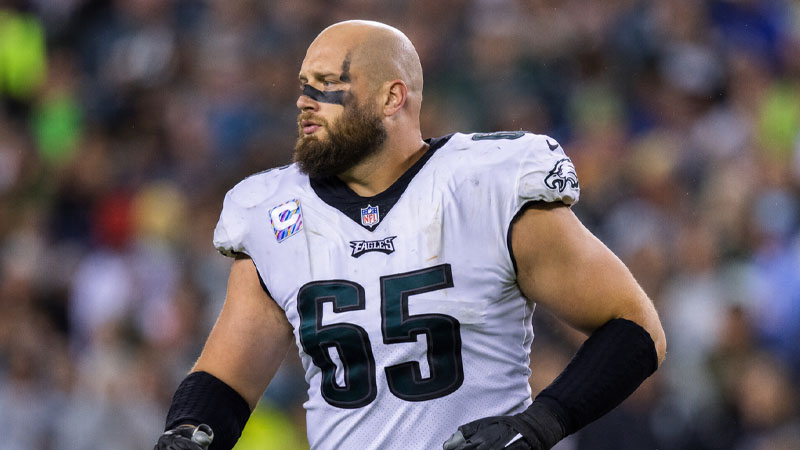
During his high-profile 2016 drug violation, Philadelphia Eagles offensive tackle Lane Johnson tested positive for banned peptides. These compounds are short chains of amino acids that can stimulate the human body’s natural production of human growth hormone.
This second infraction under the NFL’s Performance-Enhancing Substances policy resulted in a devastating ten-game suspension. This penalty cost the star player over twenty-five million dollars in contract guarantees and lost baseline game checks.
While Johnson vehemently defended his actions by pointing to an NFLPA-provided supplement verification application, independent league arbitrators upheld the suspension under strict liability rules.
Here is a comprehensive analytical breakdown of his testing history and league policies.
What Caused Lane Johnson’s 2016 Peptide Violation?
The 2016 suspension stands as one of the most controversial episodes in league history. It pitted a star player’s reliance on official union technology against the league’s rigid drug policy.
The Chemical Breakdown: What are Banned Peptides?
Peptides are short chains of amino acids that serve as the building blocks of proteins. In professional athletics, specific synthetic peptides are banned because they can stimulate the natural production of human growth hormone.
This biochemical stimulation provides recovery advantages, landing them on the league’s banned list. During his high-profile 2016 drug test violation, Johnson tested positive for these substances.
The Technology Gap: Scanning with the Aegis App
Johnson maintained that he verified his over-the-counter amino acid supplement before ingestion. He used the Aegis application, which was officially provided by the NFL Players Association for player safety, to scan the product.
The application explicitly cleared the supplement as approved for player use, creating a false sense of security.
The Unlisted Ingredients and Banned Substances
The critical issue was that the purchased supplement allegedly contained active, banned peptide ingredients that were completely omitted from the packaging bottle.
Because these substances were unlisted, a physical bottle inspection could not reveal the contamination, highlighting a major regulatory gap in over-the-counter athletic supplements.
The League Arbitrator’s Final Binding Decision
Despite Johnson’s evidence of third-party product testing and application clearance, an independent arbitrator denied his appeal. The decision upheld the league’s standard of strict player liability.
Consequently, Johnson initiated subsequent legal action and formal complaints against both the league administration and his own players’ union.
How Much Did Lane Johnson’s 2016 Suspension Cost Him?
The financial repercussions of the ten-game suspension in 2016 were immediate and historically severe, illustrating how a single contaminated supplement can derail a player’s long-term financial security.
| Financial Component | Estimated Dollar Amount Lost | Direct Cause of Financial Impact |
|---|---|---|
| Voided Contract Guarantees | $25,000,000 | Suspension triggered a contract clause voiding remaining guarantees. |
| Forfeited Game Checks | $421,875 | Sidelined for ten games without baseline pay. |
| Total Direct Losses | $25,421,875 | Combined cost of the ten-game disciplinary action. |
To fully grasp the magnitude of this penalty, consider the following structural financial details:
- Voided Guarantee Clause: The suspension directly voided twenty-five million dollars in remaining guaranteed money in his long-term contract extension with the Eagles.
- Direct Salary Forfeiture: Sidelined players do not receive weekly game checks during their disciplinary absence. For Johnson, this resulted in forfeiting roughly $421,875 in baseline game checks.
- Long-Term Leverage Loss: Beyond the immediate cash losses, losing contract guarantees reduces a player’s leverage in future restructuring negotiations with the franchise.
- Career Earnings Trajectory: A ten-game suspension represents a permanent gap in career earning potential that cannot be recovered, even with subsequent elite play.
A Timeline of Lane Johnson’s Testing History
Over his professional tenure, Johnson has experienced three separate positive test results under distinct league protocols. Each incident carried unique circumstances, defenses, and disciplinary outcomes.
The 2014 Positive Test and Prescription Missteps
During April 2014 training, Johnson tested positive for an undisclosed banned substance contained within a prescribed medication. He admitted he mistakenly and foolishly took the item to treat a private medical issue.
Because he failed to clear the prescription with the Eagles’ medical staff or check the official registry, he received a four-game suspension.
The 2016 Suspension for Banned Peptides
The 2016 peptide infraction served as his second official policy violation under the Performance-Enhancing Substances program.
Due to his repeat-offender status under league rules, the punishment escalated from four games to a massive ten-game suspension. This incident remains the most financially damaging of his career, triggering immense contractual and legal battles.
The 2020 COVID-19 Health and Safety Protocol
In 2020, Johnson tested positive for the SARS-CoV-2 virus, landing on the league’s Reserve/COVID-19 list. This was a medical health event, not a disciplinary infraction, so no punishment was issued.
To prevent outside speculation, Johnson self-announced the diagnosis on social media before safely returning from quarantine.
Understanding the NFL’s Strict Liability Drug Policy
The outcome of the 2016 appeal highlighted the uncompromising nature of the league’s anti-doping regulations. Under the strict liability doctrine, players are held completely responsible for any banned substance detected in their biological samples.
It is legally irrelevant whether the athlete acted with malicious intent, made an honest mistake, or was actively misled by inaccurate product labels or third-party scanning software.
This framework ensures uniform enforcement across the league but places an extraordinary burden of care on individual players, who must navigate an unregulated supplement market at their own professional and financial peril.
Frequently Asked Questions About Lane Johnson’s Suspension
What exactly did Lane Johnson test positive for in 2016?
He tested positive for banned peptides during his high-profile drug test violation. These are short chains of amino acids that can stimulate the human body to produce more natural growth hormone.
Why was the 2016 suspension 10 games instead of 4 games?
The 2016 incident was Johnson’s second violation of the Performance-Enhancing Substances policy. Under league rules, second-time offenders face an escalated ten-game suspension, compared to the four-game suspension he received for his first infraction in 2014.
How much money did Lane Johnson lose due to his 2016 positive test?
He lost more than twenty-five million dollars in total. Specifically, the suspension voided twenty-five million dollars in guaranteed contract money and forced him to forfeit approximately $421,875 in baseline game checks over ten weeks.
Did the Aegis app actually clear Lane Johnson’s supplement?
Yes, Johnson scanned the over-the-counter amino acid supplement with the Aegis app, which was provided by the Players Association, and the system cleared it. However, because the product contained unlisted peptide ingredients, he still tested positive.
Was Lane Johnson suspended for his 2020 positive test?
No, he was not suspended. The 2020 positive test was for the SARS-CoV-2 (COVID-19) virus, which fell under standard health and safety protocols rather than disciplinary drug policies.
Key Takeaways on Athletic Accountability
The case of Lane Johnson’s 2016 suspension underscores the intense professional and financial risks associated with supplement contamination.
Even when utilizing official union-provided verification apps, athletes operate under a strict liability system where excuses are not legally recognized.
This landmark case remains a vital lesson in vigilance, showing that a simple label omission can instantly dissolve millions of dollars in guaranteed contract security and alter a career trajectory.