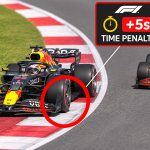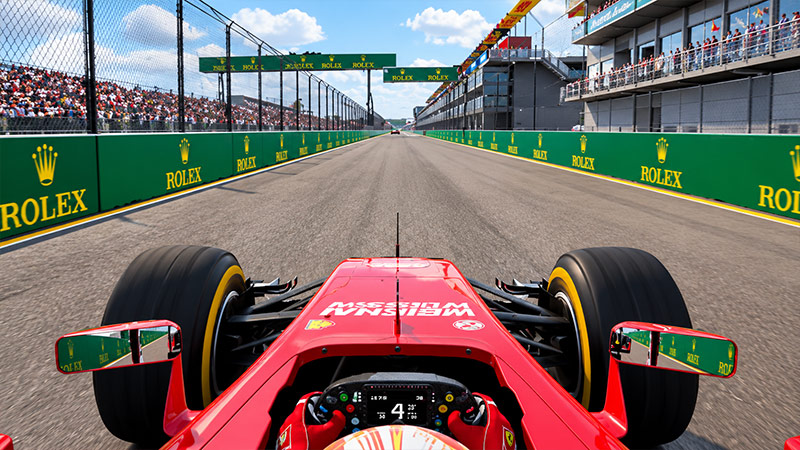
A drive-through penalty forces a driver to leave the track, travel the full length of the pit lane at the speed limit, and rejoin the race without stopping.
It sounds simple. In practice, it can cost 15 to 30 seconds and wipe out an afternoon of hard work in a single lap.
If you have ever watched a race leader tumble down the order moments after a message from the stewards, you have seen how much weight this sanction carries.
For new fans, the rules can feel confusing. For seasoned viewers, the strategy behind serving the penalty is a race within the race.
This guide explains exactly what a drive-through penalty is, how it is served, what triggers it, and how it compares with other sanctions.
Whether you follow Formula 1, IndyCar, endurance racing or online sim leagues, you will come away knowing what is happening on track and why it matters.
What Is a Drive-Through Penalty?
A drive-through penalty is an in-race sanction that requires a driver to enter the pit lane, drive through it at the posted speed limit, and return to the track without stopping at the team’s garage.
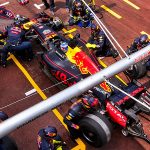
No tyres can be changed, no repairs can be made, and no adjustments can be carried out while the penalty is being served.
The logic is simple. Every circuit has a pit lane speed limit, usually 80 km/h in Formula 1 and lower at some tighter venues.
On the fastest straights, cars travel at roughly four times that speed. The detour therefore costs a large, fixed chunk of time that the driver cannot claw back quickly.
Who decides?
Penalties are issued by the race stewards, an independent panel appointed for each event. In Formula 1, race control reports a possible breach, and the stewards review onboard footage, timing data and team radio before reaching a decision. Former racing drivers often sit on the panel to add real-world judgement.
Why does it exist?
A drive-through delivers an immediate sporting consequence. Instead of waiting for the chequered flag to adjust the result, the stewards remove the unfair advantage while the race is still running. Fans see justice served on track, and rivals get back the time or position they lost.
How a Drive-Through Penalty Works, Step by Step
Serving the penalty follows a clear sequence. Here is how it typically unfolds in Formula 1, the series most others use as a reference point.
- An incident is noted. Race control flags a possible breach, such as an unsafe rejoin or a dangerous move in the pit lane.
- The stewards investigate. They study video, telemetry and radio messages, and may call the drivers involved to a hearing.
- The decision is issued. The team is notified through the official messaging system, and the penalty appears on timing screens and broadcast graphics.
- The clock starts. The driver has three laps from the moment of notification to enter the pit lane.
- The driver slows for the pit entry. They must be at or below the speed limit before crossing the speed control line, usually with the help of the car’s pit limiter.
- The driver drives straight through. They pass the garages without stopping, and the crew is not allowed to touch the car.
- The driver rejoins the race. They leave via the pit exit and merge back onto the track, often in traffic and several places lower.
Two conditions make the penalty bite. First, it must be served under green-flag conditions. In Formula 1, a driver generally cannot take it while the Safety Car is out, when the field is slowed and less time would be lost.
Second, a drive-through cannot be combined with a scheduled pit stop. That single rule is the main reason it hurts far more than a time penalty.
How Much Time Does a Drive-Through Penalty Cost?
A drive-through usually costs between 15 and 30 seconds. The exact figure depends on the length of the pit lane, the speed limit, and how much time the driver loses braking for the entry and accelerating out of the exit.
Context is what makes that number so painful. In a close race, the gaps between positions are often just one or two seconds.
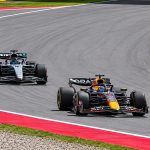
Losing 20 seconds can drop a front-runner into the midfield, park them behind slower cars, and force them to spend the rest of the afternoon overtaking.
Fighting through traffic also wears the tyres faster, which can compromise the rest of the race plan.
Drive-through vs other in-race penalties
| Penalty | What the driver must do | Approximate time lost | Served at a normal pit stop? |
|---|---|---|---|
| 5-second time penalty | Wait 5 seconds before the crew starts work, or have it added at the finish | 5 seconds | Yes |
| 10-second time penalty | Wait 10 seconds before the crew starts work, or have it added at the finish | 10 seconds | Yes |
| Drive-through penalty | Drive through the pit lane at the speed limit without stopping | 15 to 30 seconds | No |
| 10-second stop-and-go | Stop in the pit box for 10 seconds with no work allowed | 25 to 40 seconds | No |
| Disqualification | Excluded from the race result | The entire result | Not applicable |
Formula 1 introduced the five-second time penalty in 2014, giving stewards a milder option for minor offences. Since then, drive-throughs have become less common in Grand Prix racing, but they remain the go-to response for serious breaches.
What if there is no time left to serve it?
When a drive-through is handed out during the last three laps, or after the race has finished, the driver has no chance to serve it.
In Formula 1, the stewards add 20 seconds to the driver’s total race time instead. A 10-second stop-and-go issued in the same circumstances becomes 30 seconds.
Why Stewards Hand Out Drive-Through Penalties
Drive-throughs are reserved for offences that give a clear advantage or create genuine danger. The exact list varies by series and season, but these are the most common triggers:
- Rejoining the track unsafely after running off, especially when other drivers have to take avoiding action.
- Crossing the pit entry or exit line dangerously, which the Formula 1 penalty guidelines list as a drive-through or stop-and-go offence.
- Causing a serious collision, where a time penalty would not match the damage done to another driver’s race.
- Repeatedly exceeding track limits, after warnings and lesser penalties have already been given.
- Speeding in the pit lane, which earns an automatic drive-through in many series, although Formula 1 now usually starts with a time penalty.
- Ignoring blue flags and holding up faster cars that are about to lap them.
- Overtaking under yellow flags or the Safety Car, which puts marshals and other drivers at risk.
- Jump starts, detected by sensors on the starting grid in several championships.
Stewards weigh the severity of each incident, the advantage gained, and any mitigating circumstances. The same type of offence can draw a five-second penalty in one race and a drive-through in another.
In Formula 1, serious offences can also add penalty points to a driver’s super licence. A driver who collects 12 points within 12 months receives a one-race ban, so one costly mistake can carry consequences well beyond the race in which it happened.
Drive-Through Penalties Across Motorsport
The concept appears in almost every form of circuit racing worldwide, though the name and the fine print change from one championship to the next.
- Formula 1: served within three laps of notification, under green-flag conditions, and converted to 20 seconds of added race time if issued in the final three laps or after the finish.
- IndyCar: uses drive-through penalties alongside stop-and-go penalties and loss-of-position sanctions, chosen according to the seriousness of the offence.
- NASCAR: calls it a pass-through penalty. Speeding on pit road is the classic cause, and the driver must travel the length of pit road at the limit before rejoining.
- Formula E and endurance racing: both use drive-throughs, with stop-and-go penalties held back for more serious breaches. In long endurance events, the time lost can still decide a class victory hours later.
- MotoGP: has used the ride-through, the motorcycle equivalent. Since 2019, the long lap penalty, which sends a rider around a slower marked loop at one corner, has become a common alternative.
- Sim racing and amateur leagues: online platforms and racing games apply drive-throughs automatically for pit speeding, cutting the track or jumping the start. Many organised leagues mirror professional rules, so drivers build race craft that transfers to real competition.
If you race or follow a specific championship, always check its current sporting regulations. Rules are updated every season, and the details that decide a penalty often sit in the small print.
How Teams Manage a Drive-Through Penalty
Once the penalty lands, the pit wall has a fast decision to make inside a three-lap window. The goal is to lose as little as possible beyond the unavoidable pit lane time.
- Serve it immediately when the driver will rejoin in clean air, away from slower cars.
- Wait a lap or two when a pack of cars is about to pass the pit exit, so the driver does not rejoin stuck in traffic.
- Rework the race plan. Because a drive-through cannot double as a tyre stop, the team may bring the scheduled stop forward or push it back to limit the total damage.
- Keep the driver calm and focused. Clear radio messages reduce the risk of a second offence, such as speeding in the pit lane while serving the first penalty.
A lesson from history
The rules on serving penalties are precise for good reason. At the 1998 British Grand Prix, Michael Schumacher received a 10-second stop-and-go penalty late in a wet race.
Ferrari’s pit box sat beyond the finish line, so he crossed the line in the pit lane on the final lap while serving it, and was classified as the winner.
The episode is still cited as a reason modern rules spell out exactly how and when penalties must be served, and what happens when time runs out.
For teams, it is a reminder that knowing the regulations in detail is a competitive weapon in its own right.
Conclusion
A drive-through penalty is one of the clearest ways stewards restore fairness in the middle of a race. The driver must leave the track, pass through the pit lane at the speed limit, and rejoin without stopping, usually losing 15 to 30 seconds.
Because that time cannot be hidden inside a normal pit stop, the penalty often reshapes the result. Understanding how it works helps you read races with sharper eyes.
You can spot why a leader drops back, why a team delays the call by a lap, and why late penalties turn into added time. For drivers in any league, the lesson is simple: clean, disciplined racing is always faster than racing that draws a call from the stewards.