In the landscape of modern sports, few athletes command the global stage quite like Kylian Mbappé. Yet, alongside his accolades as a World Cup winner and prolific goal-scorer, an unusual pop-culture moniker has followed him throughout his career: the “Ninja Turtle.”
This nickname has transcended simple locker room banter to become a defining element of his personal brand, connecting the high-stakes world of European football with the nostalgic charm of the Teenage Mutant Ninja Turtles (TMNT).
Understanding the origins of this comparison offers a unique glimpse into the camaraderie and culture of elite professional soccer.
The Origin Story: A 2017 Locker Room Prank
The association between Kylian Mbappé and the Ninja Turtles did not begin with a marketing campaign or a fan-driven hashtag; it started as a lighthearted joke between teammates.
Shortly after Mbappé made his high-profile move from Monaco to Paris Saint-Germain (PSG) in 2017, the locker room dynamic played a pivotal role in shaping his public persona.
The Kimpembe Connection
The joke first took flight when teammate Presnel Kimpembe pointed out a striking physical resemblance between the then-teenage sensation and the iconic cartoon characters.
The comparison was immediate and infectious, with the rest of the PSG squad quickly adopting the joke as a way to welcome the young star into the fold.
In professional sports, such nicknames often serve as a rite of passage, signaling a player’s successful integration into a team’s social circle.
The Infamous Dior Box Incident
Later in 2017, the nickname was immortalized through a widely publicized prank orchestrated by veteran defender Thiago Silva.
Silva presented Mbappé with a luxury Dior box, suggesting a high-end fashion gift. However, when Mbappé opened the package, he found a plastic Teenage Mutant Ninja Turtle mask inside.
The locker room erupted in laughter as Mbappé, displaying the good-natured personality that has endeared him to millions, actually tried the mask on and performed his signature arms-crossed goal celebration while wearing it.
Decoding the Resemblance: Why Donatello?
While the “Ninja Turtle” label is general, Mbappé is most frequently compared to a specific member of the four-turtle team: Donatello. This specific identification is not random; it is rooted in distinct physical traits and a perception of his role on the pitch.
| Feature | Mbappé / Donatello Comparison |
|---|---|
| Facial Structure | Teammates specifically noted Mbappé’s wide, infectious smile. |
| Nasal Features | The round nose of the striker was a primary point of comparison to the turtle character. |
| Persona | Donatello is often seen as the intelligent, calculating member of the group, paralleling Mbappé’s tactical awareness. |
| Signature Look | The purple-masked turtle (Donatello) became the primary avatar for Mbappé-related memes. |
A Physical and Tactical Parallel
Teammates such as Dani Alves have even gone as far as to highlight the speed of the character as a reason for the nickname.
Alves once posted an image of a Donatello toy with the caption, “Donatello is fast, eh?”, directly linking Mbappé’s world-class sprinting ability to the nimble movements of the fictional ninja.
This blend of physical resemblance and athletic prowess ensured the nickname was viewed as a compliment rather than a slight.
The Viral Expansion: From Pitch to Internet Meme
As Mbappé’s star power grew, the nickname escaped the confines of the training ground and entered the public consciousness.
Fans and social media users globally began to embrace the identity, turning a private joke into a massive cultural phenomenon that follows him to every stadium he visits.
The Rennes Pitch Invasion
One of the most memorable public displays of this nickname occurred during a December 2017 match against Rennes. Following a PSG goal, several fans dressed in full Ninja Turtle costumes managed to evade security and invade the pitch.
Their goal was not disruption, but rather to hug Mbappé, demonstrating how deeply the fans had connected with the “Donatello” persona. This event signaled that the nickname was no longer just a joke between friends, but a part of his public identity.
The Role of Social Media Influencers
Mbappé’s high-profile teammates, particularly Neymar and Dani Alves, were instrumental in keeping the meme alive through their massive social media followings.
By frequently teasing him on Instagram and Twitter, they invited the public to participate in the banter. This constant reinforcement through digital channels transformed the nickname into a recurring search topic for soccer enthusiasts worldwide.
The Euro 2024 Resurgence: The Broken Nose Crisis
The “Ninja Turtle” narrative reached a fever pitch during the Euro 2024 tournament, proving that even seven years later, the connection remains as relevant as ever.
An unfortunate injury on the pitch led to one of the most viral social media moments in the history of the European Championships.
The Search for a Protective Mask
After suffering a broken nose in an opening match against Austria, Mbappé turned to his fans on social media for advice on a protective mask.
The response was immediate and overwhelming, with thousands of fans flooding his mentions with Ninja Turtle memes and suggestions.
The internet saw this as the ultimate “life imitates art” moment, where the man nicknamed after a masked hero finally needed a mask of his own.
Regulation vs. Fan Expectation
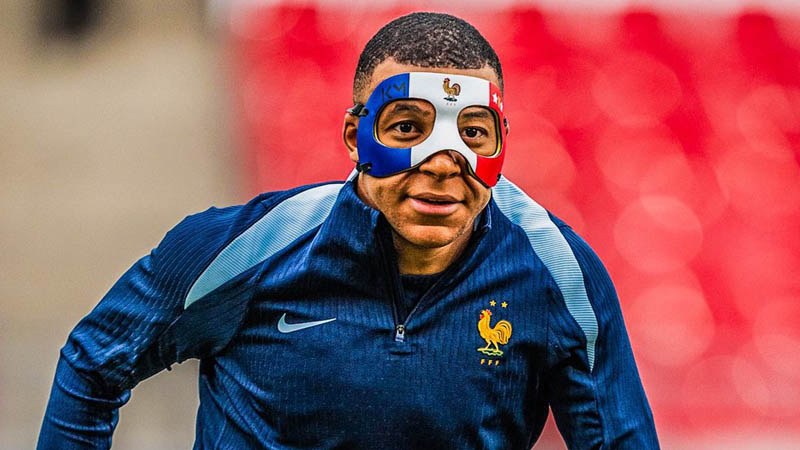
The excitement reached such heights that a custom-made TMNT protective mask was actually manufactured for him.
Fans eagerly anticipated seeing the striker take the field looking like a literal Ninja Turtle. However, the reality of professional sports regulations intervened.
- The Custom Mask: It featured the colors of the French flag and subtle turtle-like aesthetics.
- UEFA Rules: Tournament regulations are strict regarding medical equipment, generally requiring masks to be of a single color and free from team or brand branding.
- The Outcome: Consequently, Mbappé was forced to wear a standard, plain medical mask, much to the disappointment of the viral internet community.
The Cultural Impact of the Mbappé-TMNT Identity
The longevity of this nickname is a testament to Mbappé’s charisma and the power of athlete branding in the digital age.
Most nicknames in sports are fleeting, yet “Donatello” has survived a move across major European clubs and several international tournaments.
Humanizing the Global Superstar
By embracing the joke, Mbappé has humanized himself to a global audience. In an era where top-tier athletes are often seen as untouchable or overly manufactured, his willingness to wear a plastic mask in a locker room or laugh at turtle memes on Twitter makes him relatable.
This approachability is a key driver of engagement for his younger demographic of fans.
A Marketing Goldmine
While not an official partnership, the unofficial association with the Teenage Mutant Ninja Turtles franchise has likely provided millions of dollars in “earned media” for both the player and the brand.
It has created a unique “hook” for content creators, leading to endless fan art, merchandise, and digital content that keeps Mbappé at the center of the conversation even when he isn’t scoring goals.
Expert Analysis: Why This Nickname Works
From a branding perspective, the “Ninja Turtle” moniker succeeds because it is organic, visual, and harmless. It avoids the negativity often associated with sports rivalries and instead focuses on a shared piece of global pop culture.
- Universality: TMNT is a brand recognized on every continent, much like Mbappé himself.
- Visual Consistency: The mask becomes a visual shorthand for the player, making for excellent social media “thumbnail” content.
- Positive Association: The turtles are heroes; they are fast, agile, and work as a team—all traits that align perfectly with Mbappé’s professional image.
Frequently Asked Questions (FAQ)
Did Kylian Mbappé choose the nickname himself?
No, the nickname was given to him by his PSG teammates in 2017, specifically Presnel Kimpembe, due to his physical resemblance to the character Donatello.
Why was he specifically compared to Donatello?
Teammates pointed to his facial features, including his wide smile and the shape of his nose, as being similar to the purple-masked turtle.
Did he ever actually wear a Ninja Turtle mask during a game?
No. While he has worn them for jokes in the locker room and fans hoped he would during Euro 2024, UEFA rules require medical masks to be plain and single-colored.
Is Mbappé offended by the Ninja Turtle comparison?
On the contrary, he has embraced it. He was seen laughing during the original prank and has interacted with fans on social media regarding the nickname.
The Future of the Legend
As Kylian Mbappé enters the next phase of his career, the “Ninja Turtle” legend is likely to follow him.
Whether he is lifting trophies or navigating the pressures of being the world’s most watched footballer, the mask—literal or metaphorical—remains a symbol of his journey.
It is a reminder of a young player who joined a team of superstars and, through a simple locker room joke, found a way to connect with millions of fans through the universal language of humor.
The story of the “Ninja Turtle” is more than just a meme; it is a case study in how modern athletes interact with their peers and their public.
It proves that in the high-pressure world of professional football, there is always room for a little bit of fun, a well-placed prank, and a purple mask. For Kylian Mbappé, being a hero on the pitch and a “turtle” off of it seems to be the perfect winning combination.