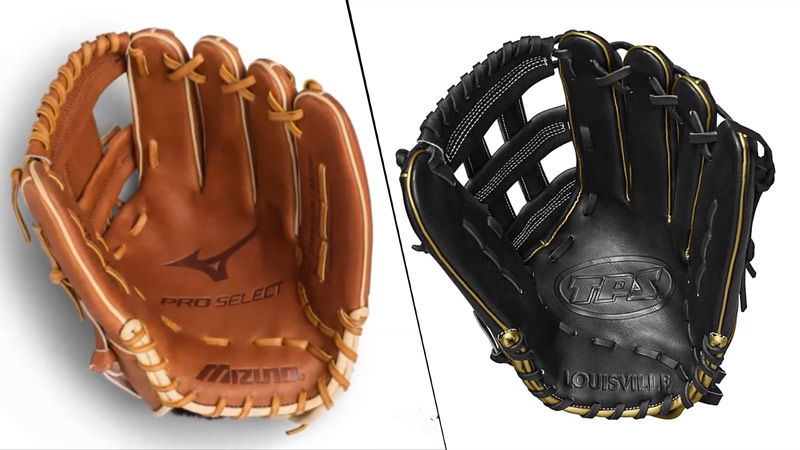
At a casual glance, baseball and softball look almost identical. Both feature a pitcher firing a ball toward a plate, athletes tracking fly balls in the outfield, and players sliding safely into bases while dirt flies.
Even the off-field traditions feel the same—from the chatter in the dugout to the familiar crunch of sunflower seeds.
However, any player who has stepped onto the diamond knows that the devil is in the details. While the rules and objectives share a common DNA, the equipment required to play each sport successfully varies in subtle yet critical ways.
If you have ever wondered whether you can grab your baseball glove for a fastpitch game—or vice versa—the short answer is yes, sometimes.
But understanding the structural differences between these two pieces of leather can make the difference between making a game-winning catch and watching a ball bounce out of your web.
Ball Size and Composition
To understand why baseball and softball gloves are engineered differently, you first have to look at the objects they are designed to catch.
Softballs and baseballs are worlds apart in scale. A standard baseball measures roughly 9 inches in circumference and features a hard, tightly wound core. Softballs, by contrast, scale up significantly depending on the age group and league:
- 8U Leagues: Typically use a 10-inch softball.
- Ages 9 through 12: Transition to an 11-inch softball.
- Ages 12 and Up: Play with the standard 12-inch softball.
Because a softball is drastically larger, heavier, and has a wider circumference than a baseball, a standard baseball glove’s smaller pocket simply cannot cradle it securely.
This single physical reality dictates every major manufacturing difference between the two types of gloves, from pocket architecture to wrist adjustments.
Glove Patterns: Baseball vs. Softball Design
When you hold a baseball glove next to a softball glove, your eyes immediately notice variations in length, pocket depth, and webbing patterns. Manufacturers carefully engineer these patterns to match the mechanical demands of each sport.
Pocket Depth and Shape
Because softballs demand more real estate, most softball gloves feature a fairly deep, rounded pocket. This ensures the larger sphere sinks securely into the webbing without popping out upon impact.
Baseball gloves, on the other hand, often feature shallower pockets—particularly in middle-infield patterns like the NP or TT2.
These shallow pockets are intentionally designed for baseball second basemen and shortstops who need lightning-fast ball transfers to turn double plays and gun down swift runners at first. A softball would struggle to fit comfortably or cleanly release from these ultra-flat baseball infield patterns.
However, the line isn’t entirely rigid. Certain baseball glove patterns—such as Rawlings’ popular 200-pattern—offer a deeper, more rounded pocket that bridges the gap. In fact, some competitive fastpitch players utilize a slightly longer 200-pattern baseball glove.
Elite athletes occasionally cross over too; star MLB infielder Francisco Lindor famously used a signature fastpitch softball glove during a game and even secured a Defensive Play of the Month honor with it.
Overall Length and Sizing
Length is another defining differentiator on the diamond:
- Infield Play: Pro baseball infielders frequently utilize compact gloves measuring 11 to 11.75 inches to maximize quick hand-eye transitions. In contrast, you will rarely find a competitive softball player gaming anything smaller than 11.75 inches, with 12 inches serving as the common starting baseline for infielders.
- Outfield and Utility Play: Outfield-style baseball gloves range anywhere from 12 to 13 inches with deep pockets, making them much more adaptable crossover options for certain softball athletes seeking extra reach.
Specialized Positions: Catcher and First Base Mitts
The structural differences become even more pronounced at specialized positions:
Catcher’s Mitts
A softball catcher’s mitt is heavily fortified, typically measuring at least 33 inches, featuring enhanced width and an exceptionally deep pocket to absorb the velocity of a heavy fastpitch ball.
First Base Mitts
While softball first base mitts are comparable in overall length to their baseball counterparts (roughly 12.75 to 13 inches), softball first base mitts are built with a noticeably wider pocket to secure errant throws from infielders tracking a larger target.
Fit for Comfort: Wrist Openings and Ergonomics
Hand architecture and wrist stability represent another major design divergence. Manufacturers recognize that comfort directly dictates defensive confidence, leading to distinct fit technologies for each sport.
Adult Baseball Glove Fits
Adult baseball gloves offer diverse wrist configurations tailored to hand volume:
- ContoUR Fit: Engineered specifically for baseball athletes with smaller, thinner hands, featuring lowered finger stalls and a more compact hand opening.
- Standard and Narrow Adjustments: Traditional Heart of the Hide or Pro Preferred baseball gloves can often be toggled between narrow and standard fits through simple relacing modifications, shifting a 6.5-inch or 7-inch narrow fit up to a 7.5-inch standard profile.
Softball Glove Engineering: The Pull-Strap Advantage
Designing softball gloves requires a distinct approach because female athletes often have a wider statistical range of hand and wrist proportions relative to palm length.
To solve this, most top-tier softball gloves from leading brands feature pull-strap wrist openings (utilizing Velcro or adjustable pulls). This allows players to achieve a snug, fully customized wrist lock instantly.
Beyond offering a superior ergonomic feel, these gloves are crafted with premium full-grain leather designed to undergo a swift, manageable break-in process, ensuring the glove feels game-ready in minimal time.
Playing Your Way: Stock vs. Custom Options
The modern equipment landscape offers more customization than ever before, ensuring that players no longer have to settle for a “one-size-fits-all” mentality on the field.
Athletes can select readily available stock gloves across major brands or utilize online custom glove builders to design their ideal gamer.
For instance, players can configure Pro Preferred and Heart of the Hide models tailored precisely to baseball or softball specs, while dedicated lines like Liberty Advanced provide high-performance frameworks engineered exclusively for softball dynamics.
Premium steerhide collections also allow players to fine-tune leather types, colorways, web styles, and embroidery to match their exact personal aesthetic and positional needs.
Frequently Asked Questions
Can I use a baseball glove for fastpitch softball?
Yes, but with caveats. If you choose a baseball glove for fastpitch, opt for larger utility models (12 inches or greater) or deeper patterns like the Rawlings 200-pattern.
Avoid small, shallow middle-infield baseball gloves, as the pocket will likely be too restrictive for a 12-inch softball.
What size softball glove should an infielder wear?
While baseball infielders often wear 11.25 to 11.5-inch gloves, softball infielders typically start at 11.75 to 12 inches to successfully accommodate the larger ball circumference and ensure secure ball control.
Why do softball gloves have pull-strap wrists?
Pull-strap wrist closures allow for high adjustability, accommodating varying hand and wrist sizes while delivering a tight, secure fit that prevents the glove from shifting during intense defensive plays.
Is there a trick to using a baseball glove for softball?
Many experienced players who prefer baseball gloves for fastpitch utilize a “two fingers in the pinky” shift.
This grip modification deepens the pocket artificially, giving you better leverage and control over a larger softball. However, for ultimate comfort and pocket integrity, a softball-specific glove remains the recommended standard.
Final Verdict: Choose the Tool That Fits Your Game
Your glove serves as an extension of your hand on the diamond. While a baseball glove and a softball glove share similar outward characteristics, their internal geometry—driven entirely by the physics of ball size and weight—sets them apart.
Whether you opt for the adjustable comfort of a dedicated fastpitch design or the deep pocket of a versatile utility model, make sure your gear matches your hand, your position, and your style of play.
After all, when the game is on the line, confidence in your equipment lets you focus entirely on making the play.