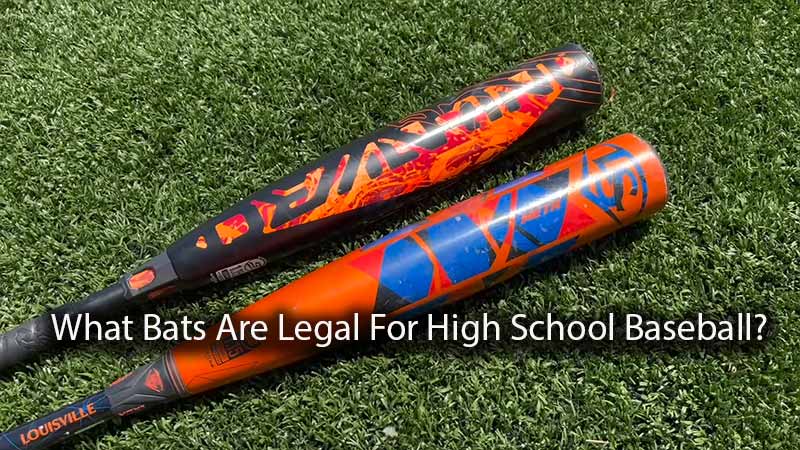
Navigating the equipment regulations for high school baseball can feel like moving through a maze. Every season, parents, players, and coaches face the daunting task of purchasing gear that complies strictly with governing body standards.
Buy the wrong model, and a player could face disqualification right before stepping into the batter’s box.
To ensure absolute compliance with the National Federation of State High School Associations (NFHS) rules, every piece of equipment must satisfy precise manufacturing, dimension, and certification criteria.
Whether you are prepping for the upcoming spring season or planning for future rule changes, understanding what makes a bat legal is essential for peace of mind and optimal performance.
Understanding NFHS Governance and High School Standards
High school baseball in the United States operates under the rulebook maintained by the NFHS. While youth leagues run by organizations like Little League, USA Baseball, or travel ball circuits enforce their own unique standards, high school play adheres strictly to NFHS regulations.
When an umpire steps in to inspect a player’s equipment prior to the first pitch, they look for specific certification marks, structural composition, and physical dimensions.
Using an unauthorized bat results in immediate penalties, including the batter being called out and potential restrictions for the team.
To protect your investment and keep players safe and legal, let us break down the exact requirements governing high school baseball bats today.
Core Requirements for Non-Wood Bats
Non-wood bats—commonly referred to as aluminum, alloy, or composite bats—must meet a strict trifecta of criteria to be deemed legal for NFHS play. If a bat fails even one of these three requirements, it is illegal for high school competition.
1. The BBCOR .50 Certification Mark
The most critical requirement for any non-wood high school bat is the BBCOR .50 certification mark (Bat-Ball Coefficient of Restitution).
Introduced over a decade ago to regulate the exit velocity of non-wood bats so that they perform similarly to wood, BBCOR technology ensures player safety and preserves the traditional integrity of the game.
- Location: The certification mark must be permanently stamped, etched, or affixed directly onto the barrel or taper of the bat.
- Visibility: It must be clearly legible. If a bat’s BBCOR stamp has worn away from heavy use, umpires may rule the bat illegal until verified.
2. Maximum Barrel Diameter
NFHS rules enforce strict limits on how wide a bat’s barrel can be.
- The Limit: The maximum barrel diameter for a non-wood high school bat is 2 5/8 inches.
- Prohibited Sizes: Bats featuring a 2 3/4-inch barrel (commonly known as “Big Barrel” bats popular in some youth travel leagues) are strictly prohibited in high school baseball, regardless of whether they carry a BBCOR stamp.
3. Length-to-Weight Drop of -3
The “drop weight” represents the numerical difference between the length of the bat (measured in inches) and its weight (measured in ounces).
- The Requirement: Non-wood high school bats must feature a length-to-weight drop of -3.
- Example: A 33-inch bat must weigh precisely 30 ounces. This heavy drop weight is intentionally designed to transition players from youth-weighted bats to the heavy standards used in collegiate and professional baseball.
The Wood Bat Exception
While non-wood bats face rigorous certification standards, wood bats enjoy a long-standing tradition of acceptance under NFHS rules, though distinction exists between construction types:
Solid One-Piece Wood Bats
A traditional bat carved from a single piece of solid wood (such as ash, maple, or birch) is fully legal without requiring any special stamps or certification marks.
They simply need to adhere to general safety parameters regarding dimensions (maximum 2 3/4 inches in diameter at the thickest part, though 2 5/8 inches is more common, and a maximum length of 36 inches).
Composite or Multi-Piece Wood Bats
Bats constructed from multiple pieces of wood, or wood combined with composite materials (like a bamboo core or composite handle wrapping), must meet specific performance criteria and are generally required to carry the BBCOR .50 certification mark to be legal for NFHS play.
Looking Ahead: Current & Future High School Bat Standards
The landscape of high school baseball equipment is evolving. While traditional regulations remain firmly in place, governing bodies have introduced forward-looking adjustments to accommodate technological advancements and player development.
Traditional BBCOR Bats (-3)
These remain the undisputed foundation of high school play. Featuring a -3 drop weight, a 2 5/8-inch maximum barrel, and the mandatory BBCOR .50 label, these bats are fully legal for high school competition indefinitely.
Upcoming USABat Expansion (Effective 2028)
A significant shift is on the horizon. The NFHS voted to allow lighter USABat drop weights (-4, -5, and -6) alongside a newly structured USA BBCOR (-3) standard, with implementation slated for the 2028 season.
This upcoming expansion bridges the gap for younger or developing high school athletes who may struggle initially with the heavy -3 drop requirement, aligning high school standards more closely with progressive youth governing bodies.
Summary of Bat Types at a Glance
How to Verify Your Bat Before Game Day
To avoid embarrassing moments at the plate or getting a player called out, use this quick pre-season checklist to inspect your bat:
- Locate the Stamp: Look closely at the barrel or handle area. Confirm that the BBCOR .50 rectangular logo is clearly visible, untamed by tape or heavy wear.
- Check the Specifications: Read the laser etching or printing on the taper of the bat. Ensure the length-to-weight ratio reads
-3and the barrel diameter states2 5/8". - Inspect for Structural Damage: Umpires will check for structural integrity. Cracks, severe dents, loose end caps, or rattles inside composite barrels will cause an umpire to immediately remove the bat from play, even if it carries the correct stamps.
- Understand League Variations: Always double-check if your specific conference or tournament adheres strictly to NFHS guidelines or if they incorporate local league overlays.
Frequently Asked Questions
Can I use a USA Baseball stamped bat in high school games right now?
No. Currently, bats featuring the “USA Baseball” stamp (commonly used in Little League, Babe Ruth, and Pony leagues) are not legal for high school play unless they also carry the BBCOR .50 stamp.
However, note that the upcoming 2028 rule updates will introduce expanded USABat options for high school competition.
What happens if a player steps up with an illegal bat?
If an opposing team appeals or the umpire notices an illegal bat before or during an at-bat, the batter is declared out, and any advancement by base runners caused by the play can be nullified. It is crucial to verify equipment before stepping onto the diamond.
Do wood bats need a BBCOR stamp?
Traditional solid one-piece wood bats do not require a BBCOR stamp. However, multi-piece or composite wood bats must meet BBCOR performance standards and display the appropriate certification to be legal for high school play.
Can I use a training bat or weighted warmup bat in the on-deck circle?
While legal for the on-deck circle to loosen up, official game bats used inside the batter’s box must meet all NFHS game specifications. Never bring a weighted sleeve-attached training bat into the actual batter’s box during an official plate appearance.