
The 2026 professional tennis circuit has been defined by high-stakes drama and the physical toll of an increasingly demanding calendar.
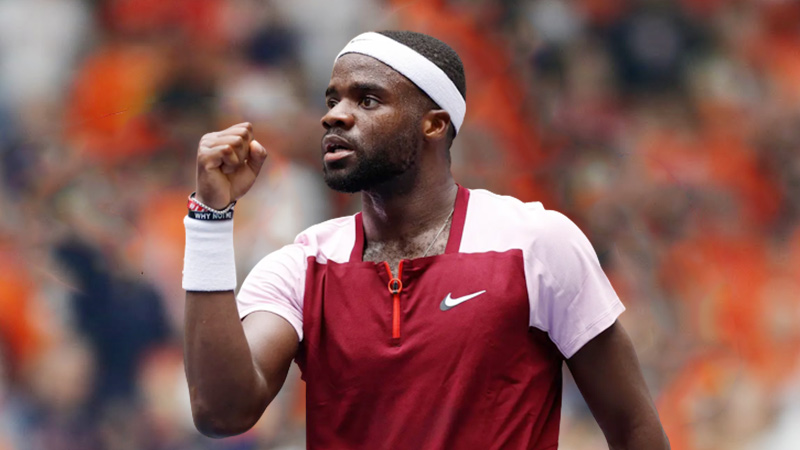
At the center of this narrative is Frances Tiafoe, whose performance during the North American hard-court swing became a case study in athletic resilience and strategic risk-taking.
For fans and analysts asking why Tiafoe has been absent from certain brackets or appeared hampered in key moments, the answer lies in a complex interplay of a persistent hand injury, a mid-season surgical intervention, and the deliberate prioritization of his singles career.
The Montreal Incident: A Season at a Crossroads
The trajectory of Tiafoe’s summer changed abruptly on August 6, 2026, at the Montreal Open. In a match that began with high expectations, Tiafoe was forced into a sudden mid-match retirement.
The cause was immediate: sharp pain and significant discomfort in his right hand. For a player whose game relies on explosive forehands and a delicate touch at the net, an injury to the dominant hand is not merely a setback; it is a potential threat to his professional standing.
This retirement was the first indicator to the global tennis community that Tiafoe was navigating a physical crisis. The Montreal Open serves as a critical preparatory event for the US Open, and a withdrawal at this stage often signals the end of a competitive summer.
However, Tiafoe’s subsequent actions would demonstrate a departure from the conventional recovery path.
Clinical Diagnosis and the Surgical Solution
Following the events in Montreal, Tiafoe underwent comprehensive medical evaluations. Advanced scans identified the presence of a cyst in his right hand.
While a cyst may sound minor in a general medical context, for an elite athlete, it can cause nerve compression, restricted range of motion, and debilitating pain upon impact.
The medical team determined that minor surgery was necessary to remove the cyst and alleviate the pressure on his hand. Surgery during the peak of the hard-court season is a decision fraught with risk.
It requires a delicate balance between immediate relief and the inevitable loss of match rhythm. The surgical procedure was successful, but it introduced a new variable: a strict medical recommendation for rest and rehabilitation.
The Cincinnati Gambit: Defying Medical Protocol
In a move that surprised the tennis world, Tiafoe opted to ignore the initial medical advice suggesting a prolonged period of rest.
Driven by the momentum of the season and perhaps a desire to maintain his ranking ahead of the final Grand Slam of the year, he entered the Cincinnati Open shortly after his surgery.
This decision was a calculated gamble. The risk of aggravating the surgical site or developing compensatory injuries in the wrist or elbow was substantial.
Yet, the outcome in Cincinnati provided a testament to Tiafoe’s mental fortitude. He did not merely participate; he excelled, defying expectations to reach the final of the tournament.
This performance served as a signal that while the injury was a factor, it was not a deterrent to his competitive spirit. However, the physical cost of this run would necessitate further strategic adjustments as the tour moved toward New York.
Strategic Load Management at the US Open
As the US Open approached, the focus shifted from simple participation to sustainable performance. On August 24, 2026,
it was announced that Tiafoe would withdraw from the US Open Mixed Doubles, where he had been scheduled to compete alongside Leylah Fernandez.
This withdrawal was not an indication of a new injury, but rather a sophisticated approach to load management.
To maximize his potential in the singles draw, Tiafoe and his team recognized the need to protect his wrist and hand from the additional volume of play required by a doubles campaign.
By sacrificing his participation in the mixed doubles event, he was able to dedicate his physical resources entirely to his singles matches.
This decision aligns with the modern trend of “load management” seen in other high-impact sports. For Tiafoe, the priority was clear: a Grand Slam singles title.
Every extra set played in doubles represented a risk to the integrity of his right hand, which was still in a phase of post-surgical recovery.
The Semifinal Stand: An All-American Duel
The culmination of Tiafoe’s summer of grit took place on the grandest stage in American tennis. Despite the surgery and the ongoing management of his hand health, Tiafoe successfully navigated the early rounds of the US Open singles draw, reaching the semifinals.
On September 11, 2026, he faced fellow American Ben Shelton in a match that captivated the domestic audience. The contest was a physical and tactical battle that extended to four sets. Ultimately, Shelton emerged victorious, ending Tiafoe’s impressive run.
While the loss was disappointing for Tiafoe, his ability to reach the semifinals of a Grand Slam just weeks after hand surgery is a remarkable achievement.
It underscores a level of durability and competitive will that few players possess. The question of “Why is Frances Tiafoe not playing?” was replaced by “How is he playing at this level?”
Technical Analysis: The Impact of Hand Injuries on Performance
To understand why Tiafoe had to make these difficult choices, one must consider the mechanics of a professional tennis stroke. The right hand is the primary point of contact between the athlete and the racket.
- Grip Pressure: A cyst in the palm or near the wrist can make maintaining a firm grip painful. This affects the ability to generate “heavy” topspin, a staple of Tiafoe’s baseline game.
- Vibration Absorption: Modern rackets are designed to dampen vibration, but the impact of a 130-mph serve still sends significant energy through the hand. Post-surgery, the tissues are hypersensitive to these micro-traumas.
- Touch and Finesse: Tiafoe is known for his variety—drop shots, volleys, and sliced backhands. These shots require extreme precision in the small muscles of the hand. Any swelling or stiffness directly compromises this aspect of his game.
By withdrawing from specific events and managing his practice schedule, Tiafoe was likely trying to minimize the cumulative inflammation that occurs over a two-week tournament.
The Psychological Resilience of “Big Foe”
The decision to ignore medical advice and play through the Cincinnati Open highlights a specific psychological profile common among top-tier athletes. For Tiafoe, the “all-in” mentality is a core part of his identity.
In professional sports, the window of peak performance is narrow. Tiafoe’s choice suggests he viewed the 2026 season as a pivotal moment in his career—one worth the risk of playing through discomfort.
This “grit” factor is what endears him to fans, but it also requires a highly disciplined support team to ensure that his desire to compete does not lead to long-term career-threatening damage.
Evaluating the 2026 Hard-Court Campaign
Looking back at the events from August to September, Tiafoe’s season can be characterized by three distinct phases:
- Crisis Management: The immediate reaction to the Montreal pain and the decision to seek surgical intervention.
- The Defiance Phase: The successful run in Cincinnati that proved his competitive viability despite medical concerns.
- The Strategic Phase: The calculated withdrawal from the US Open Mixed Doubles to preserve his body for the singles semifinals.
The Road Ahead: Recovery and Future Outlook
As the 2026 season moves into its final stages, the focus for Tiafoe will undoubtedly return to long-term health. The physical toll of his deep run in the US Open, combined with the earlier surgery, suggests that a period of genuine rest may finally be necessary.
His performance this summer has solidified his position as one of the most resilient players on the tour.
By navigating a surgical recovery in the middle of the most intense part of the season, he has shown that he can manage physical adversity without losing his competitive edge.
For the tennis world, Tiafoe’s 2026 journey is a reminder that the “not playing” status of an athlete is often a strategic pause rather than a full stop.
Whether it was the withdrawal from a doubles match or a mid-tournament retirement, every move was part of a larger plan to remain a contender at the highest level of the sport.
As he rehabilitates his hand for the next season, the lessons learned in 2026 will likely inform his approach to health and performance for years to come.
Final Perspective
The story of Frances Tiafoe in 2026 is not one of injury, but one of management. It is about a world-class athlete making difficult choices in real-time to balance the demands of his body with the ambitions of his career.
He proved that even when “not playing” in certain events, his focus remained entirely on the ultimate goal: excellence on the singles court.
His semifinal finish at the US Open, under these circumstances, remains one of the most impressive feats of the year.






