
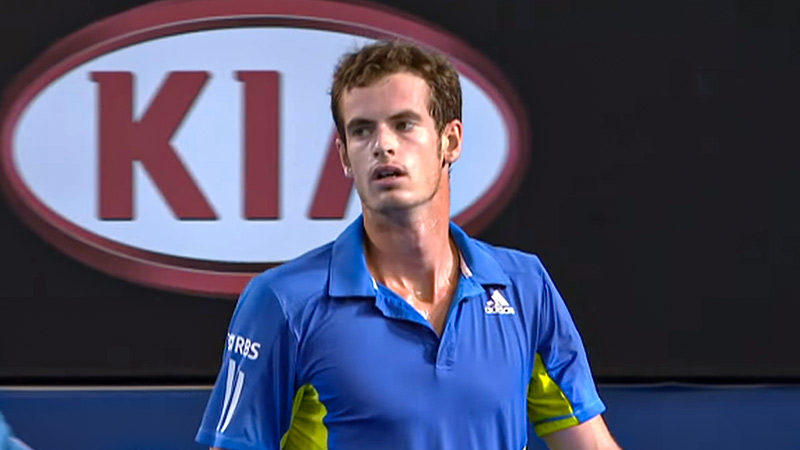
The career of Sir Andy Murray stands as a testament to the power of persistence in the face of historic adversity. To understand why he is one of the most recognizable figures in global sport, one must look beyond the mere tally of his trophies.
His fame is rooted in a unique combination of breaking nearly century-old national droughts, dominating the Olympic stage in a way no other man has, and serving as a rare, principled voice for progress within the professional circuit.
As a central member of the “Big Four”—the most dominant era in the history of men’s tennis—Murray did not just compete; he ascended to the top of the rankings during a period defined by the greatest players to ever pick up a racket. This exploration details the milestones and character traits that have solidified his legacy.
The Historical Burden: Ending the Great British Wait
For decades, British tennis was defined by the shadow of Fred Perry and the year 1936. The pressure on any talented British player was immense, often proving too heavy for many to carry. Murray, however, transformed that pressure into a catalyst for excellence.
His breakthrough at the 2012 US Open was the first major signal that the status quo had shifted. By defeating Novak Djokovic in a grueling five-set final, he became the first British man to win a Grand Slam singles title in 76 years.
This victory was not merely a personal triumph but a relief for a nation that had long waited for a successor to Perry.
The pinnacle of this historical journey occurred on the lawns of SW19. In 2013, Murray defeated Djokovic again to claim the Wimbledon title, ending a 77-year drought for a home-grown male champion. The scenes of celebration across the United Kingdom underscored the magnitude of the achievement.
He repeated this feat in 2016, proving that his initial success was no fluke but the result of a “stellar season” that would eventually lead him to the pinnacle of the sport.
The Olympic Icon: A Record Without Peer
While Grand Slams are the traditional currency of tennis greatness, Murray’s fame is uniquely tied to his performances representing Great Britain.
He holds a distinction that separates him from every other male player in the history of the game: he is the only man to win two consecutive Olympic gold medals in singles.
His first gold came at the 2012 London Games, held at Wimbledon just weeks after a heartbreaking loss in the Wimbledon final.
The psychological resilience required to return to the same court and defeat Roger Federer for the gold medal remains one of the most celebrated moments in British Olympic history.
He successfully defended this title at the 2016 Rio Games, cementing his status as a legendary competitor on the world stage.
Furthermore, his commitment to national representation was evidenced by his leadership during the 2015 Davis Cup. Murray effectively carried the British team on his shoulders, leading them to their first title in 79 years.
For many fans, this selfless dedication to team and country elevated him from a successful individual athlete to a national hero.
The Architect of the “Big Four” and World No. 1
The “Big Four” era—comprised of Roger Federer, Rafael Nadal, Novak Djokovic, and Andy Murray—represented a bottleneck of talent never before seen in tennis.
To be famous in this era required more than just skill; it required an almost superhuman level of fitness and mental toughness.
Murray’s consistency during this time was staggering. He reached the World No. 1 spot in late 2016, a feat that required him to outwork and outplay three of the greatest players in history over a 12-month period.
Reaching the top of the ATP rankings is the ultimate validation of a player’s career, and doing so during the height of the Djokovic and Nadal rivalry remains one of his most significant professional achievements.
Advocacy and the Fight for Gender Equality
Perhaps what makes Murray most famous to those outside the traditional tennis world is his role as a vocal advocate for social progress. In an industry that has often struggled with gender parity, Murray used his platform to challenge the status quo.
In 2014, he made the groundbreaking decision to hire Amélie Mauresmo as his coach. At the time, it was a move that drew significant scrutiny and, in some corners, casual sexism.
Murray defended his choice and his coach vigorously, often pointing out the double standards applied to female coaches in the sport.
His continued advocacy for equal pay and better representation for women’s sports has earned him respect far beyond the baseline. He is frequently cited as a model for how male athletes can be effective allies in the pursuit of equality.
Resilience: The “Bionic” Comeback
The latter stage of Murray’s career added a new layer to his fame: that of the ultimate survivor. Following years of grueling competition, he suffered a debilitating hip injury that many believed would end his career.
His journey through major hip-resurfacing surgery and his subsequent return to the professional tour became an inspiration.
Fans and fellow athletes alike admired his “fierce fighting spirit” and his refusal to retire when the odds were stacked against him.
This period of his career redefined his legacy, shifting the focus from the trophies he won to the sheer love of the game that kept him competing with a metal hip.
A Legacy Knighted by History
In recognition of his unparalleled contributions to the sport and his extensive charitable work, Murray was awarded a knighthood by Queen Elizabeth II in 2017.
This honor served as the formal acknowledgment of his impact on British society, moving him into the realm of the country’s all-time sporting greats.
Conclusion
Sir Andy Murray is famous not just for the matches he won, but for the barriers he broke. He carried the hopes of a nation for over a decade, ending historic droughts that had stood for generations.
His dominance in the Olympics, his ascent to World No. 1, and his courageous advocacy for equality have created a multifaceted legacy.
Whether it was his “fierce fighting spirit” on the court or his principled stance off it, Murray has left an indelible mark on the sport of tennis.
His story is one of resilience—a journey of a boy from Dunblane who became a knight of the realm and changed the face of British sport forever.






