
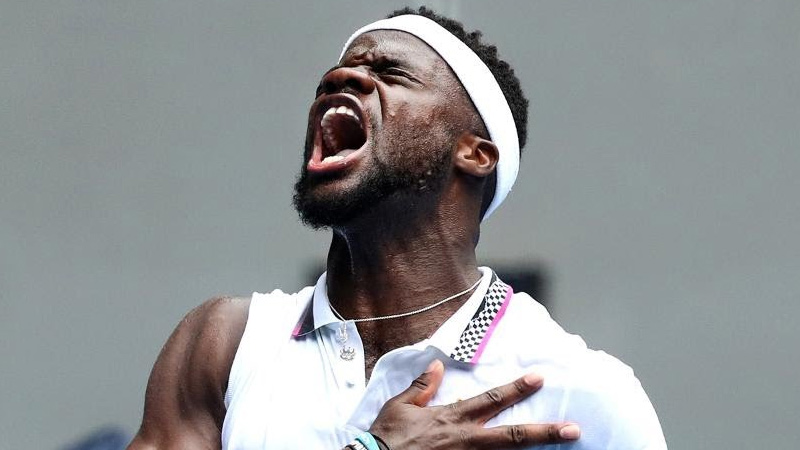
In the modern era of professional athletics, few individuals embody the intersection of raw physical capability and the rigorous discipline required for global elite status as effectively as Frances Tiafoe.
As a premier professional in the tennis industry, he has achieved a career-high singles ranking of World No. 10, signaling his position among the top tier of his peers.
Evaluating his current standing requires an examination of his technical proficiency, his record in major competitions, and the psychological resilience demonstrated during pivotal shifts in his career trajectory.
I. The Technical Foundation: Analyzing the “Explosive” Advantage
At the core of his success is a specialized skill set that distinguishes him within a highly competitive market. Analysts and fellow competitors frequently highlight his return of serve as one of the most effective and explosive tools in the game.
In professional tennis, the ability to neutralize a high-velocity serve is a critical metric of success; his return is unique because it does more than just restart the point. It allows him to transition from a defensive stance into an offensive attack almost instantly.
This technical aggression is supported by a playing style defined by immense flair and heavy pace. While many players rely on a singular tactical approach, he incorporates significant variety into his matches, which has contributed to his status as a preferred figure for global audiences.
This combination of power and unpredictability makes him a difficult opponent to prepare for, as he can dictate the tempo of a match through sheer pace or disrupt a competitor’s rhythm with tactical shifts.
II. Performance Under Pressure: The Major Tournament Metric
The primary indicator of a world-class professional is their performance on the largest stages. For him, the US Open has served as a consistent benchmark of excellence.
He reached the semi-finals of this prestigious tournament in 2022, 2024, and 2026. Consistency at this level of Grand Slam competition is a rare achievement, demonstrating that his game is optimized for high-stakes environments.
His signature victory remains his round-of-16 defeat of Rafael Nadal during the 2022 US Open. To overcome a multi-time champion in a best-of-five format requires a level of tactical precision and physical endurance that only a fraction of professionals ever master.
This specific victory served as a proof of concept for his potential, confirming that his peak performance is capable of surpassing the highest established standards in the sport.
III. The Strategic Evolution: Managing Career Volatility
A defining characteristic of an elite career is the ability to navigate periods of underperformance. Despite his high ceiling, his professional journey has occasionally been impacted by bouts of inconsistency.
This is common in athletes who play with a high degree of variety and flair, as the technical margins for error are thinner than those of a purely defensive player.
The year 2025 represented a significant challenge, described as a difficult stretch in his career. However, the response to this slump provides a compelling case study in professional growth.
Rather than continuing with the status quo, he initiated a major coaching reset. This reorganization was not merely a change in personnel but a fundamental shift in philosophy.
He refined his focus toward routine and discipline, moving away from a reliance on pure instinct. This structural change was highly effective, facilitating a return to strong form by 2026.
IV. A Diversified Portfolio: ATP Titles and Surface Versatility
His success is not limited to Grand Slam appearances; his portfolio of achievements includes four ATP singles titles. These victories demonstrate an ability to perform across diverse conditions and geographical locations:
- Delray Beach: Showcasing success in high-humidity environments.
- Houston: Demonstrating technical adaptation to different surface speeds.
- Stuttgart: Proving his effectiveness on faster, grass-court surfaces.
In addition to these titles, his run to the final of the Cincinnati Masters 1000 further solidifies his standing as a consistent threat in the most competitive brackets of the tour. His ranking of World No. 10 is a reflection of this cumulative success across multiple seasons and surfaces.
Conclusion
When assessing “how good” he is, one must look beyond individual wins and losses. He represents a successful blend of explosive athleticism and strategic adaptation.
By addressing his historical inconsistency through a commitment to routine and discipline, he has transitioned from an unpredictable talent to a reliable top-tier professional.
His career trajectory suggests that he has reached a stage of maturity where his flair is backed by a robust technical and psychological foundation.
Whether through his signature major wins or his resilience in overcoming setbacks, he has established himself as a permanent and formidable fixture in the world’s top ten.






