
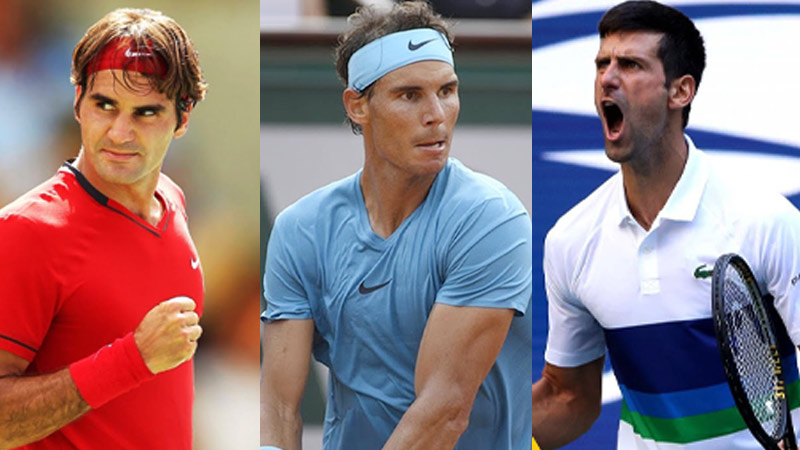
The question of who is the “Greatest of All Time” (GOAT) in men’s tennis is no longer a simple discussion of who hit the most winners. It has evolved into a complex analysis of statistics, stylistic influence, and historical impact.
While the “Big Three”—Roger Federer, Rafael Nadal, and Novak Djokovic—have collectively dominated the sport for two decades, the debate often centers on whether Roger Federer’s elegance and pioneering role outweigh the staggering statistical records of Novak Djokovic or the unparalleled physical dominance of Rafael Nadal.
This analysis evaluates these three legends through the lens of historical data, technical proficiency, and the mutual respect that defined their era.
The Statistical Landscape: By the Numbers
To understand the current hierarchy, one must first look at the definitive metrics of success: Grand Slam titles, weeks at the top of the rankings, and head-to-head records.
Statistically and historically, Novak Djokovic has emerged as the most successful player in the history of the sport.
Core Performance Metrics
| Metric | Novak Djokovic | Rafael Nadal | Roger Federer |
|---|---|---|---|
| Grand Slam Titles | 24 (Record) | 22 | 20 |
| Weeks at World No. 1 | Most in history | Historically significant | Set the 2000s standard |
| French Open Titles | 3 | 14 (Record) | 1 |
| Year-End No. 1 | Most in history | Consistent top-tier | Dominant peak era |
| Head-to-Head (H2H) | Winning record vs. both | Winning record vs. Federer | Trailing both rivals |
Roger Federer: The Standard-Setter and Stylist
Roger Federer is widely celebrated for an elegant, all-court style and an exceptional forehand that redefined how tennis was played in the 21st century.
His game was built on a foundation of “perfect control” and technical fluidity that made the most difficult maneuvers look effortless.
- The Pioneer of the Era: Federer set the standard for dominance during his peak years in the 2000s, establishing a benchmark that Nadal and Djokovic eventually had to surpass.
- All-Surface Fluidity: He possessed the ability to hit winners from any position and was known for fantastic passing shots and a versatile net game.
- Influence and Admiration: Despite being surpassed in total titles, Federer remains one of the most influential and admired figures in the history of the sport.
- Mental Fortitude in Comebacks: His career was marked by significant resilience, including one of the best comebacks on tour following a long injury.
Rafael Nadal: The King of Clay and Resilience
Rafael Nadal’s legacy is inextricably linked to his unmatched physical intensity and a “fighting spirit” that is often cited as the best on the tour.
His career trajectory was defined by a left-handed topspin that created unique tactical challenges for his rivals.
- The Roland Garros Dynasty: Nadal’s 14 titles at the French Open represent a level of single-tournament dominance that may never be replicated.
- The Ultimate Challenge: Roger Federer himself noted that if one had to pick a player to win a single set to “save your life,” the choice would be Nadal on the clay of Roland Garros.
- Consistency and Longevity: Even as he entered the later stages of his career, Nadal maintained a high level of play, with rivals noting his ability to return “one more shot” better than almost anyone else.
- Mutual Respect: Nadal viewed Federer as his biggest rival, noting that they traveled in the same direction from the beginning of their careers.
Novak Djokovic: The Statistical Pinnacle
Novak Djokovic is often described by his peers as “unbeatable” due to his defensive consistency, flexibility, and return game. His ability to cover the court is considered superior to any other player in the current era.
- Head-to-Head Dominance: Djokovic holds a winning record against both Nadal (31-29) and Federer (27-23), a key argument for his status as the greatest competitor.
- Mental Strength: In recent years, Djokovic has demonstrated a “big strong mentality,” allowing him to win crucial points at important stages of major matches.
- Historical Milestone: His 24 Grand Slam singles titles place him at the top of the men’s record, effectively “writing history” with every subsequent victory.
- Depth and Power: His game is characterized by a backhand that hits with depth and power, making it difficult for opponents to find a rhythm.
The “Old Guys” and the Evolution of the Game
A fascinating aspect of the Big Three is how they pushed each other to remain relevant long after typical retirement ages.
Novak Djokovic and Rafael Nadal have even joked in locker rooms about being the “old guys” who refuse to give up, showing a “fresh energy” that continues to challenge the younger generation.
The rivalry was not just about winning; it was a primary reason these athletes stayed in the sport. Federer admitted that the challenge of facing Djokovic was a “big reason” he continued playing, as the athletic nature of their contests provided a unique motivation.
Similarly, Djokovic noted that playing Nadal in the finals of major tournaments remained “extra motivating” even after decades of competition.
Comparison of Playing Philosophies
- Federer’s Philosophy: Focus on variety, elegance, and dictating play with the forehand.
- Nadal’s Philosophy: Focus on resilience, physical attrition, and high-topspin tactical pressure.
- Djokovic’s Philosophy: Focus on defensive wall-building, elite returning, and mental endurance.
The Human Element: Friendship vs. Rivalry
The relationship between these three men shifted from intense sporting animosity to deep mutual respect. Federer has highlighted the personal bonds formed over the years, noting his immense respect for Nadal’s family and values.
A poignant example of this was when Nadal admitted to crying when Federer finally won the French Open in 2009, showcasing a level of empathy rarely seen in elite individual sports.
Djokovic has also been vocal in his praise, often referring to Federer and Nadal as “great champions” and acknowledging their roles in his own development as a player.
When Djokovic broke various records, Federer was among the first to call for the focus to remain on the “amazing accomplishment” of his rival rather than his own missed opportunities.
The Final Verdict
Determining if Roger Federer is “better” than Nadal and Djokovic depends entirely on the criteria used.
- Tatistical dominance and winning records, the answer is Novak Djokovic.
- Dominance on a single surface and resilience: the answer is Rafael Nadal.
- Stylistic impact, popularity, and the “eye test” of elegance: the answer remains Roger Federer.
The era of the Big Three was a unique moment in sports history where three different philosophies of greatness collided.
While the records may eventually sit with Djokovic, the legacy of the era belongs to all three for how they pushed the boundaries of human performance and maintained a level of “fresh energy” that redefined the lifespan of a professional athlete.






