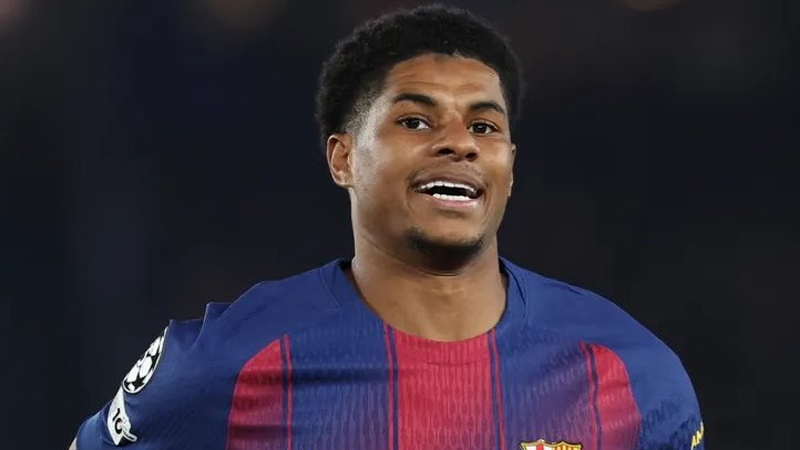
The footballing world is currently fixated on a high-stakes chess match between two of Europe’s most storied institutions.
Marcus Rashford, once the golden boy of Old Trafford, has found a second life at the Spotify Camp Nou, yet his future remains precariously balanced on a financial knife-edge.
As the June 15 deadline looms, the negotiations surrounding a permanent transfer have shifted from a question of sporting merit to a complex battle of accounting and leverage.
This transition represents more than a player move; it is a defining moment for Barcelona’s financial recovery and Manchester United’s tactical reset.
The Financial Architecture of the Rashford Agreement
To understand why this deal is stalled, one must look past the goals and assists to the balance sheets that govern modern European football. Barcelona’s pursuit is not just about talent; it is about fitting a global superstar into a rigid economic framework dictated by La Liga.
While the sporting fit has been seamless, the financial mechanics require unprecedented cooperation from the player.
Marcus Rashford has already demonstrated a rare level of commitment to the Catalan project by agreeing to terms that most elite forwards would find unpalatable in their prime years.
A Massive Reduction in Personal Wages
The most significant breakthrough in the Marcus Rashford Barcelona transfer saga is the player’s willingness to absorb a massive financial hit. At Manchester United, Rashford was earning a gross salary of £325,000-a-week, which equates to roughly €16.9 million annually.
To facilitate a permanent stay in Spain, he has agreed in principle to a 40% salary reduction. Under the proposed terms, his new base salary would sit at approximately €14 million per year, though this would be heavily supplemented by performance-related bonuses tied to appearances and goal contributions.
This gesture has frozen out interest from other suitors, including Aston Villa, as Rashford has made it clear that Barcelona is his only desired destination.
The Five-Year Amortization Strategy
Beyond the base salary, the length of the contract is a critical sticking point in the negotiations.
While an initial three-year deal was discussed, Rashford’s camp is now pushing for a five-year contract extending to 2031. This is a strategic move designed to help Barcelona comply with La Liga’s spending limits.
By spreading the €30 million transfer fee over five years instead of three, the annual “hit” on Barcelona’s books is reduced, providing the club with more breathing room under the league’s strict economic rules.
Rashford reportedly views this extension as his “only option” to remain in Spain long-term.
The €30 Million Impasse: A Tactical Tug-of-War
Despite the player’s agreement, the two clubs remain locked in a standoff regarding the payment structure of the transfer fee. Manchester United, undergoing their own transformation, are in no mood to grant financial favors to their European rivals.
The tension lies in the discrepancy between Barcelona’s need for liquidity and United’s demand for immediate capital to fund their own summer reinforcements. The following table illustrates the current gap between the two proposals:
| Feature | Manchester United’s Demand | Barcelona’s Proposal (Deco) |
|---|---|---|
| Total Fee | €30 Million (£26M) | €22M – €30M (negotiable) |
| Payment Structure | Full Payment Upfront | 3-Year Installments (€10M/year) |
| Alternative | No Alternatives Accepted | 2nd Loan with Obligation to Buy in 2027 |
| Deadline | June 15, 2026 | Flexible (requested) |
United’s Demand for Liquidity
Manchester United has flatly rejected any installment-based structures or lower valuations. From the perspective of the Old Trafford board, a €30 million fee for a player who contributed 28 direct goal involvements in a single season is already a significant bargain.
Their primary objective is to clear Rashford’s substantial wages from their books entirely and receive the cash upfront to facilitate their own recruitment plans under the new permanent management.
The “New Formula” from Deco
Barcelona Sporting Director Deco is attempting to navigate these waters with a “new formula” that minimizes immediate cash outflow.
His primary push has been for a second consecutive season-long loan for 2026/27, which would include a conditional obligation to buy in 2027 based on performance metrics.
This would allow Barcelona to defer the capital expenditure to a future fiscal year when their financial health is expected to be more robust. However, United has shown zero interest in this deferment, viewing it as an unnecessary risk.
On-Pitch Excellence: Why Hansi Flick Demands the Deal
The urgency behind Barcelona’s negotiations stems from Rashford’s undeniable impact on the pitch.
Under Hansi Flick, the English forward has reinvented himself, moving away from the inconsistency that plagued his final months in the Premier League to become a cornerstone of a title-winning side.
Rashford’s ability to operate both as a starting left winger and a high-impact substitute has given Flick a tactical flexibility that was missing in previous seasons.
His synergy with the squad helped Barcelona secure their second consecutive La Liga title in the 2025/26 campaign.
Statistical Breakdown of the 2025/26 Season
Rashford’s production in Spain has silenced critics who suggested he could not adapt to a more technical league. His year at the Camp Nou was defined by efficiency and high-level contribution in major moments.
- La Liga Performance: In 32 appearances, Rashford netted 8 goals and provided 7 assists.
- European Impact: His Champions League form was even more clinical, with 5 goals and 3 assists in just 11 matches.
- Total Output: He finished the season with a combined 14 goals and 14 assists across 49 appearances in all competitions.
The England Recall and World Cup Factor
This resurgence has had international ramifications. After a period in the international wilderness, Rashford’s Spanish form earned him a recall to the England national team under Thomas Tuchel.
With the 2026 World Cup on the horizon, Rashford is desperate to have his club future settled before the tournament begins in June.
The player’s camp is pushing for a resolution so he can represent his country without the distraction of a looming return to a club where he no longer feels he belongs.
The Michael Carrick Factor: A Potential Return?
While Rashford’s heart is set on Catalonia, the evolving situation at Manchester United cannot be ignored. The appointment of Michael Carrick as the permanent manager at Old Trafford has changed the internal dynamic of the club.
If the Marcus Rashford Barcelona transfer fails to materialize by the June 15 deadline, the player will technically be forced to return to Manchester. This presents a fascinating tactical dilemma for the “Red Devils.”
A Transformed United Squad
Under Michael Carrick, Manchester United has seen a dramatic improvement in form, securing a third-place finish in the Premier League and a return to Champions League football.
Carrick, who has been instrumental in this turnaround, now faces a pivotal transfer window. While Rashford has expressed a clear desire to stay in Spain, some reports suggest he could have a “route back” into the squad if a deal cannot be reached.
The Homegrown Quota Dilemma
United is also dealing with squad composition rules that make Rashford an asset, even if he wants to leave.
With veteran goalkeeper Tom Heaton signing a one-year extension to help fulfill UEFA homegrown player quotas, United is acutely aware of the value of association-trained stars.
Selling Rashford would provide cash, but it would also remove one of their most high-profile academy graduates from the books at a time when homegrown talent is at a premium for Champions League registration.
Strategic Frequently Asked Questions
When is the absolute deadline for the Rashford transfer?
The hard contractual deadline is June 15, 2026. If Barcelona does not activate the buy clause or reach a new agreement by this date, Rashford must technically return to Manchester United.
Why won’t Barcelona just pay the €30 million fee?
The club is constrained by La Liga’s strict economic rules. While €30 million is a fair market value, Barcelona’s current spending limits require them to minimize upfront payments and utilize amortization strategies to stay compliant.
What happens if the deal collapses?
If no agreement is reached, Rashford will join Manchester United’s pre-season under Michael Carrick. However, given his 40% wage cut agreement with Barcelona, it is likely his camp would seek another European buyer rather than reintegrate into the Premier League.
How has Rashford performed compared to his time at United?
His loan spell saw a return to elite productivity, with 28 direct goal involvements (14 goals, 14 assists). This is a significant improvement over his final season at United and his brief loan spell at Aston Villa.
Conclusion: The Final Verdict on the Transfer
The Marcus Rashford Barcelona transfer represents a rare moment where a player’s personal desire and a club’s tactical needs are perfectly aligned, yet threatened by the harsh realities of sports finance.
Rashford has done everything in his power to make the move permanent, from slashing his wages to ignoring interest from other Premier League clubs. He has proven his worth on the pitch by helping deliver a league title and reclaiming his spot in the England squad.
Ultimately, the resolution rests on whether Barcelona can find a way to satisfy Manchester United’s demand for immediate liquidity. With the June 15 deadline approaching, the margin for error is non-existent.
For Rashford, the stakes are nothing less than the prime years of his career; for the clubs, it is a test of who will blink first in one of the most significant transfer standoffs of the summer.