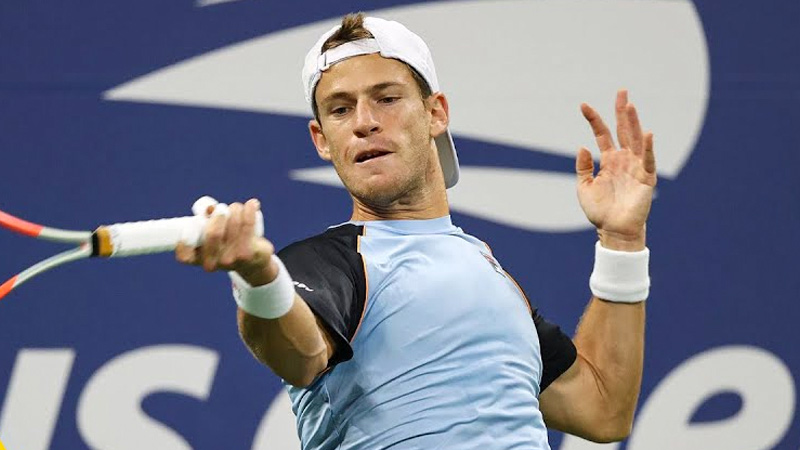
Diego Schwartzman is famous for being the premier “giant-killer” of modern tennis, reaching a career-high World No. 8 despite standing just 5 feet 7 inches tall.
In an era dominated by towering power hitters, the Argentine star, nicknamed “El Peque,” defied physical limitations through elite footwork and a world-class return game.
He is celebrated for legendary victories over icons like Rafael Nadal and reaching the 2020 Roland Garros semifinals.
Beyond his stats, his fame stems from an underdog story involving financial hardship and Jewish heritage, proving that mental toughness can overcome any height disadvantage.
Why is Diego Schwartzman Famous in Modern Tennis?
To understand why this Argentine athlete captured the hearts of fans worldwide, one must look at the sheer physical disparity he overcame to reach the absolute pinnacle of a professional sport.
Defying the Height Disadvantage in a Power Era
Standing at 1.70 meters (5’7”), Diego Schwartzman became a global icon by proving that height is not a limitation in a sport increasingly dominated by “giants”.
Most modern tennis professionals stand well over six feet, utilizing their leverage for massive serves that can exceed 130 mph. Schwartzman, however, achieved elite consistency by neutralizing these advantages with speed and tactical intelligence.
His presence in the later stages of Grand Slams served as a beacon for shorter players everywhere, demonstrating that elite technique could still trump raw physical size.
The Shortest Player to Reach the Top Tier
In October 2020, Schwartzman made history by climbing to a career-high ranking of World No. 8. This achievement was statistically significant, as he became the shortest player to crack the ATP Top 10 since 1981.
His ability to maintain a position among the world’s elite for several years was a testament to his durability and mental fortitude.
By consistently defeating opponents who were often a foot taller than him, he earned his reputation as a “giant-killer” and became a staple of the tour’s championship rounds.
Analyzing the Tactical Mastery of El Peque
Diego Schwartzman’s fame is not just based on his stature but on a highly specialized playing style that made him one of the most difficult opponents to beat on any surface.
The Best Return Game in Tennis History
Because he could not rely on “cheap points” from a booming serve, Schwartzman developed what many consider the best return game of his generation.
He statistically led the ATP Tour in several categories, including the percentage of second-serve return points won and total return games won.
His lightning-fast reflexes allowed him to put immediate pressure on opponents, often breaking serve multiple times per set. This mastery of the return became his signature, turning an opponent’s greatest weapon—their serve—into a liability.
Lightning Footwork and Baseline Aggression
Schwartzman’s success was built on a foundation of exceptional movement. His lateral speed and footwork allowed him to track down balls that would have been winners against almost any other player on tour.
Unlike many defensive specialists, however, he was a baseline aggressor. He used deep, flat groundstrokes to take time away from his larger rivals, forcing them to move and react faster than their frames usually allowed.
This combination of elite defense and proactive ball-striking ensured he was never a passive participant in a match.
Defining Career Victories and Grand Slam Success
The following table highlights the remarkable consistency and peak performances that defined Schwartzman’s fifteen-year journey on the ATP Tour.
| Achievement Category | Details and Key Stats |
|---|---|
| Career-High Ranking | World No. 8 (Reached in October 2020) |
| ATP Singles Titles | 4 (Istanbul, Rio de Janeiro, Los Cabos, Buenos Aires) |
| Grand Slam Peak | Semifinalist at Roland Garros (2020) |
| US Open Performance | Two-time Quarterfinalist (2017, 2019) |
| Career Prize Money | Over $14 million earned through elite play |
| Signature Upset | Straight-sets win over Rafael Nadal (Rome 2020) |
- Victory Over the King of Clay: One of his most famous moments occurred at the 2020 Italian Open in Rome. Schwartzman pulled off a stunning 6-2, 7-5 victory over Rafael Nadal, marking a rare straight-sets defeat for the Spaniard on his preferred clay surface.
- The 2020 Roland Garros Marathon: His run in Paris that same year remains a career highlight. He defeated World No. 3 Dominic Thiem in a grueling, five-hour, five-set quarterfinal match to secure his place in the semifinals and cement his status as a Top 10 player,.
- Laver Cup Regular: His fierce competitive spirit led to multiple selections for Team World in the Laver Cup, where he represented his continent against Europe’s greatest legends.
The Inspiring Personal History of the Argentine Icon
While his on-court achievements are vast, the narrative of his family and his upbringing adds a layer of depth to his fame that resonates with people far beyond the tennis world.
Overcoming Financial Hardship in Argentina
Born during an economic crisis in Argentina, Schwartzman’s rise to the top was anything but guaranteed. His family went from a position of wealth to significant poverty, making the pursuit of a professional tennis career nearly impossible.
To fund his early junior travels, his mother, Silvana, sold rubber wristbands at tournaments. This background of struggle instilled in him a work ethic that defined his professional career; he treated every point as a battle, knowing exactly what it cost his family to get him there.
A Legacy of Resilience and Jewish Heritage
Schwartzman is a proud representative of his Jewish heritage and is recognized as the highest-ranked active Jewish player of his era.
His family history is one of incredible survival; his maternal great-grandfather miraculously escaped a Nazi concentration camp train in Poland and eventually settled in Argentina.
For his contributions to the sport and his community, Schwartzman was inducted into the International Jewish Sports Hall of Fame. This heritage of resilience mirrors his on-court persona—a man who refuses to be counted out regardless of the odds.
Life After Professional Tennis: Management and UTS
As his playing days came to a close, Diego Schwartzman ensured that his influence on the game would continue through new ventures and leadership roles.
A Farewell to the ATP Tour
In February 2025, Schwartzman played his final professional match at the Argentina Open in Buenos Aires.
It was a fitting location for his retirement, allowing his home fans to celebrate a career that included four ATP titles and over 15 years of world-class competition.
He retired not because he could no longer compete, but to transition into a new phase of his life where he could influence the sport from a different perspective.
Leading the Miami Smash
Following his retirement, Schwartzman moved into team tennis management, serving as the Team President of the Miami Smash.
This franchise competes in the UTS (Ultimate Tennis Showdown) league, a modern format designed to bring a faster pace and more entertainment to the sport.
By taking on this leadership role, he continues to advocate for the evolution of tennis, ensuring that the next generation of players has the same opportunities to succeed that he fought so hard to obtain.
Frequently Asked Questions About Diego Schwartzman
How tall is Diego Schwartzman?
He stands at 5 feet 7 inches (1.70 meters), making him one of the shortest elite players in history.
What was his highest ranking?
He reached World No. 8 in the ATP rankings in October 2020.
How many titles did he win?
He captured four ATP singles titles during his career, including a significant win at the 500-level Rio Open.
What is his most famous win?
Most fans cite his 2020 victory over Rafael Nadal in Rome as his most impressive tactical performance.
What is he doing now?
He is currently the Team President of the Miami Smash in the UTS league.
How much money did he win?
Over the course of his career, he earned more than $14 million in prize money.
Conclusion: The Enduring Impact of Diego Schwartzman
Diego Schwartzman remains a beloved figure because he humanized the sport through his sheer determination.
He was not a physical specimen designed in a lab for power; he was a grinder, a fighter, and a master strategist who proved that heart and head could overcome any physical deficit.
His career stands as a permanent blueprint for the underdog, reminding everyone that while you cannot control your height, you can always control your work ethic and your will to win.
This legacy of resilience, from selling wristbands to defeating the world’s best, is what truly defines “El Peque” as one of the most respected players of his generation.