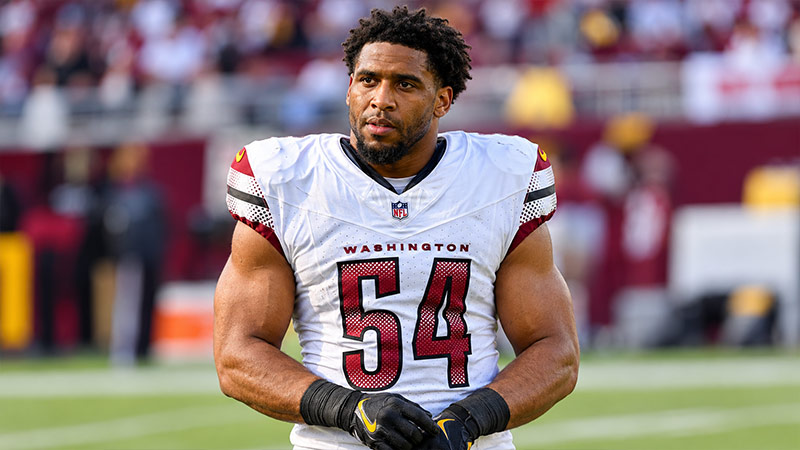
Bobby Wagner stands as one of the most impactful defensive figures in the history of the Seattle Seahawks, having anchored the franchise’s linebacking corps across ten standout seasons.
Despite his deep ties to the city and team, Wagner’s tenure in Seattle was marked not by a single departure, but by two separate exits occurring in March 2022 and March 2024.
Understanding why Wagner left requires examining two distinct chapters in recent franchise history, involving salary cap calculations, organizational communication challenges, roster rebuilds, and coaching transitions.
During his first exit in March 2022, the franchise made a calculated business decision to release Wagner after a disappointing 7–10 season to create over $16 million in salary cap flexibility.
Although he returned for a single-season stint in 2023, Wagner departed once again in March 2024 as a free agent to join the Washington Commanders.
His second departure was guided by strategic alignment, reuniting with familiar coaches such as Dan Quinn and Ken Norton Jr., while Seattle entered a new era under head coach Mike Macdonald.
1. The March 2022 Release: Salary Cap Realities and Roster Rebuilding
The $16.6 Million Cap Savings
Professional football operates under strict financial constraints, where roster management often necessitates difficult choices regarding veteran contracts.
In March 2022, following a 7–10 season, the Seattle front office evaluated its financial landscape and opted to release Bobby Wagner after 10 seasons with the franchise.
The core financial driver behind this release was the need to clear $16.6 million in salary cap space. Releasing Wagner provided the organization with crucial financial flexibility to undertake a broader roster transition following their sub-.500 campaign.
By clearing over $16 million against the salary cap, the team positioned itself to reallocate funds toward rebuilding key areas of the roster.
While Wagner’s individual performance remained strong, his significant salary cap hit during a rebuilding phase made him a primary candidate for financial restructuring.
The decision highlighted the pragmatic nature of modern roster management, where financial efficiency often overrides historical contributions.
Roster Transition Following a 7–10 Season
The timing of Wagner’s March 2022 release was directly tied to the franchise’s broader strategic pivot. Finishing the season with a 7–10 record signaled that the existing roster core was no longer contending at the highest level.
Faced with an imperative to recalibrate, the front office initiated a multi-year transition process aimed at refreshing the talent pool and resetting the payroll structure.
Releasing a franchise cornerstone after 10 seasons served as a clear indicator that Seattle was shifting its focus toward young asset accumulation and financial reset.
In professional sports, holding high-earning veteran contracts during a transitional rebuild can limit a franchise’s ability to restructure effectively.
Consequently, the decision to part ways with Wagner in March 2022 was rooted primarily in long-term cap management and structural realignments.
2. The 2022 Communication Breakdown: Lessons in Organizational Dynamics
Learning of the Release Through Media Reports
Beyond the financial motivations, the March 2022 parting was marked by an unfortunate breakdown in organizational communication.
When the franchise made the official decision to terminate Wagner’s contract after 10 seasons, Wagner initially learned of his release through media reports rather than direct communication from team leadership.
For a player who had served as an iconic leader for a decade, receiving news of his release from external outlets created unexpected friction.
This communication lapse overshadowed what should have been a seamless transition for both parties. In high-profile athletic organizations, direct and timely notification is critical when making roster decisions involving marquee veterans.
The delay in informing Wagner directly created public and private tension, adding an unexpected layer of difficulty to an already emotional departure.
Acknowledgement by Leadership
Recognizing the misstep, general manager John Schneider and head coach Pete Carroll later publicly acknowledged the breakdown in communication.
Both leaders expressed regret over how the release was handled, acknowledging that a tenured veteran who spent 10 seasons with the organization deserved direct notification before public reports surfaced.
The candid acknowledgement by Schneider and Carroll underscored the organizational complexity of managing high-pressure roster decisions during peak transaction periods.
While the admission could not alter how the release unfolded, it demonstrated accountability from leadership and helped clear the air between Wagner and the front office.
This resolution eventually paved the way for Wagner’s return to the team a year later.
3. The 2023 Return and March 2024 Free Agency Exit
The One-Year Homecoming Season
Following his departure in 2022, Wagner spent a season away before orchestrating a reunion with Seattle for the 2023 campaign.
Wagner signed a one-year deal to return to the Pacific Northwest, providing immediate veteran leadership and stability to the defense.
His return demonstrated that despite the communication missteps of March 2022, the mutual respect between Wagner, Pete Carroll, and John Schneider remained intact.
During the 2023 season, Wagner proved his continued capability as a high-level producer on the field. However, because his contract was structured as a single-season agreement, his long-term future with the team remained open-ended heading into the spring of 2024.
Upon completion of the one-year deal, Wagner entered free agency in March 2024 with full autonomy over his next career move.
Entering Free Agency in March 2024
When the free agency window opened in March 2024, Wagner once again found himself at a career crossroads.
Unlike the March 2022 exit—which was a team-initiated release driven by $16.6 million in salary cap savings—the March 2024 exit was a voluntary departure through unrestricted free agency.
With his single-year contract expired, Wagner evaluated options across the league to determine where his skillset and leadership would fit best.
At this stage of his career, Wagner sought an environment that offered familiarity, clear role clarity, and competitive opportunity.
Simultaneously, the Seattle franchise was undergoing its most significant leadership transformation in over a decade, which influenced how both parties approached contract discussions in 2024.
4. Strategic Drivers of the 2024 Move: Coaching Reunions and Scheme Transitions
Reuniting with Dan Quinn and Ken Norton Jr. in Washington
The primary motivation behind Wagner choosing the Washington Commanders in March 2024 was the opportunity to reunite with trusted coaching figures from his past.
Wagner chose to sign with Washington specifically to work alongside new Commanders head coach Dan Quinn and linebackers coach Ken Norton Jr.
Both Quinn and Norton Jr. had worked extensively with Wagner during his initial ten-season tenure in Seattle, building deep professional and personal relationships.
Dan Quinn had previously served as Seattle’s defensive coordinator, while Ken Norton Jr. served as linebackers coach and defensive coordinator during key periods of Wagner’s career.
Joining Washington allowed Wagner to integrate seamlessly into a defensive culture where the expectations, terminology, and leadership style were already familiar.
This established coaching trust played a decisive role in enticing Wagner to choose Washington in free agency.
Scheme Transitions Under Head Coach Mike Macdonald
While coaching familiarity drew Wagner to Washington, major structural changes in Seattle also contributed to his March 2024 departure.
Following the 2023 season, the Seahawks transitioned away from long-time head coach Pete Carroll and hired Mike Macdonald as their new head coach.
Macdonald brought a distinct defensive philosophy and a new scheme to Seattle, marking a complete departure from the system Wagner had executed for over a decade.
As head coach Mike Macdonald began implementing his new defensive system, the team prioritized adapting its roster to align with new tactical demands.
For a veteran linebacker, transitioning to a brand-new scheme under a first-time head coach presented a different dynamic than joining coaches like Dan Quinn and Ken Norton Jr., who ran familiar schemes.
Ultimately, the convergence of Seattle’s defensive overhaul under Macdonald and the enticing coaching reunion in Washington made departing in March 2024 the logical path forward for Wagner.
2022 Release vs. 2024 Free Agency Exit
To clearly understand the distinctions between both departures, it is helpful to analyze the key structural differences between the March 2022 move and the March 2024 transition:
- Mechanism of Departure: The March 2022 departure was a team-initiated release after 10 seasons. The March 2024 departure was a player-chosen exit via unrestricted free agency.
- Primary Financial Factor: The 2022 move was driven by the team’s need to clear $16.6 million in salary cap space during a roster rebuild after a 7–10 season. The 2024 move occurred after the natural expiration of a one-year deal signed for the 2023 season.
- Communication Context: The 2022 release suffered from an initial communication failure, where Wagner found out through media reports before general manager John Schneider and head coach Pete Carroll acknowledged the misstep. The 2024 transition was a transparent free agency decision.
- Destination Alignment: In 2022, Wagner was released into the open market during a roster transition. In March 2024, Wagner chose the Washington Commanders specifically to reunite with head coach Dan Quinn and linebackers coach Ken Norton Jr..
- Systemic Environment in Seattle: In 2022, Seattle was resetting its core following a 7–10 record under Pete Carroll. In 2024, Seattle was embarking on a comprehensive defensive overhaul under new head coach Mike Macdonald.
Summary
Bobby Wagner’s departures from Seattle reflect the complex intersection of business, leadership, and strategy in professional football.
His March 2022 release was a calculated financial maneuver that saved $16.6 million in salary cap space following a 7–10 season, though it highlighted organizational communication challenges that leadership later acknowledged.
His March 2024 departure represented a natural strategic progression. After completing a successful one-year return in 2023, Wagner chose to sign with the Washington Commanders to reunite with trusted leaders Dan Quinn and Ken Norton Jr., while Seattle embarked on a new defensive era under head coach Mike Macdonald.
Together, these two exits demonstrate how financial realities and coaching relationships dictate modern athlete mobility.