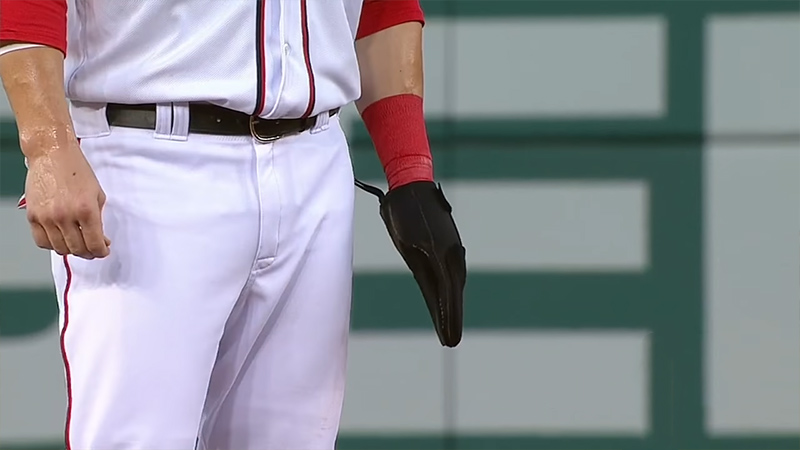
If you have watched a baseball game recently, you have probably noticed something odd. A runner reaches first base, then pulls a big, padded glove out of his back pocket and slips it over one hand.
It looks like an oven mitt or a winter mitten, and it seems strangely out of place on a summer ballfield.
So why do baseball players wear mittens? The short answer is protection. That mitten is called a sliding mitt, and it guards a runner’s hand and fingers during headfirst slides. But it is not the only “mitten” in the sport.
Catchers and first basemen wear mitts instead of fingered gloves, and players on cold nights reach for hand warmers to keep their grip.
In this guide, we break down every reason baseball players wear mittens, how the gear works, and why it has become a standard part of the modern game.
What Is the “Mitten” Baseball Players Wear on the Bases?
The mitten you see on baserunners is a sliding mitt. It is a padded, fingerless covering that slips over the hand and wrist. Instead of separate slots for each finger, the fingers sit together inside one closed pocket, just like a winter mitten.
Runners usually wear it on just one hand, the hand that leads into the base on a slide. When they are not on base, many players tuck the mitt into a back pocket. As soon as they reach first, they put it on and are ready to run.
Sliding mitts began showing up in professional baseball during the 2010s. Within a few years, they spread from a handful of speedy base stealers to nearly every major league clubhouse. Today, you will see them at every level of the game, from Little League to the World Series.
The Main Reason: Protecting Hands on Headfirst Slides
The biggest reason baseball players wear mittens is to prevent hand and finger injuries. A headfirst slide puts the hands in the most dangerous spot on the field.
They hit the ground first, at full speed, and then slam into a base that is anchored firmly in the dirt.
Here is what can go wrong when a runner slides with a bare or lightly gloved hand:
- Jammed or broken fingers when an open hand hits the edge of the base
- Torn thumb ligaments when the thumb catches on the bag and bends backward
- Cleat injuries when a fielder’s spikes come down on an outstretched hand
- Wrist sprains from awkward landings or collisions during a tag
These injuries are not minor. A torn thumb ligament or broken finger can keep a player out for weeks or even require surgery.
For a team, losing a key player because of one aggressive slide is a costly mistake. The sliding mitt was designed to make that outcome far less likely.
How a Sliding Mitt Works
A sliding mitt protects the hand through smart design rather than bulk alone. Most models share a few key features:
- A closed, fingerless shape. Because the fingers are held together, they cannot splay out and catch on the base. The hand stays compact, which spreads the force of impact across a wider area.
- Padding on the back and palm. Foam or layered padding absorbs the shock of hitting the dirt and the bag.
- A rigid insert. Many mitts include a firm plate or splint along the back of the hand. It keeps the wrist and fingers from bending too far in the wrong direction.
- A secure wrist strap. A hook-and-loop strap keeps the mitt snug so it does not slip off mid-slide.
The result is a slide that feels safer and more controlled. Runners can reach for the base with confidence, knowing their fingers are tucked away from the worst kinds of contact. Some players even say the mitt helps them keep their hand flat and steady as they touch the bag.
Why Do Players Slide Headfirst at All?
If headfirst slides are so risky, why not just slide feet first every time? The answer comes down to speed and reach.
Many players believe a headfirst slide gets them to the base a fraction of a second faster. Their momentum carries forward naturally, and they do not have to drop their body backward the way a feetfirst slide requires.
In a sport where stolen bases and close plays at first are decided by inches, that small edge matters.
A headfirst slide also gives runners more control. With their hands leading, they can reach around a tag, grab the corner of the base, or adjust at the last moment to avoid a fielder. That flexibility is a big reason base stealers love it.
Modern rule changes have also put more focus on the running game. With bigger bases and limits on pickoff attempts, stealing has become more common again. More stolen base attempts mean more headfirst slides, and more headfirst slides mean more players reaching for a sliding mitt.
Mitts vs. Gloves: Why Catchers and First Basemen Wear Mittens Too
Sliding mitts are not the only mittens in baseball. Look closely at the catcher and the first baseman, and you will notice their gear looks different from everyone else’s. That is because they wear mitts, not gloves.
A standard fielding glove has individual finger slots. A mitt, like a mitten, has no separate fingers. It is a large, rounded pocket with heavy padding, and the rules of baseball allow only the catcher and the first baseman to use one.
Why Catchers Wear Mitts
The catcher receives more throws than any other player, often well over 100 pitches a game, many at very high speeds.
A catcher’s mitt is thickly padded to absorb that repeated impact. Its deep, round pocket also gives the catcher a bigger target and a better chance of securing pitches that move or dip late.
Why First Basemen Wear Mitts
First basemen catch throws from all over the infield, and many of those throws are low, wide, or in the dirt.
A first baseman’s mitt is longer than a regular glove, with a wide, scoop-shaped pocket. That shape helps them scoop short hops and stretch farther to complete the out.
Cold-Weather Mittens and Hand Warmers
Sometimes a mitten in baseball is exactly what it looks like: a way to stay warm. The baseball season stretches from early spring into late fall, and games in northern cities can be played in near-freezing temperatures.
Cold hands are a real problem for ballplayers. When fingers go numb, it is harder to grip the bat, feel the seams on a throw, or squeeze a ball in the glove. Cold also makes contact more painful, especially the sting of a bat hitting a pitch off the handle.
To fight back, players use a few tricks:
- Hand warmers tucked into back pockets, jackets, or glove pockets between plays
- Thermal mittens or heated pouches worn in the dugout while waiting to bat
- Batting gloves kept on while running the bases, sometimes under a sliding mitt for extra warmth
- Heavy jackets worn on the bench, and by pitchers who reach base, to keep arms warm
Pitchers face stricter limits on what they can wear on their throwing hand, so they rely on hand warmers and jackets between innings to stay loose. In April and October, it is common to see the whole dugout bundled up like a winter crowd.
Style, Swagger, and Personal Expression
Protection is the main purpose of a sliding mitt, but style has played a big part in its popularity. Baseball players have always used their gear to show personality, and the sliding mitt has become one of the most eye-catching canvases on the field.
Today’s mitts come in bold colors, team logos, custom patterns, and even playful designs that nod to a player’s hometown, family, or favorite things. Some players match their mitt to their cleats and batting gloves. Others pick something loud enough to stand out on a highlight reel.
This trend has helped push the sliding mitt into the mainstream. When young fans see their favorite players flash a custom mitt after a stolen base, they want one too. That visibility has made the sliding mitt a must-have item in youth baseball and softball, not just a piece of safety equipment for the pros.
Are Sliding Mitts Legal, and Should Young Players Wear Them?
Sliding mitts are legal in professional baseball and in most amateur leagues. Because runners wear them only on the bases and never while fielding, they do not give anyone an unfair advantage with the ball.
For young players, a sliding mitt can be a smart investment. Kids are still learning proper sliding technique, which means their hands are often in the wrong place at the wrong time. A mitt adds a layer of protection while they build good habits.
Keep in mind that many youth leagues restrict or ban headfirst slides for younger age groups, so check your league’s rules first.
If you are shopping for a sliding mitt, look for:
- The right size, snug enough to stay on but loose enough to slip on quickly
- Solid padding across the back of the hand and fingers
- A rigid insert for extra wrist and finger support
- A sturdy wrist strap that will not loosen during a slide
- The correct hand, usually the one you naturally lead with when you slide
Final Thoughts
So, why do baseball players wear mittens? Most of the time, the answer is the sliding mitt, a simple piece of gear that protects runners’ hands and fingers on headfirst slides.
Catchers and first basemen wear mitts for a different reason: to handle hard, frequent, and tricky throws. And on cold nights, a warm mitten or hand warmer keeps players’ grip ready for action.
The next time you see a runner slip on that oversized mitten at first base, you will know it is not a fashion accident. It is smart, modern baseball.