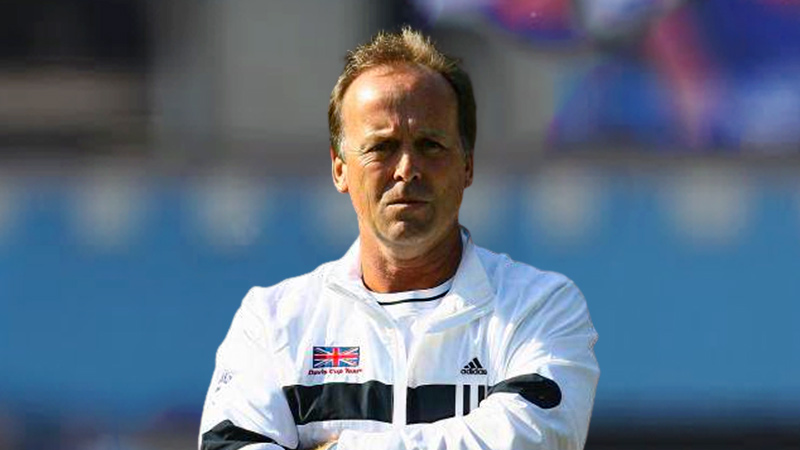
John Lloyd was a very good professional tennis player who achieved significant success at the highest level during the 1970s and 1980s.
While he may have fallen just short of individual greatness by elite Grand Slam singles standards, his career milestones confirm his status as an excellent athlete.
He became the first British man in the Open Era to reach a Grand Slam singles final and secured three Grand Slam mixed doubles titles.
Ranking as the UK’s Number 1 male player multiple times, Lloyd’s longevity and tactical intelligence redefined British tennis expectations for an entire generation.
Analyzing John Lloyd’s Professional Statistical Profile
To evaluate the quality of a player from this era, one must look closely at their performance data across multiple disciplines, including singles and doubles.
Lloyd was a versatile competitor who maintained a high level of play for over a decade, accumulating significant match wins and professional titles.
| Statistic Category | Singles Performance Data | Doubles & Mixed Performance Data |
|---|---|---|
| Career Record | 210 Wins – 259 Losses | 206 Wins – 239 Losses |
| Career Titles | 1 (1974 Merion Open) | 2 ATP Doubles Titles |
| Grand Slam Titles | 0 Singles Titles | 3 Mixed Doubles Titles |
| Grand Slam Finals | 1 (1977 Australian Open) | 5 (Including 1 Runner-up) |
| Highest Ranking | World No. 21 (July 1978) | World No. 34 (September 1986) |
| National Status | UK Number 1 (1984, 1985) | British Tennis Icon |
| Prize Money | $598,092 Total | Included in total earnings |
The 1977 Breakthrough: A Turning Point for British Tennis
John Lloyd is often remembered as an Open Era trendsetter because he achieved what no other British man had since the start of the professional era. His run at the end of the 1970s proved that British players could still compete for the most prestigious trophies in the world.
Breaking the National Grand Slam Final Drought
For decades, British tennis fans waited for a male player to reach the final stage of a major tournament. In 1977, Lloyd finally broke that cycle at the Australian Open.
By reaching the singles final, he carved his name into the history books as the first British man to do so in the Open Era.
This achievement was so rare and difficult to replicate that no other British man would reach a Grand Slam singles final for another twenty years, until Greg Rusedski in 1997.
Defeating Legends on the Path to the Final
Lloyd’s run in 1977 was not the result of a lucky draw; it was earned through high-level play against established champions. On his way to the final, he defeated major figures such as the Australian icon John Newcombe.
This victory over a world-class player on their home soil demonstrated that Lloyd possessed the mental and physical tools to compete with the very best in the sport.
The Epic Battle Against Vitas Gerulaitis
The final itself remains one of the most iconic matches in Australian Open history. Lloyd pushed American star Vitas Gerulaitis to the absolute limit in a grueling five-set match.
Despite falling just short with a score of 6–3, 7–6, 5–7, 3–6, 6–2, the quality of tennis produced by Lloyd cemented his reputation as a formidable opponent.
His ability to fight back from two sets down to force a fifth set showed the tenacity that would define his later career resurgence.
Mixed Doubles Mastery: Three Grand Slam Victories
While singles success brought him fame, his performance in mixed doubles established him as a champion of the highest order. Partnering with Australian legend Wendy Turnbull, Lloyd formed what became one of the most feared mixed-doubles pairings of the 1980s.
The Legendary Partnership with Wendy Turnbull
The chemistry between Lloyd and Turnbull was immediate and tactically superior to most of their rivals. Together, they navigated the complexities of doubles play to win three Grand Slam titles.
Their first major victory came at the 1982 French Open, proving that Lloyd’s classic style could be effective even on the challenging red clay of Roland Garros.
Reclaiming Glory on the Grass of Wimbledon
Perhaps the greatest highlight of Lloyd’s career was his dominance on the grass courts of Wimbledon. Alongside Turnbull, he secured back-to-back Wimbledon mixed doubles titles in 1983 and 1984.
Winning at the All England Club is the pinnacle for any British player, and Lloyd’s ability to defend his title successfully speaks to his consistency and tactical evolution.
They also finished as runners-up at Wimbledon in 1982, marking a three-year period where they were nearly unbeatable on grass.
Legacy in Team Tennis: The Davis Cup Years
John Lloyd’s value as a player was never more evident than when he was wearing national colors. He was a cornerstone of the British Davis Cup team for over a decade, representing his country with a level of dedication that inspired future generations of players.
The 1978 Historic Final Run
In 1978, Lloyd was part of a historic “brother act” alongside his older brother, David Lloyd. Together, they propelled Great Britain to the Davis Cup Final for the first time since 1937.
This was a massive achievement for British tennis, as they had to overcome several powerhouse nations to reach the final stage.
Although they eventually finished as runners-up to a dominant United States team, the run remains a highlight of 20th-century British sport.
A Record of Consistency and Leadership
Over an 11-year span between 1974 and 1986, Lloyd made 23 separate appearance ties for Great Britain. He finished his international career with an impressive combined win-loss record of 27–24.
His commitment to the team did not end with his retirement; he later transitioned his tactical knowledge into leadership by serving as the British Davis Cup Team Captain from 2006 to 2010.
How Competitive Was John Lloyd Against Top-Tier Legends?
When evaluating if a player was “good,” one must consider the quality of the opposition they faced. Lloyd spent his career competing in one of the most talented eras in tennis history, often going toe-to-toe with the all-time greats of the game.
Challenges Against Borg and Connors
Lloyd frequently reached the deep stages of prestigious tournaments only to find legendary figures blocking his path. In 1977, he reached the finals in both Basel and Wembley, losing both matches to the incomparable Björn Borg.
At the 1984 US Open, Lloyd put on a stellar performance to reach the quarterfinals, where he was eventually knocked out by world great Jimmy Connors. Competing at this level against such icons proves that Lloyd was a elite professional capable of top-tier play.
The 1985 Resurgence and National Rankings
One of the most impressive aspects of Lloyd’s career was his longevity and ability to reinvent himself. In 1984 and 1985, late in his career, he reclaimed the UK Number 1 spot.
His resurgence was so significant that he won the “Comeback Player of the Year” award from Tennis Magazine in 1985.
During this period, he reached the quarterfinals of the Australian Open and the third round of Wimbledon, proving he was still a threat on the global stage well into his thirties.
Transitioning to Leadership and Global Broadcasting
The measure of a tennis figure often extends beyond their match record. Lloyd’s transition into coaching and media solidified his status as a respected authority within the tennis ecosystem.
Coaching the Greats of the Game
After retiring from professional play at Wimbledon in 1986, Lloyd’s tactical mind remained in high demand. He briefly served as a coach for legends like Tracy Austin and Björn Borg during their respective comeback attempts in the 1990s.
His ability to guide former world number ones highlights the deep technical understanding he possessed.
A Legendary Career in the Commentary Box
Lloyd spent over 30 years as a premier analyst and lead studio commentator for the BBC at Wimbledon. He became a beloved figure for his insightful analysis and his famous use of food metaphors to describe the action on the court.
His retirement from the microphone recently marked the end of a multi-decade career where he served as the voice of British tennis for millions of viewers.
Frequently Asked Questions About John Lloyd
Was John Lloyd ever ranked number one in the world?
No, his highest world singles ranking was No. 21, which he achieved in July 1978. However, he was the UK’s Number 1 male player in 1984 and 1985.
How many Grand Slam titles did John Lloyd win?
He won a total of three Grand Slam titles, all in mixed doubles alongside Wendy Turnbull (1982 French Open, 1983 Wimbledon, and 1984 Wimbledon).
Who did John Lloyd lose to in his Grand Slam singles final?
He lost an epic five-set match to American Vitas Gerulaitis at the 1977 Australian Open.
Did John Lloyd have a successful Davis Cup career?
Yes, he played for 11 years, helped Britain reach the 1978 final, and later served as the team captain.
What is John Lloyd’s most famous non-tennis association?
He was famously married to 18-time Grand Slam champion Chris Evert from 1979 to 1987.
Conclusion
John Lloyd was far more than just a “good” player; he was a pioneer for British tennis in the Open Era. His historic breakthrough as the first British man to reach a Grand Slam singles final in the professional era ended a decades-long national drought.
This achievement, combined with his dominance in mixed doubles—where he secured three Grand Slam titles—and his long-term national service in the Davis Cup, created a legacy that remains highly respected in the sport today.
For any tennis enthusiast or professional analyst, Lloyd represents the quintessential “excellent professional”.
He was a player who maximized his talent, held the UK Number 1 ranking, competed against the greatest of all time like Björn Borg and Jimmy Connors, and continued to contribute to tennis for decades as a coach, captain, and legendary broadcaster.