In the world of high-performance athletics, equipment integrity is not merely a matter of aesthetics; it is a critical variable in the equation of success.
A dented golf driver can be more disruptive to your performance than an unexpected weather shift during a high-stakes tournament.
For the dedicated golfer, the driver is the most significant investment in the bag, engineered with aerospace-grade precision to deliver maximum velocity and forgiveness.
When that precision is compromised by a structural indentation, the psychological and physical impact on your game can be profound.
We will move from the foundational physics of club construction to advanced DIY recovery techniques and professional intervention strategies, ensuring your equipment—and your confidence—is restored to its former glory.
The Anatomy of Modern Driver Engineering
To effectively repair a club, one must first understand the sophisticated materials used in its construction. Modern drivers are marvels of material science, typically utilizing titanium, carbon fiber, or high-tech composite materials.
The Paradox of Strength and Weight
Manufacturers select these materials for their exceptional strength-to-weight ratios. Titanium, for instance, allows for a thin, flexible face that produces the “trampoline effect” necessary for long drives. However, this focus on lightweight performance has a trade-off: the club head is essentially a hollow shell.
This hollow architecture is what makes the driver vulnerable. A momentary lapse in judgment—such as a collision with a rock during a swing or a bump in a moving golf cart—can result in a noticeable indentation that disrupts the aerodynamic and structural balance of the head.
Performance vs. Aesthetics
It is vital to distinguish between a “battle scar” (a superficial scratch) and a structural dent. Because the head is hollow, any impact that causes a concave deformation changes the way the metal vibrates and flexes upon impact with the ball.
While some dents are purely aesthetic, others can fundamentally alter the club’s “sweet spot” and MOI (Moment of Inertia).
Strategic Damage Assessment: The Three-Point Inspection
Before attempting any restoration, a rigorous assessment protocol is required to determine the viability of a repair.
1. Dimensional Analysis
Use a precision measuring tool, such as a ruler or small measuring tape, to quantify the damage.
- Minor/Shallow Dents: These are typically under an inch in diameter and do not show signs of metal fatigue. These are the primary candidates for DIY restoration.
- Major “Meteor” Impacts: Large, deep indentations often indicate that the internal structure has been compromised. In these cases, performance will likely be affected, and professional consultation is mandatory.
2. Structural Integrity Audit
The most critical part of your inspection is checking for cracks or splits within or around the dented area.
Warning: If a dent has caused the material to crack, the structural integrity of the club is lost. A cracked driver head is a safety hazard; the immense forces generated during a 100+ mph swing could cause the head to shatter. In this scenario, the driver head must be replaced entirely.
3. Localization
Where is the dent located? A dent on the crown (the top) may be purely visual, whereas a dent on the sole (the bottom) or near the face-to-body weld can significantly impact how the club sits at address and how it interacts with the turf.
Advanced DIY Restoration Protocols
For those who prefer a hands-on approach to equipment management, several “home-remedy” techniques can be surprisingly effective for minor surface indentations. These methods leverage the thermal properties of the driver’s metallic components.
1. The Thermal Expansion Method (Hot and Cold)
This technique utilizes the physical principle that metal expands when heated and contracts rapidly when cooled, often “popping” back into its original molded shape.
- Step A: Direct a high-heat hairdryer at the dent for approximately sixty seconds. The goal is to make the metal warm to the touch, facilitating expansion.
- Step B: Immediately follow the heat application with a blast of compressed air (typically from a canister used for cleaning electronics). Hold the canister upside down to release the freezing liquid propellant. The sudden thermal shock can trigger the metal to snap back to its factory equilibrium.
2. The Hydro-Thermal Technique
Similar to the thermal expansion method, this uses boiling water to achieve a more uniform heat distribution.
- Procedure: Carefully pour boiling water over the dented area. While the metal is in its expanded state, use a rubber mallet or the handle of a screwdriver (wrapped in a soft microfiber cloth) to gently tap the perimeter of the dent. This vibration, combined with the heat, encourages the metal to “memory-pop” back outward.
3. The Suction Extraction Method
For very shallow dents on flat areas of the club, a small sink plunger can be utilized.
- Execution: Ensure the club surface is pristine. Apply a small amount of moisture to the rim of a small plunger to create an airtight seal. Apply firm pressure and pull straight back. This vacuum force can often lift minor indentations without the need for heat.
Professional Intervention: When to Outsource
In the corporate world, we recognize when a task requires a specialist. Golf equipment is no different. If DIY methods fail or if the damage is “severe,” seeking professional help is the most cost-effective long-term strategy.
The Benefits of Professional Repair:
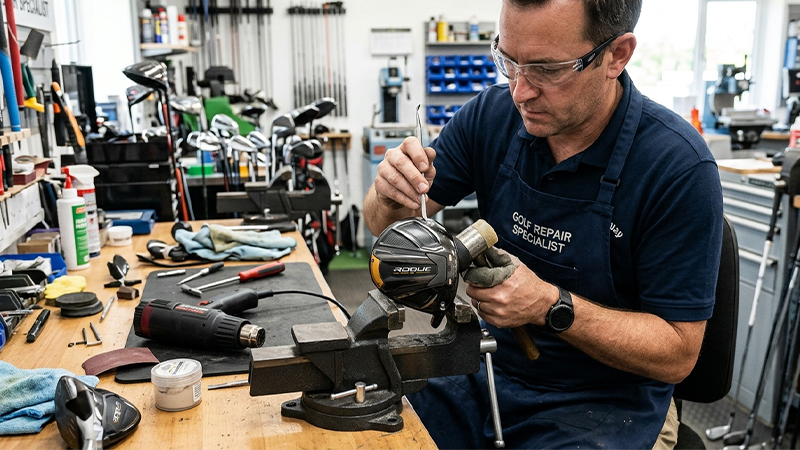
- Specialized Tooling: Professional golf shops have access to hydraulic and thermal tools specifically designed for thin-walled titanium.
- Comprehensive Diagnostics: A specialist can detect micro-fractures that are invisible to the naked eye but could lead to catastrophic failure during a round.
- Peace of Mind: For a marginal cost compared to a new $600 driver, professional repair ensures the club performs to its original specifications.
Aesthetic Refinement and Surface Restoration
Once the structural dent has been addressed, the focus shifts to cosmetic restoration. A driver that looks new inspires the confidence necessary for an aggressive swing.
1. Preparation and Cleaning
Paint will not adhere to dirt, oils, or grass stains. Before any touch-up work, the club must be thoroughly cleaned.
- The Club Washer Advantage: Using a dedicated tool like The Club Washer ensures that the surface is stripped of debris without using abrasive chemicals that could further damage the finish. Its gentle cleaning solution is specifically formulated for high-end club materials.
2. The Precision Paint Protocol
To fix scratches or paint chips resulting from a dent:
- Match the Color: Use touch-up paints specifically formulated for golf clubs to ensure a seamless match with the original factory finish.
- Layering: Use a toothpick or a micro-brush to apply the paint in thin layers rather than one thick glob.
- Curing: Allow the paint to dry for at least several hours (ideally 24 hours) before handling or putting the club back in the bag.
Preventative Engineering: Protecting Your Assets
In any high-performance environment, prevention is superior to repair. Protecting your driver from future damage is essential for maintaining its resale value and on-course reliability.
- The Headcover Mandate: Your headcover is not an accessory; it is a piece of protective armor. Always replace the headcover immediately after a shot to cushion the head against other clubs and external impacts.
- Strategic Storage: When in a golf cart or vehicle, ensure your bag is secured. Most dents occur when clubs bounce against each other during transport.
- Environmental Awareness: Be mindful of where you place your club between shots. Avoid leaning your driver against rocks, gravel, or hard cart paths.
- Routine Maintenance: Integrate cleaning into your post-round routine. Using The Club Washer keeps the grooves clean and allows you to inspect the club head regularly for early signs of wear or minor nicks before they become major problems.
Enhanced FAQ: Expert Insights for the Modern Golfer
Q: Will a small dent actually affect my ball flight?
A: It depends on the location. A dent on the crown is mostly cosmetic, but a dent on the face or sole can change the center of gravity and the aerodynamic profile of the head, potentially leading to a loss of distance or increased side-spin.
Q: Can I use an automotive dent puller on my driver?
A: It is not recommended. Automotive tools are designed for thicker steel panels. The ultra-thin titanium of a driver head can easily be torn or further deformed by high-pressure automotive pullers. Stick to the “Hot and Cold” or “Boiling Water” methods for DIY attempts.
Q: Is it ever better to just buy a new driver?
A: If there are any visible cracks or if the dent is in the “hitting zone” (the face), the structural integrity is compromised. In these cases, replacement is the safest and most performance-oriented choice.
Q: How often should I clean my driver?
A: Ideally, after every round. Dirt and sand can act as abrasives. Using a tool like The Club Washer ensures that your “big stick” remains in peak condition and ready for action.
Final Thoughts: The Pursuit of Excellence
In golf, as in business, the details matter. Maintaining your equipment is an extension of your commitment to the game.
Whether you choose to utilize DIY thermal techniques or entrust your driver to a certified professional, the goal remains the same: uncompromising performance.
By following these restoration and prevention protocols, you ensure that your driver remains a reliable tool for dominating the fairways.
Remember, a clean, dent-free club isn’t just about vanity—it’s about the confidence to swing freely and hit those long drives with absolute precision.
Ready to elevate your equipment maintenance? Invest in your game by keeping your tools pristine. Explore the professional cleaning power of The Club Washer and ensure your driver is always tournament-ready.