In the elite world of baseball, where milliseconds determine the outcome of a game, a catcher’s most vital asset isn’t just their arm—it is their mitt.
A catcher’s mitt is far more than a simple piece of equipment; it is a highly specialized, technical tool that serves as an extension of the athlete’s hand.
For the professional or the aspiring collegiate player, the “break-in” period of a new mitt is a critical phase that dictates the longevity, shape, and performance of the leather for years to come.
Despite the importance of this process, the internet is saturated with “quick-fix” myths—ranging from microwaving leather to running it over with a truck—that can permanently compromise the integrity of high-end equipment.
This guide, backed by decades of professional catching and coaching expertise, provides a masterclass in the correct, data-supported methods for breaking in your mitt, preserving its pocket, and ensuring it meets the rigorous standards of competitive play.
The Philosophy of the Tool: Why Maintenance Matters
Before a single ball is caught, a catcher must adopt the mindset of a professional. The relationship between a catcher and their mitt is one of mutual respect.
Xan Barksdale, a renowned catching expert, emphasizes that a mitt must be treated as a catcher’s most important tool.
The Professional Standard of Care:
- Protection: Your mitt should never be tossed carelessly into a gear bag where it can be smashed, mangled, or mis-formed by heavy leg guards or chest protectors.
- Respect the Leather: Between innings, the mitt should never be thrown on the dirt. It should be set down gently in a secure location where it will not be stepped on or lost.
- Initial Investment: The care of your mitt begins the moment you remove it from the box or purchase it from a sporting goods store.
The goal of a proper break-in is not just to make the leather soft; it is to create a customized pocket that is perfectly calibrated to your specific hand shape and receiving style.
The Gold Standard: The “Natural Usage” Method
The most effective way to break in a catcher’s mitt is not found in a kitchen or a garage—it is found on the field. While shortcuts are tempting, the #1 tip for a perfect break-in is simple, consistent usage.
1. The “Flip-Flop” Analogy
Think of a premium catcher’s mitt like a high-quality pair of flip-flops. When first purchased, they are often stiff, uncomfortable, and rigid—feeling “about as comfortable as wearing the box they came in”.
However, over time, the material molds specifically to the contours of your feet. A catcher’s mitt functions identically; the more you use it, the more it shapes itself to the unique geometry of your hand.
2. High-Frequency Catching
The most direct path to a game-ready mitt is playing catch—frequently.
- Bullpen Sessions: Using a new mitt during bullpens is one of the fastest ways to break it in. The repeated impact of high-velocity pitches helps soften the leather while reinforcing the pocket’s depth.
- Pitching Machines: For an accelerated process, utilize a pitching machine. Set the machine to a high velocity and receive hundreds of repetitions. This provides the consistent, forceful impact needed to break down the stiffest “ball-repellent” leather found in pro-level mitts.
3. Using Weighted Balls
For ultra-stiff, high-end leather, some experts suggest playing catch with a heavy ball (weighted ball). The increased mass of the ball forces the leather to give more rapidly than a standard baseball, helping the pocket form more naturally.
However, this must be done with caution; once the mitt is broken in, you should cease using heavy balls to avoid over-stretching the leather or snapping the laces.
The Maintenance Blueprint: Preserving the Perfect Pocket
Breaking in the mitt is only half the journey. Maintaining that shape over a 162-game season—or a grueling summer circuit—requires daily discipline.
If a mitt is not stored correctly, the hard work of breaking it in can be undone in a single night in a cramped equipment bag.
The “Ball in the Pocket” Rule
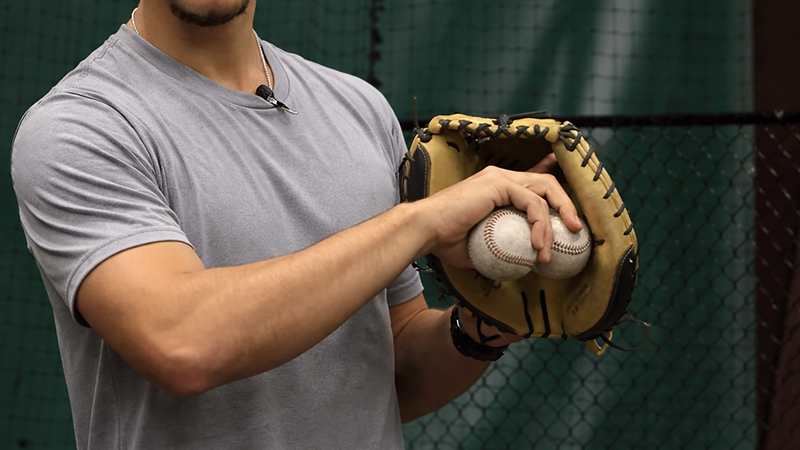
The most critical habit a catcher can develop is storing the mitt with a ball (or two) in the pocket every time it is not in use. This acts as a “form” for the leather, ensuring that as the mitt dries or sits, it maintains a deep, rounded pocket rather than flattening out.
Advanced Storage Techniques:
- The Belt Method: After placing a ball in the pocket, wrap a belt or a specialized glove wrap around the mitt to secure the ball in place. This prevents the ball from falling out and ensures the mitt remains under consistent, gentle tension.
- The TANK Case: For those looking for of equipment protection, professional-grade protective cases like “The TANK” are designed specifically to prevent mitts from being crushed and to extend the life of the leather.
- Glove Lockers: Specialized storage systems, such as the Markwartz Glove Locker, provide a dedicated pocket for a ball and a structured wrap to maintain the “perfect” form throughout the off-season.
The “Blacklist”: Methods That Destroy Your Investment
In the pursuit of a “quick fix,” many players inadvertently ruin expensive leather. High-end mitts, such as the Rawlings Heart of the Hide or Wilson A2K, are significant investments that can last for years if cared for properly—but they can be destroyed in minutes by improper heat or chemicals.
1. The Kitchen Myths: Ovens and Microwaves
Never “cook” your mitt. While putting a mitt in the oven or microwave might make it feel temporarily pliable, it is devastating to the leather’s structural integrity.
High heat draws out the natural moisture of the hide, making it brittle, prone to ripping, and significantly shorter-lived. As the experts say: “Keep your mitt out of the kitchen”.
2. Foreign Substances: Shaving Cream, Vaseline, and Oils
There is a common misconception that drenching a mitt in shaving cream, Vaseline, or various oils will accelerate the break-in process. In reality, these substances often do more harm than good.
- Leather Decay: Foreign substances can cause the leather to break down and rot prematurely. This leads to laces snapping and the leather losing its “pop,” necessitating a costly replacement much sooner than expected.
- Weight Issues: Excessive oiling makes the mitt significantly heavier, which can slow down a catcher’s transfer time and lead to “heavy hands” behind the plate.
- The Professional Secret: Many professional mitts remain in game-ready shape for years simply because they were never treated with foreign substances, preserving the original quality of the premium leather.
3. The Steaming Controversy
Many sporting goods stores offer “glove steaming” as a value-added service. However, many catching experts remain skeptical. Steaming uses high-temperature moisture to soften the fibers, which can potentially degrade the quality of the leather and shorten the lifespan of the mitt.
For a high-end mitt intended to last several seasons, the “slow and steady” natural method is always preferred.
Navigating High-End Leather and the Used Market
One of the most common “pain points” for catchers and parents is the sheer stiffness of premium leather. A $400 mitt can often feel like a “ball repellent” for the first several weeks, where the ball literally springs out of the pocket upon impact.
Strategy for Youth Athletes
Younger players (13U and below) often lack the hand strength to properly squeeze a stiff, professional-grade All-Star or Rawlings Pro Preferred mitt.
When a player cannot close the mitt correctly, they often develop a “fold-over pocket,” which renders a high-end tool nearly useless.
The “Used Market” Solution: Instead of buying a brand-new, rock-stiff mitt for a young player, consider the used market. Finding a high-end mitt that was broken in correctly by a previous owner allows a younger player to benefit from premium leather without the struggle of the initial break-in period. If the laces are worn, they can be easily replaced, giving the mitt a second life.
Enhanced FAQ: Expert Insights for Common Dilemmas
Q: Can I use hot water to soften the leather?
A: While some suggest it, it is generally not recommended. Like the oven method, extreme temperatures can damage the natural fibers of the hide.
Q: My mitt is broken in, but the pocket still feels small. What can I do?
A: Beyond storing it with two balls, the best solution is increased volume from a pitching machine. The high-velocity impact is the only way to physically expand the “pocket” area of the leather.
Q: Is it okay to use my son’s mitt to help him warm up?
A: Be cautious. If an adult with a much larger hand uses a youth mitt, it can over-stretch the finger stalls and the palm, causing the ball to “pop out” more frequently when the child uses it.
Q: What should I do during the off-season to protect the mitt?
A: Clean it with a damp cloth and a very small amount of mild soap to remove dirt and salt from sweat. Once dry, apply a minimal amount of a high-quality leather conditioner (like Pecards or Lexol) to seal and moisturize the leather—but do not over-saturate it.
Conclusion: The Reward of Patience
In an era of instant gratification, the proper break-in of a catcher’s mitt stands as a testament to the value of patience and discipline. There are no shortcuts to excellence.
While you can “drown your mitt in oils” or “cook it like a lasagna,” these methods ultimately sacrifice the long-term health of your equipment for a fleeting gain.
The most respected catchers in the game know that a mitt is earned through thousands of repetitions in the bullpen and on the practice field.
By following the natural usage method, storing your mitt with a ball in the pocket, and avoiding destructive “hacks,” you ensure that your most important tool will be ready to perform when the game is on the line.