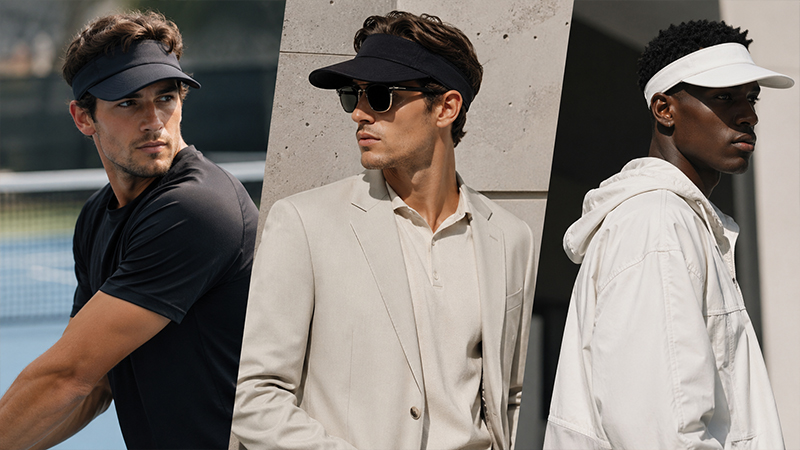
The athletic visor has long been a staple of the sporting world, particularly on golf courses and tennis courts. However, for many years, it was unfairly relegated to the category of “dad fashion.”
In recent years, that perception has shifted dramatically. Today, the visor has regained popularity as a fashionable choice for men, carving out a niche in both casual and high-energy sporty contexts.
Whether you are looking for a practical solution for sun protection or a way to elevate your street style, understanding how to wear a visor correctly is essential.
This guide will walk you through the technicalities of the fit, the nuances of styling, and how to integrate this versatile accessory into your modern wardrobe.
Mastering the Fundamentals: How a Visor Should Sit
Before you can worry about the “vibe” of your outfit, you must ensure the visor is physically positioned correctly. Unlike a traditional baseball cap, which has a full crown to stabilize its position, a visor relies entirely on the band.
The One-Inch Rule
For the most stylish and effective look, position the visor approximately one inch above your eyebrows. This placement offers optimal sun protection for your eyes and face while ensuring the accessory looks intentional rather than accidental.
If the visor sits too high, it looks awkward and provides no shade; if it sits too low, it can interfere with your field of vision and look sloppy.
Finding the Perfect Tension
Comfort is paramount, especially if you plan to wear the visor for an entire round of golf or a day at the beach. Most modern visors feature a Velcro or hook-and-loop closure.
- Avoid the “Forehead Mark”: A common mistake is tightening the band too much to ensure it stays on. This can lead to discomfort and leave an unsightly red mark on your forehead when you eventually take it off.
- The Snug Fit: You want the fit to be snug enough to avoid it falling off during movement, but loose enough that you barely feel the pressure.
Choosing Your Style: Forward, Backward, or Tilted
How you orient your visor sends a specific message about your style and the activity you are performing.
The Classic Forward Look: Maximum Functionality
Wearing the visor forward is the traditional method, favored for its functional benefits. This is the ideal orientation for sports like golf or tennis, where keeping the sun out of your eyes is critical for performance.
When worn forward, the visor pairs best with athletic gear, such as a high-quality moisture-wicking shirt.
The Backward Look: Casual and Sporty Vibes
For a more laid-back, casual, and sporty vibe, many men choose to wear the visor backward. This style has seen a resurgence as part of a “GenZ” aesthetic, where traditional items are reimagined for street style.
The backward look is less about sun protection and more about hair management and aesthetic flair.
The Tilted Aesthetic
For those who want to push the boundaries further, a slightly tilted or angled visor can provide a unique, modern edge. This is a high-style move that works best in non-sporting, casual environments like music festivals or beach outings.
The Visor as a Solution for Hair Management
One of the primary reasons many men prefer visors over standard caps is the freedom they provide for different hairstyles. If you have high-volume hair, a traditional hat can feel restrictive or ruin your style.
Benefits for Long and Curly Hair
The visor is a practical alternative to caps for men with long hair, ponytails, or buns. Because it lacks a crown, it allows your hair to “breathe” and prevents the dreaded “hat hair” that occurs when hair is compressed for hours.
For men with curly hair, the visor keeps the hair out of the face without crushing the natural curl pattern.
The “Flip Trick” for Perfect Styling
If you have longer hair and want to wear a visor effectively, use this professional styling trick:
- Flip your hair forward over your face.
- Secure the visor onto your head at the desired height.
- Flip your hair back over the band. This ensures the hair sits naturally over the closure and keeps you feeling cool and styled.
Material Science: Selecting the Right Fabric
The material of your visor should be determined by your environment and activity level.
- Cotton for Comfort: If you are wearing a visor for a casual lunch or a walk on the boardwalk, cotton is the go-to material. It is soft, breathable, and has a classic look that pairs well with linen shirts or casual tees.
- Polyester and Technical Materials: For high-intensity activities, look for technical fabrics or polyester. These materials are specifically designed for better sweat management, wicking moisture away from the skin and drying quickly. These are standard for athletic-specific visors used in competitive sports.
Coordinating Your Look: Outfits and Accessories
A visor should never be an afterthought; it should be a cohesive part of your overall ensemble.
Matching and Color Coordination
To look polished, choose a color that matches or complements your outfit. A white or navy visor is a versatile choice that works with most athletic wear. If you are wearing a bold, patterned moisture-wicking shirt, a neutral-colored visor helps ground the look.
The Power of Accessories
To truly master the “modern man” aesthetic, pair your visor with other functional accessories:
- Sunglasses: Essential for both style and eye protection.
- Athletic Watches: Enhances the “performance” look of the outfit.
- Moisture-Wicking Headbands: For extreme heat, some men wear a thin headband under the visor to manage heavy perspiration.
Occasions: Where to Wear Your Visor
While the visor is more popular than ever, it is still most at home in specific settings:
- The Golf Course & Tennis Court: These remain the traditional homes of the visor, where functionality meets etiquette.
- The Beach: A visor is an excellent beachwear accessory, providing shade while allowing your head to stay cool in the ocean breeze.
- Casual Outdoor Socials: Think outdoor breweries, hiking, or sporting events where a full hat might feel too heavy or formal.
Conclusion: Embracing the Modern Visor
The modern visor is no longer a relic of the past. By positioning it correctly, choosing the right materials for the job, and using it as a tool for hair management, you can transform this practical accessory into a genuine style statement.
Whether you’re aiming for a high-performance athletic look or a relaxed GenZ-inspired aesthetic, the visor offers a level of versatility and comfort that few other headwear options can match.