Formula 1 drivers are among the best-paid athletes in the world. Yet the pay gap inside one starting grid is wider than in almost any other sport. In 2026, the top earner takes home a reported $70 million in base salary, while the newest rookies sign for less than $1 million.
So how much does an F1 driver actually earn? Where does the money come from, and why can two drivers in similar cars be paid more than 70 times apart?
This guide answers all of it. You will see the full 2026 salary picture, how contracts are built, what drivers spend to stay on the grid, and what it takes to get a seat in the first place.
The Short Answer: F1 Driver Salaries in 2026
An F1 driver earns between roughly $500,000 and $70 million a year in base salary in 2026. That figure comes before race bonuses, personal sponsors and endorsements, which can add tens of millions for the biggest names.
- Highest base salary: $70 million (Max Verstappen, Red Bull)
- Lowest base salary: $500,000 to $1 million (Franco Colapinto, Alpine, and Arvid Lindblad, Racing Bulls)
- Typical (median) driver: about $10 million
- Drivers on $1 million or more: 20 of 22
- Combined base pay of the whole grid: roughly $350 million
One caution before the numbers: F1 teams never publish driver contracts. Every figure here is a well-reported estimate, drawn from RacingNews365’s 2026 salary list as published by NBC Sports (March 2026). The median and grid total are our own tally of those reported figures.
Highest-Paid F1 Drivers in 2026: Full Salary List
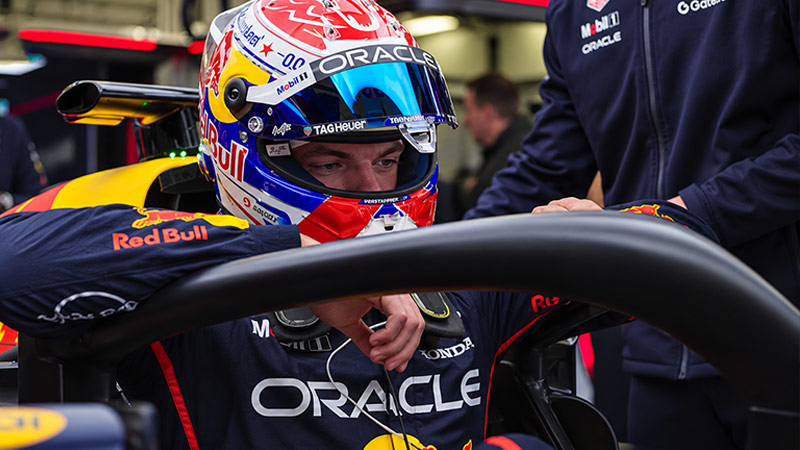
Who earns the most in Formula 1 this season? Max Verstappen tops the 2026 pay list with a reported $70 million base salary, followed by Lewis Hamilton at $60 million. Only five of the 22 drivers on the grid earn $30 million or more.
Here is the complete ranking of reported 2026 F1 driver salaries:
| Rank | Driver | Team | 2026 Base Salary (USD) |
|---|---|---|---|
| 1 | Max Verstappen | Red Bull | $70 million |
| 2 | Lewis Hamilton | Ferrari | $60 million |
| T-3 | Charles Leclerc | Ferrari | $34 million |
| T-3 | George Russell | Mercedes | $34 million |
| 5 | Lando Norris | McLaren | $30 million |
| 6 | Fernando Alonso | Aston Martin | $20 million |
| T-7 | Carlos Sainz | Williams | $13 million |
| T-7 | Oscar Piastri | McLaren | $13 million |
| T-9 | Alex Albon | Williams | $12 million |
| T-9 | Pierre Gasly | Alpine | $12 million |
| T-9 | Lance Stroll | Aston Martin | $12 million |
| 12 | Sergio Pérez | Cadillac | $8 million |
| T-13 | Esteban Ocon | Haas | $7 million |
| T-13 | Nico Hülkenberg | Audi | $7 million |
| T-15 | Isack Hadjar | Red Bull | $5 million |
| T-15 | Valtteri Bottas | Cadillac | $5 million |
| T-17 | Gabriel Bortoleto | Audi | $2 million |
| T-17 | Kimi Antonelli | Mercedes | $2 million |
| T-19 | Oliver Bearman | Haas | $1 million |
| T-19 | Liam Lawson | Racing Bulls | $1 million |
| T-21 | Franco Colapinto | Alpine | $500,000–$1 million |
| T-21 | Arvid Lindblad | Racing Bulls | $500,000–$1 million |
Reported estimates from RacingNews365, as published by NBC Sports (March 2026). Figures exclude bonuses, sponsorships and endorsements.
Top 5 Highest-Paid F1 Drivers at a Glance
- Max Verstappen (Red Bull) – $70 million. The four-time world champion remains the best-paid driver in the sport, even after his title streak ended in 2025.
- Lewis Hamilton (Ferrari) – $60 million. Now in his second season at Ferrari, the seven-time champion still holds the all-time records for wins (105) and podiums (202).
- Charles Leclerc (Ferrari) – $34 million. Ferrari’s long-time leader. With Hamilton, he makes Ferrari’s line-up the most expensive on the grid at about $94 million.
- George Russell (Mercedes) – $34 million. The face of Mercedes since Hamilton’s exit, Russell won two races in 2025.
- Lando Norris (McLaren) – $30 million. The reigning 2025 world champion is arguably the best value in the top five.
Who Is the Lowest-Paid F1 Driver in 2026?
Franco Colapinto (Alpine) and rookie Arvid Lindblad (Racing Bulls) share the lowest reported salary, between $500,000 and $1 million. At 18, Lindblad is also the youngest driver on the 2026 grid.
Did you know? Bonuses can reshuffle the money order. Forbes estimated Verstappen’s 2025 on-track earnings at $76 million and Hamilton’s at $70.5 million once performance pay was added (F1i).
How F1 Driver Pay Is Structured
Base salary is only the first layer of an F1 driver’s income. Most top drivers earn from four streams, and for some the extras are worth more than the contract itself.
- Base salary (the retainer). This is the guaranteed figure the team pays each season, whatever the results. It is the number most salary lists report.
- Performance bonuses. Teams pay extra for points, podiums, wins and championships. For a driver in a winning car, these can dwarf the base. Forbes estimated that 2025 champion Lando Norris earned an $18 million base plus nearly $40 million in bonuses, for $57.5 million in on-track pay (F1i, December 2025).
- Personal sponsors and endorsements. Watch, fashion, gaming and lifestyle brands pay for a driver’s face and following. Forbes put Lewis Hamilton’s off-track income at about $20 million in its 2025 athlete rankings, through partners such as Dior and EA (F1i).
- Image rights and business ventures. Merchandise, social media deals, helmet sponsors and investments add a fourth stream. Norris, for example, built his own gaming and lifestyle brand, Quadrant.
The mix matters. A rookie may live almost entirely on base pay. A champion’s bonus and brand income can match or exceed it, which is why the base salary alone undersells what the stars truly earn.
Why the Pay Gap Is So Wide
The top five drivers take home about $228 million of the grid’s roughly $350 million in base pay, close to two-thirds. Four factors explain why salaries are spread so unevenly.
- Titles and track record. Champions sell seats, sponsorship and credibility. Verstappen (four titles) and Hamilton (seven) sit at $70 million and $60 million.
- Team wealth and ambition. Ferrari pays its pair a combined $94 million, by our tally of the reported figures. Racing Bulls pays its two drivers less than $2 million combined.
- Contract timing. Pay is fixed when a deal is signed, not when results arrive. Norris won the 2025 title yet entered 2026 on a reported $30 million, behind four rivals. A rookie who impresses usually cashes in on the next contract, not the current one.
- Negotiating leverage. A driver with offers from rival teams can push the price up. Drivers promoted from a team’s junior academy often accept modest first deals in exchange for the seat itself.
In short, an F1 salary is a price on future value: how many points, sponsors and headlines a team expects that driver to deliver.
The Cost Cap Does Not Cover Drivers
F1’s 2026 cost cap is $215 million per team, but driver pay sits entirely outside it. Driver salaries, the three highest-paid staff, marketing and race travel are all excluded from the limit (Formula1.com, April 2026).
That exclusion is why a $70 million salary can exist alongside a capped car budget. A top team can pay its star without giving up a single upgrade.
The idea of limiting driver pay keeps coming back. A $30 million driver salary limit was floated in 2020 but never adopted (Crash.net).
More recently, Alpine adviser Flavio Briatore has called for driver salaries to be brought inside the cap (PlanetF1). For now, the driver is the one performance factor teams can spend on without limit, and that keeps top salaries rising.
What It Costs to Stay on the Grid
A headline F1 salary is a gross figure, not take-home pay. Several costs come off the top, and one of them grows with success.
- FIA superlicence. Every driver needs one each season. For 2026 it costs a flat €11,842 plus €2,392 per championship point scored in 2025. Norris’s 423 points pushed his bill to €1,023,658, while drivers with no 2025 points paid only the flat fee. Teams pay these bills, and they sit outside the cost cap (RacingNews365, January 2026).
- Management. Most drivers pay a manager or agent a share of their contract and sponsorship income.
- A personal support team. Trainers, physiotherapists, performance coaches and media staff follow top drivers across a 24-race calendar.
- Tax. Where a driver lives and where income is earned shapes the final number. Many drivers base themselves in Monaco, which has no personal income tax, though rules differ by nationality.
After all of that, a front-running driver still keeps a fortune. Further down the order, the margins are thinner than the headline numbers suggest.
Rookies, Reserves and the Price of Getting There
Most F1 drivers spend millions before they earn their first dollar in the sport. Former F1 driver David Coulthard estimated in 2026 that a lucky junior career, from karting to F1-ready, costs about £8 million (roughly $10 million). He put a Formula 3 season near £1.5 million and Formula 2 at just over £2 million (Motorsport.com).
That investment puts rookie pay in perspective. The youngest driver of 2026, 18-year-old Arvid Lindblad, earns a reported $500,000 to $1 million. Kimi Antonelli, in his second season at Mercedes, is on a reported $2 million.
Three routes shape the early career:
- Junior academies. Teams such as Red Bull, Ferrari and Mercedes fund promising drivers, then sign them to modest first contracts.
- Reserve roles. Reserve and test drivers earn far less than race drivers, and their deals are rarely disclosed.
- Sponsor backing. Some drivers arrive with personal or national sponsors, which makes them more attractive to teams on tighter budgets.
The upside is steep. A driver who proves themselves can move from seven figures to tens of millions within one or two contracts.
Conclusion: What an F1 Driver Really Earns
So, how much does an F1 driver earn? In 2026, the answer runs from about $500,000 for a rookie to a reported $70 million for Max Verstappen, with a typical driver near $10 million. Base salary is really only the starting point.
Bonuses, sponsors and personal brands can double a star’s income, while management fees, trainers and support staff take a share back.
The gap reflects market value: titles, team wealth, contract timing and leverage all set the price. With driver pay still outside the cost cap, the best drivers remain the one performance advantage teams can buy without limit.