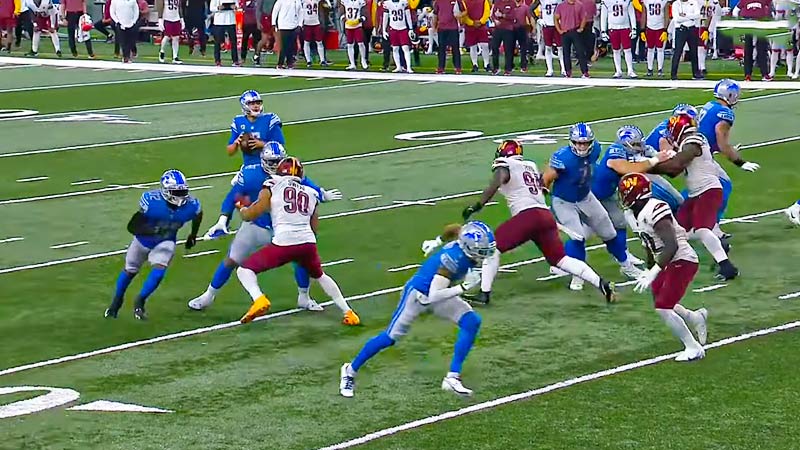
Football, with its intricate blend of athleticism, strategy, and teamwork, captivates fans worldwide. At the heart of this dynamic sport lies the art of passing, an essential element that can sway the tide of a game and leave spectators on the edge of their seats.
In this comprehensive guide, we delve into the diverse world of football pass types. From the pinpoint accuracy of short passes to the awe-inspiring spectacle of deep bombs, each pass type is a strategic masterpiece designed to outwit defenders and create scoring opportunities.
Below, we explain how each pass type works, when teams use it, and how passing shapes the game.
What Is American Football Pass
An American football pass is a fundamental offensive play in which a player, usually the quarterback, throws the ball to a teammate. Each play allows only one forward pass, and it must be thrown from behind the line of scrimmage.
The objective of the pass is to gain yards, advance toward the opposing team’s end zone, and ultimately score points. Pass plays come in various forms, such as short, intermediate, and deep passes, each strategically used based on the situation.
Effective passing requires precise timing, coordination, and communication between the quarterback and receivers. The pass play is a crucial element of a team’s offensive strategy, aiming to exploit defensive weaknesses and create scoring opportunities.
Football Pass Types
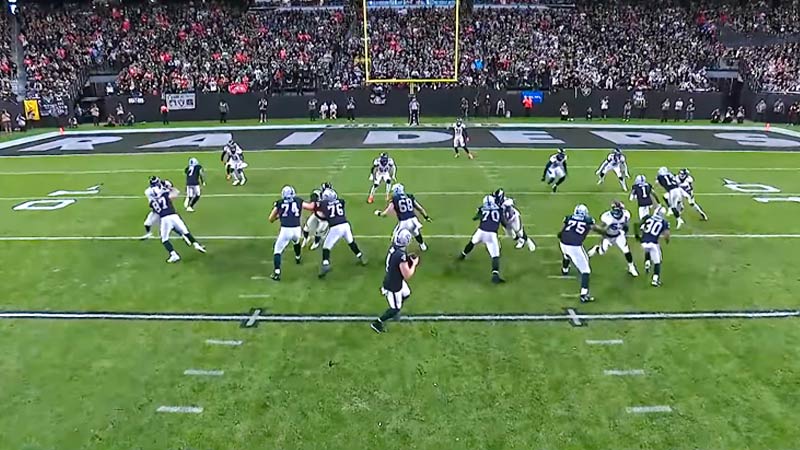
Here’s a closer look at the most common football pass types.
Long Pass
A long pass is a strategic play where the quarterback throws the ball a significant distance down the field, aiming to connect with a receiver who has managed to get behind the opposing defense.
It’s often utilized when the offense wants to make a substantial gain in yardage in a single play, quickly changing the momentum of the game.
The long pass requires precise timing and coordination between the quarterback and receiver to overcome defenders and complete the catch successfully.
Hail Mary
The Hail Mary is a dramatic play usually employed in desperate situations, such as the end of a half or game when a team is trailing and needs to score quickly.
The quarterback launches a deep pass toward the end zone, hoping one of several receivers can come down with the ball in a crowd of defenders. The name became popular after Dallas quarterback Roger Staubach‘s game-winning touchdown pass to Drew Pearson in a December 1975 playoff game against Minnesota. It is a high-risk, high-reward play that relies on arm strength, accuracy and a bit of luck.
Deep Post
In the deep post route, a receiver starts by running straight downfield and then cuts diagonally toward the center of the field. This route is designed to exploit the defense’s coverage and create separation between the receiver and defenders.
The receiver aims to catch the ball behind the defense, often resulting in a significant gain of yardage due to the deep trajectory of the pass.
Screen Pass
A screen pass involves a short throw to a receiver positioned behind or near the line of scrimmage. The offensive linemen briefly let pass rushers come upfield, then release to set up a wall of blockers in front of the receiver.
This setup is designed to give the receiver space to maneuver and gain yards after the catch while using the blockers as protection against pursuing defenders.
Stop and Go
The stop-and-go route is a deceptive maneuver by the receiver. The receiver initially runs at full speed before suddenly coming to an abrupt stop, causing the defending cornerback to slow down or stop as well.
At that moment, the receiver accelerates again, attempting to create separation from the defender who was caught off guard, ultimately aiming to catch the ball in stride.
In Pattern
An in-pattern route involves the receiver running toward the center of the field, typically at a medium depth. This route is effective for exploiting the intermediate areas of the defense.
The receiver aims to find an open spot between defenders, making them a reliable target for the quarterback to complete the pass and gain moderate yardage.
Button Hook
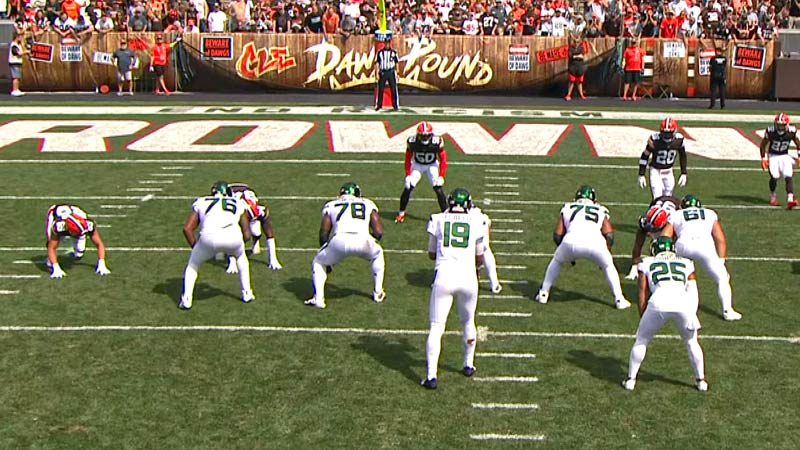
A “Button Hook” route involves the receiver initially sprinting a short distance downfield before abruptly stopping and pivoting to face the quarterback.
This sudden change in direction is intended to create separation from the defender covering the receiver, allowing them to quickly turn around and catch a pass from the quarterback.
The play is effective for gaining short to intermediate yardage in situations where timing and precision are crucial.
Out Pattern
In an out pattern, the receiver runs straight upfield, usually 5 to 12 yards, then breaks sharply at about 90 degrees toward the sideline.
This route aims to exploit the space near the boundary, allowing the receiver to catch the ball while moving toward the sideline. It’s often used to gain moderate yardage and maintain possession of the ball while potentially getting out of bounds to stop the clock.
Fade
A “Fade” pass is designed to give the receiver an advantage in a one-on-one situation, usually in the end zone.
The quarterback throws the ball high and towards the sideline, allowing the receiver to use their height and jumping ability to outmaneuver the defender and catch the ball at its highest point.
This play is particularly effective in goal-line situations where the receiver can use their physicality to secure the catch.
Short Pass
A “Short Pass” involves the quarterback quickly delivering the ball to a nearby receiver, often just a few yards downfield.
This pass type aims to exploit defensive soft spots, where the coverage might be less tight, allowing the receiver to catch the ball and potentially make a move to gain additional yards after the catch.
Slant Route
A slant route is a quick route where the receiver takes one to three steps upfield and then cuts at about a 45-degree angle toward the center of the field.
This quick and aggressive move aims to capitalize on the receiver’s momentum and the defender’s positioning, allowing the receiver to catch the ball while moving forward and potentially breaking through the defensive coverage for a significant gain.
Lateral Pass
A lateral, or backward pass, is any pass thrown sideways or backward. Unlike a forward pass, it can be thrown by any player from anywhere on the field, any number of times on a play, and if it hits the ground, the ball stays live and can be recovered like a fumble.
Laterals are common on option plays and pitch plays, and in desperate last-play situations, when teams string several laterals together.
Play Action
In a “Play Action” play, the quarterback executes a fake handoff to a running back, mimicking a running play. This action is intended to momentarily freeze the defense and draw defenders toward the line of scrimmage, creating an opening for a passing play.
The quarterback then throws the ball to a receiver who should now have more space due to the defense being deceived by the initial fake.
Each of these pass types adds variety and complexity to a team’s offensive playbook, allowing them to adapt their strategy based on the defensive formations, field position, and game situation.
Impact of Pass on American Football
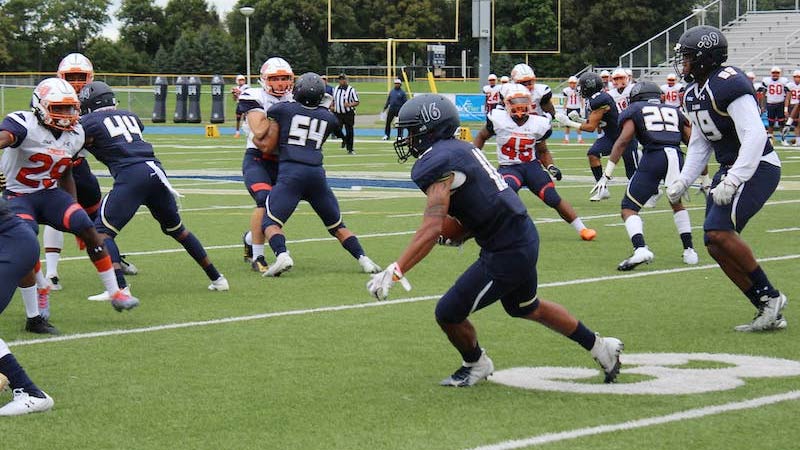
Passing plays have a significant impact on American football, shaping the dynamics of the game and influencing the outcome in various ways:
Yardage Gain
Passing plays can result in significant yardage gains in a single play, enabling teams to quickly advance down the field and position themselves for scoring opportunities.
Exploiting Defenses
Passing allows teams to exploit defensive weaknesses by targeting areas where coverage might be vulnerable or defenders might be out of position. Skilled quarterbacks can read the defense and adjust their throws accordingly.
Scoring Opportunities
Well-executed passing plays can lead to touchdowns, the most valuable scoring outcome in American football. Receivers who catch passes in the end zone or near it contribute greatly to a team’s point total.
Time Management
Passing plays can be used strategically to control the clock. In situations where a team is trailing and needs to catch up quickly, efficient passing can conserve time by stopping the clock when a pass is incomplete.
Change of Momentum
A successful passing play can shift the momentum of a game in favor of the team executing it. Spectacular catches and long completions can energize both players and fans, affecting the emotional tone of the game.
Red Zone Efficiency
In the “red zone,” which is the area close to the opponent’s end zone, passing plays can be crucial. Passing can help teams overcome the compacted field and dense defensive coverage, leading to touchdowns instead of settling for field goals.
Versatility
Different types of passing plays offer versatility in offensive strategies. Short, quick passes can be used for precision and gaining moderate yardage, while deep passes can stretch the field and catch defenses off-guard.
Defensive Considerations
Effective passing forces defenses to adapt and allocate resources to cover receivers, potentially creating mismatches that the offense can exploit.
Play Action Deception
Passing plays that involve play-action fakes can confuse defenses, as they have to respect the possibility of a running play. This can lead to receivers being more open due to defenders being out of position.
Individual Brilliance
Passing plays often showcase the skills of individual players, especially quarterbacks and receivers. A skilled quarterback can make accurate throws under pressure, and talented receivers can make spectacular catches that sway the game’s momentum.
Tactics and Strategy
The mix of run and pass plays in a team’s offensive playbook keeps the defense guessing, as they need to prepare for both possibilities. This strategic element enhances the complexity of the game.
Entertainment Value
The excitement and drama of long passes, spectacular catches, and game-changing plays make passing an essential element of the game’s entertainment value for fans.
FAQs
What is the purpose of a “Button Hook” route in football pass plays?
The “Button Hook” route involves a receiver initially sprinting a short distance downfield before suddenly changing direction and coming back toward the quarterback. This rapid change of direction creates separation from defenders, allowing the receiver to make a quick catch and gain crucial yards.
How does a “Fade” pass contribute to scoring in football?
A “Fade” pass is a high, arcing throw toward the sideline, often used in the end zone. It allows the receiver to use their height advantage to jump and catch the ball at its highest point, creating an advantage over the defender and increasing the chances of scoring a touchdown.
What makes the “Play Action” pass play a deceptive offensive strategy?
The “Play Action” pass play involves the quarterback faking a handoff to a running back, mimicking a running play. This deceives the defense into expecting a run, potentially leaving the defense out of position and creating openings for successful passes.
How does a “Screen Pass” exploit defensive formations in football?
The “Screen Pass” is a short throw to a receiver positioned behind the line of scrimmage. It’s designed to exploit defensive aggressiveness by luring defenders forward before the ball is quickly thrown to the receiver, who is then supported by blockers creating a clear path downfield.
Why is the “Slant Route” an effective pass type in football?
The “Slant Route” involves a receiver running diagonally across the field toward the center. This route capitalizes on the receiver’s momentum and aims to catch the ball while moving forward, potentially breaking through the defense and gaining substantial yardage.
Wrapping Up
As the excitement of football unfolds on the field, it’s the intricacies of pass types that often make the difference between a game-winning drive and a missed opportunity.
Whether it’s the quick precision of short passes, the anticipation of deep bombs, or the tactical cunning of play action, each pass type showcases the brilliance of teamwork, strategy, and skill that define American football.
By understanding these pass types, fans can deepen their appreciation for the sport and witness the strategic chess match that unfolds every time the ball is snapped.