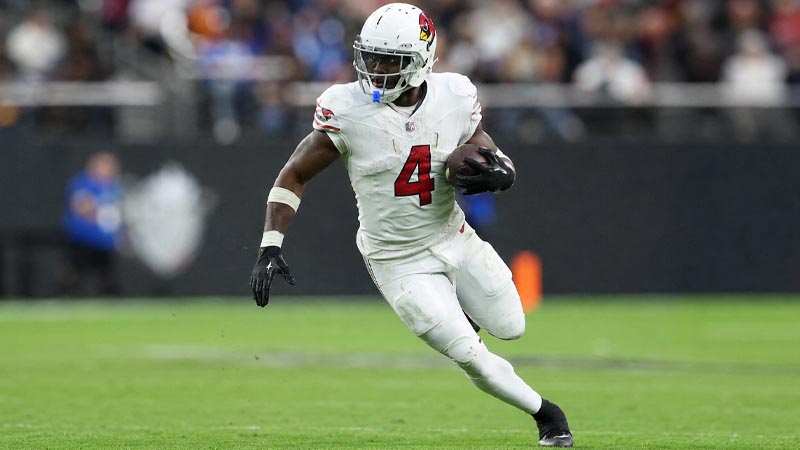
The structural architecture of the modern NFL offense is undergoing a quiet, tactical revolution.
At the epicenter of this transformation is the running back, a position whose responsibilities have expanded far beyond the traditional boundaries of carrying the football.
To understand the modern backfield is to understand how athletic requirements, schematic innovations, and tactical demands intersect.
A running back in the NFL lines up in the backfield, positioned either directly behind or beside the quarterback.
From this starting point, their primary responsibilities include taking handoffs to run with the football, catching passes out of the backfield, and executing critical pass protection blocks to shield the quarterback from defenders. However, this simple description masks a highly complex role.
To appreciate how this position operates today, we must examine its historical foundations, analyze the current strategic landscape, and deconstruct the physical and mental mechanics required to survive and excel in the professional ranks.
Historical Foundations: The Era of the “Bell Cow”
The Strategic Shift: The Modern Backfield Landscape
Football has evolved from a ground-and-pound sport into a balanced, pass-oriented game. In 2023, NFL teams averaged 219 passing yards per game compared with 113 rushing yards, highlighting the dominance of the aerial attack.
This shift has transformed the running back’s role. Rather than serving as the sole offensive centerpiece, today’s running back must contribute in multiple ways.
High school teams often rely heavily on the running game because developing quarterbacks capable of executing complex passing systems can be challenging.
At the college and professional levels, however, predictable offenses are easier for sophisticated defenses to stop.
Modern running backs must therefore run effectively, catch passes, and block defenders. Versatility keeps defenses guessing and makes the entire offense more unpredictable.
Core Responsibilities: Deconstructing the Modern Job Description
To fully comprehend what a running back does in today’s NFL, we must break down their job description into four distinct, highly demanding physical disciplines.
Running the Ball
The most visible responsibility remains the run game. This process begins when the running back receives a handoff or a lateral pitch from the quarterback. Once the ball is secured, the runner must use acute spatial awareness and field vision to locate openings and gaps created by the offensive line.
Running the ball is not merely about running forward; it is an exercise in anticipation. A back must read the blocks of their offensive linemen, identify the movement of defensive linebackers, and accelerate through the appropriate lane to gain forward yardage.
Catching Passes
As passing plays have increased in volume, the running back has evolved into a critical “safety-valve” receiver.
When primary wide receivers downfield are covered by the secondary, the running back runs short routes out of the backfield to provide the quarterback with an open, high-percentage throwing option.
The most effective modern running backs are so skilled in this discipline that they double as wide receivers.
They run sophisticated routes, catch passes away from their bodies, and immediately transition into ball carriers downfield, creating massive mismatches against slower defensive linebackers.
Pass Protection
A running back’s contribution to the passing game is not limited to catching the ball. On passing plays where they are not designated to run a route, the running back must execute pass protection.
This requires the player to scan the defensive front, identify blitzing linebackers or defensive backs who are rushing past the offensive line, and physically block them.
Without disciplined pass protection from the running back, quarterbacks do not have the necessary time to let deep passing routes develop downfield. This is often the most difficult skill for young players to master, yet it is the most critical for keeping the franchise quarterback healthy.
Goal-Line and Short-Yardage Carries
When an offense faces a short-yardage scenario—such as a third-down-and-one or a play near the opponent’s goal line—the physical demands of the running back position reach their peak. In these situations, defenses deploy heavy, tight defensive fronts designed to clog every available gap.
The running back’s responsibility is to power through these crowded fronts using sheer physical strength, low center of gravity, and high leg drive. Securing these crucial first downs or scoring touchdowns in the red zone requires an elite level of toughness and contact balance.
Running Back Duty Distribution (Modern Playbook)
===================================================
1. Rushing Phase     -> Handoffs, gap identification, perimeter runs
2. Aerial Phase      -> Route running, safety-valve catches, mismatches
3. Protection Phase  -> Blitz pickup, scanning fronts, blocking
4. High-Impact Phase -> Goal-line rushes, short-yardage conversions
===================================================
Tactical Formations: Where and How They Line Up
The spatial positioning of the running back is a key element of offensive play design. Coaches use different formations to create schematic advantages, hide their tactical intentions, and exploit weaknesses in the defensive structure.
Single Set Back
The single set back is the primary formation utilized in the modern NFL. In this alignment, there is only one running back positioned in the backfield. The specific placement of this single back depends on the quarterback’s alignment:
- Shotgun Alignment: The running back lines up directly beside the quarterback, who is positioned approximately 5 yards behind the center.
- Under Center Alignment: The running back lines up directly behind the quarterback, approximately 5 yards back.
The single set back alignment is highly advantageous for the running back’s pre-snap preparation.
Because they stand with their hands on their knees rather than having their hands on the ground, they can easily stand up, scan the entire defensive alignment, and identify potential blitz paths or defensive weaknesses before the ball is snapped.
In this formation, the single player is typically the team’s “featured back,” expected to handle the majority of the offensive snaps.
Split Backfield
In a split backfield formation, the offense deploys two running backs simultaneously, positioning them on either side of the quarterback.
When the quarterback is in the shotgun formation (5 yards behind center), both backs line up roughly 5 yards away from the quarterback on their respective sides.
The split backfield offers a major tactical advantage: it presents the defense with multiple threats. Because the quarterback can hand the ball off to either of two capable running backs, the defense cannot key in on a single player or predict the direction of the play before the snap.
Typically, this formation features a halfback and a fullback, though some modern schemes use two versatile halfbacks to maximize speed.
The I-Formation
A classic power football alignment, the I-formation is designed for direct, physical running schemes. In this formation, the quarterback lines up directly behind the center, and the running backs line up in a straight line behind him.
The fullback lines up directly behind the quarterback, and the featured running back lines up directly behind the fullback. The players are typically spaced about 3 yards apart.
This alignment allows the fullback to act as a lead blocker, hitting the defensive line first to create a path, while the featured back follows closely behind to exploit the opening.
The Blueprint: Essential Skills for NFL Success
To execute these diverse responsibilities across various formations, an NFL running back must possess a highly specific athletic and mental blueprint. Without these foundational traits, a player cannot withstand the physical toll of a professional season.
- Ball Security: This is the absolute priority for any running back. Because they are hit by defenders every single time they carry the football, opponents are trained to actively strip the ball or pop it loose to cause turnovers. Running backs must possess elite forearm and hand strength, practicing disciplined carrying techniques to wrap both arms around the ball at the exact point of contact.
- Elusiveness: While elite straight-line sprinter speed is a valuable asset, lateral agility and quick footwork are far more critical for consistent success. A running back must have the ability to change directions instantly, making defenders miss in tight spaces when defensive players penetrate the backfield.
- Balance (Contact Balance): Elite running backs must possess the physical strength and body control to absorb heavy contact from defenders and continue moving forward. This ability to run through arm tackles and keep their legs churning after initial contact is what separates average runners from elite playmakers.
- Vision: This is the cognitive foundation of the position. A running back must possess the processing speed to recognize defensive run-defense schemes, identify open lanes instantly, and make split-second decisions to cut into those lanes before the defense can close them.
- Durability: The physical toll of the running back position is unmatched on the football field. Running backs are expected to absorb high-velocity impacts from 300-pound defensive linemen and 230-pound linebackers, bounce back up immediately, and remain physically prepared to execute on the very next play.
- Versatility: In the modern NFL, a running back’s value is tied directly to their multi-faceted skill set. Top-tier running backs must seamlessly transition between rushing, running complex receiving routes, blocking blitzers, and reading advanced defensive alignments.
Tactical Personnel: How Coaches Manage the Backfield
Because the physical demands of the position are so extreme, very few NFL teams rely on a single running back to handle every single play throughout a 17-game season.
Instead, modern coaches utilize a variety of personnel strategies to keep players healthy and maximize their schematic output.
The Featured Back
The term “featured back” refers to the premier running back on a team’s roster. This is the player who possesses the most complete skill set and receives the majority of the offensive carries.
If a team’s game plan calls for 30 rushing attempts, a featured back will typically handle approximately 20 of those carries, while the remaining attempts are distributed to backup players.
The Backfield Committee (Rotation)
To preserve player health and exploit specific defensive matchups, many modern NFL coaching staffs utilize a running back rotation, often referred to as “running back by committee”.
In this setup, coaches rotate two or three different running backs throughout the game.
For example, a team might feature two backs of equal talent who split the carries evenly, keeping both players fresh for the fourth quarter. Alternatively, coaches will deploy backs with highly specialized, contrasting skill sets:
- The Short-Yardage Specialist: A larger, heavier, power-oriented running back designed to gain one or two tough yards in goal-line or third-down situations.
- The Third-Down Back (Receiving Specialist): A highly agile, smaller back with elite pass-catching skills and route-running ability, deployed primarily in passing situations.
- The Pass Blocker: A disciplined, physical back who excels at blitz pickup and pass protection, entering the game to ensure the quarterback is protected on deep passing plays.
Conclusion: The Tactical Heartbeat of the Offense
The modern NFL running back is far more than a simple ball carrier; they are the ultimate utility asset on the offensive side of the ball.
While the era of the exclusive, run-only superstar has faded in favor of explosive, high-volume passing games, the running back’s strategic importance has never been higher.
By mastering the physical execution of running, the spatial complexities of route running, and the mental discipline of pass protection, the running back remains a vital component of championship-caliber offenses.
As defensive schemes continue to evolve, the success of modern NFL offenses will always rest on the shoulders of the versatile, durable, and intelligent running back.