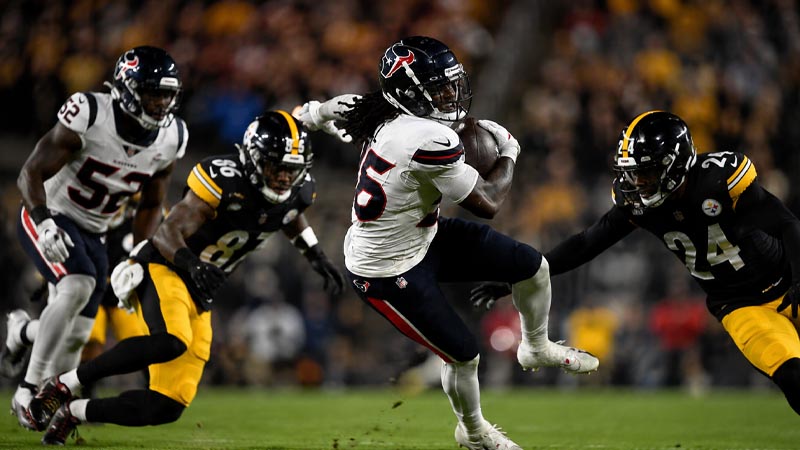
In the high-stakes theater of modern football, the defensive backfield functions as a complex, rapidly shifting matrix where a single misstep can alter the entire outcome of a game.
At the center of this defensive ecosystem is a position that has undergone one of the most profound tactical evolutions in sporting history: the safety.
No longer relegated to serving as passive, deep-seated insurance policies, today’s safeties are highly dynamic game-changers, mastermind orchestrators, and versatile playmakers who dictate terms to opposing offenses.
Understanding what a safety does requires looking beyond the basic television angles.
It requires analyzing how these defensive backs line up deep down the playing field, serving as the absolute final line of defense to prevent explosive offensive gains from turning into touchdowns.
This comprehensive analysis explores the deep-set responsibilities, physical archetypes, historical shifts, and modern schematic structures that define this essential defensive role.
1. The Four Pillars of Safety Responsibilities
The responsibilities of an NFL safety are diverse and vary significantly from one defensive scheme to another. However, regardless of the system, every safety must be capable of defending both the run and the pass to a highly proficient level.
To understand their daily impact on the field, we can divide their core responsibilities into four fundamental pillars.
Deep Pass Coverage: The Ultimate Backstop
The most visible responsibility of a safety is guarding against long passes. Safeties typically line up farthest from the line of scrimmage, giving them a bird’s-eye view of the developing play.
In pass defense, their job is to track the quarterback’s eyes, read route progressions, and prevent deep balls from being caught.
They often act as a crucial safety net for cornerbacks. If an offensive team boasts a speedy wide receiver, a safety will frequently provide double-coverage assistance, allowing the cornerback to press at the line of scrimmage while the safety brackets the receiver from above.
When a defense employs zone coverage—a scheme where defensive backs are assigned to cover specific geographic areas of the field rather than individual players—safeties are almost always charged with defending the deepest zones on the field.
Conversely, they must also be capable of matching up in tight man-to-man coverage depending on the defensive play call.
Run Support: Sprinting to the Fill
While their deep positioning makes them natural pass defenders, safeties are equally vital in stopping the running game.
If an opposing running back successfully maneuvers past the defensive line and the linebacker level, the safety represents the last player who could bring them down before they score. Under these high-pressure circumstances, safeties must be exceptionally sure-handed, physical tacklers.
In clear rushing situations, safeties do not simply wait deep downfield. Instead, they will creep closer to the line of scrimmage, transitioning into active run-stoppers.
They must sprint forward with intense physical aggression, taking on blocking schemes and bringing down heavy running backs, agile wide receivers, or physical tight ends.
Field Communication: Orchestrating the Defense
Before the ball is even snapped, a safety is working to dissect the opposing offense’s intentions. Because they line up deep, they possess the widest view of the field, enabling them to read offensive formations, pre-snap motions, and shifts.
Safeties use this visual data to communicate pre-snap alignments to their teammates. They warn fellow defenders of shifting offensive threats, adjust the coverage shell, and direct players into their proper positions.
By picking up on the opposing quarterback’s personal tendencies and reading the overall offensive structure, an elite safety can accurately anticipate where the play is going before it starts.
Blitzing: The Second Wave of Pressure
In passing situations, a defensive coordinator will typically rely on the defensive linemen to rush the quarterback. However, when a defensive scheme calls for extra pressure, the defense will send blitzers.
In these pressure packages, the linebackers act as the primary, or first wave of blitzers, while the safeties are deployed as the highly disruptive second wave.
By sprinting past the line of scrimmage, safeties can catch the offensive line off-guard, putting immediate pressure on the quarterback or recording a sack. While cornerbacks rarely blitz, safeties are used as blitzers to create explosive, game-altering plays.
Some coaching staffs utilize safety blitzes far more frequently than others, though many teams will limit safety blitzes to only a few times per game, particularly reserving them to confuse inexperienced opposing quarterbacks.
2. Physical and Mental Archetypes: How Safeties Compare
A safety must possess a highly specialized physical and mental profile to survive the rigors of the defensive backfield.
To truly appreciate their athletic profile, it is helpful to compare them directly to neighboring defensive positions, such as cornerbacks and linebackers.
Historically, safeties were exceptionally bulky, strong defenders whose physical stature closely mirrored that of traditional linebackers.
However, as modern offenses transitioned to highly pass-happy schemes over the last few decades, safeties were forced to trade pure size and brute strength for superior speed, agility, and coverage instincts.
When comparing modern defenders:
- Safeties vs. Cornerbacks: Cornerbacks are typically the fastest players on the entire defense, optimized for mirroring swift receivers in isolation. Safeties, while incredibly athletic, are generally not as fast as cornerbacks, but they are typically much stronger.
- Safeties vs. Linebackers: Linebackers are positioned closer to the box and are typically bigger than safeties. However, linebackers are generally not stronger than safeties, and safeties possess vastly superior open-field speed, range, and agility.
Because of this unique physical middle ground, a top-tier safety can match up with corner-like coverage ability against receivers and tight ends, while simultaneously taking on heavy blocks and executing physical tackles in the run game like a linebacker.
They must defend massive swaths of the field—no other position on the football field is asked to cover as much physical space as a safety.
3. The Traditional Blueprint: Strong Safety vs. Free Safety
Historically, and within traditional defensive structures, the safety position has been split into two distinct, specialized roles: the Strong Safety (SS) and the Free Safety (FS). Each role demands a different alignment, physical build, and tactical focus.
The Strong Safety (SS)
The strong safety is traditionally the more physical, run-oriented defender of the pair. They typically align closer to the line of scrimmage, positioned on the “strong side” of the offensive formation—which is the side where the opponent’s tight end lines up.
Because of this alignment, the strong safety is tasked with direct responsibilities that include:
- Acting as a primary run-stopping defender near the box.
- Covering the physical tight end in pass defense.
- Assisting the linebacker corps in defending mid-range passing routes across the middle of the field.
To handle these physical matchups against tight ends and blocking linemen, strong safeties are typically built bigger and heavier than free safeties.
The Free Safety (FS)
The free safety is the deep-field centerfielder of the defense. They typically align deeper down the field than the strong safety and position themselves on the weak side (the side opposite the tight end). For this reason, they are sometimes referred to as the weak-side safety.
A free safety’s role focuses heavily on speed, vertical range, and pure pass coverage. Their main responsibilities include:
- Roaming the deep field to assist cornerbacks in covering long vertical routes.
- Serving as the absolute final line of defense against any breakaway runner or receiver who breaches the line of scrimmage into open space.
- Using their superior speed and agility to read the quarterback’s eyes and make plays on deep passes across the entire width of the field.
4. The Modern Hybrid Revolution: The Rise of the ‘Rover’
While the division between strong and free safeties remains a helpful instructional tool for understanding football history, the modern NFL has moved in a vastly different direction.
Today’s offensive coordinators design highly complex, fast-paced passing attacks that search for defensive weaknesses. To counter this, defensive coordinators have largely abandoned rigid position labels.
In modern NFL defensive systems, the traditional strong and free safety distinction has largely fallen out of regular use. Instead, defenses favor hybrid schemes that require both safeties to be interchangeable.
A modern safety cannot afford to specialize in only one discipline; they must be complete, multi-faceted defenders who can rotate seamlessly between deep coverage and run-stopping duties on any given snap.
The Rover or Star Position
The ultimate expression of this modern hybrid philosophy is a unique subset of the safety position known as the “Rover” or the “Star”.
The rover is an incredibly versatile, high-impact defender who does not line up in a single, predictable spot. Instead, a rover lines up on completely different sides of the field and in varied pre-snap positions depending on the specific in-game scenario.
The rover is a hybrid linebacker and defensive back who possesses a highly rare, specialized skill set. This unique talent allows them to:
- Match up in man coverage against the opposing team’s absolute best receiver.
- Come down into the box to shut down physical running plays.
- Rotate deep to play with the range of a free safety.
- Operate close to the scrimmage line with the physical enforcement of a linebacker or strong safety.
Because rovers are such unique and multi-talented athletes, not every NFL team possesses a player capable of fulfilling this complex role. However, those teams that do have a true rover can leverage them as the ultimate tactical chess piece to neutralize an opponent’s entire game plan.
5. Cornerback vs. Safety: Choosing Your Defensive Path
For young defensive players developing their skills, choosing a specific positional path is a major milestone. Often, younger players are unsure whether they are better suited to play cornerback or safety. Understanding the differences in their day-to-day duties can help guide this decision.
Cornerback: Focused Isolation
Playing cornerback is widely regarded as one of the most difficult jobs in professional sports, but its overall scope of responsibility is much narrower than that of a safety. The primary, overriding duty of a cornerback is pass coverage.
If a player loves the intense challenge of guarding swift wide receivers one-on-one on an island, they are naturally suited for the cornerback position.
Safety: The Holistic Hybrid
If a player prefers to be involved in every single facet of the defensive game plan, they should pursue the safety position.
Safeties are hybrid players who must actively dissect complex offensive systems, meaning they get to play both the pass and the run with equal intensity.
Playing safety offers the unique opportunity to make highly diverse impact plays, from deep interceptions and forced fumbles to physical run tackles and timely quarterback sacks.
The Ultimate Defensive Impact
The modern football landscape is defined by offensive sophistication. As offensive schemes have grown more complex, the demands placed upon the safety position have risen proportionally.
Today’s safeties must be highly physical, exceptionally strong, and fast enough to cover elite wide receivers down the field.
A highly skilled safety is a defensive coordinator’s greatest asset. By picking up on quarterback tendencies, communicating defensive adjustments, and flying across the field to make game-changing plays, a single safety can completely turn the tide of a game with one explosive turnover.
They are the ultimate guardians of the deep field—the final line of defense and the primary engine of defensive versatility.