In modern football, offensive systems increasingly emphasize high-tempo passing attacks, spreading defenses across the field and creating opportunities for explosive plays.
As quarterbacks, wide receivers, edge rushers, and defensive backs often receive the most attention, the importance of controlling the interior line of scrimmage can be overlooked.
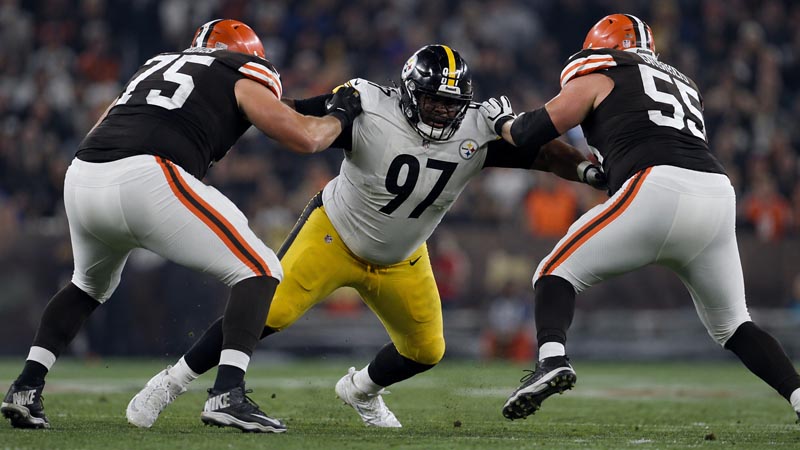
At the heart of that battle is the defensive tackle. Working in the most congested area of the field, defensive tackles are responsible for controlling interior gaps, stopping the run, disrupting blocking schemes, and generating pressure through the middle of the pocket.
Their performance often determines whether linebackers can make clean tackles and whether quarterbacks have enough space to operate.
A great defensive tackle combines size, leverage, explosive power, technique, awareness, and relentless effort.
The position is not simply about being the biggest player on the field; it is about understanding angles, winning leverage, defeating blocks, and creating opportunities for the entire defense.
1: Defensive Fronts and Positional Alignment
A defensive tackle’s responsibilities depend heavily on the defensive structure used by the coaching staff.
Although modern defenses employ numerous fronts and personnel packages, the traditional 3-4 and 4-3 structures provide a useful framework for understanding the position.
In a 3-4 front, the interior lineman often functions as a nose tackle, occupying the middle of the offensive formation. In a 4-3 front, two defensive tackles typically work together, with one often aligned as a one-technique and the other as a three-technique.
Defensive Tackle Alignments
| Defensive Front | Position | Typical Alignment | Primary Responsibility | Tactical Objective |
|---|---|---|---|---|
| 3-4 | Nose Tackle | Over the center, commonly a 0-technique | Control the interior and both A-gaps | Occupy blockers and keep linebackers free |
| 4-3 | Defensive Tackles | Around the guards, commonly 1- or 3-technique | Control A- or B-gap responsibilities | Penetrate, disrupt runs, and pressure the quarterback |
The terminology can vary from one defensive system to another, but the underlying objective remains consistent: control the interior and prevent the offense from creating easy space.
2: The Four Core Responsibilities
A defensive tackle has several responsibilities that overlap throughout a play. Four fundamental duties define much of the position.
1. Win the Initial Contact
The battle begins immediately after the snap. A defensive tackle must explode from his stance and attack the blocker before the offensive lineman can establish control.
Winning this initial collision requires excellent pad level, hand placement, balance, and lower-body power. The objective is not simply to hit the blocker hard but to establish leverage and dictate the direction of the engagement.
2. Maintain Gap Discipline
Every defensive front assigns responsibilities to specific gaps. Depending on the scheme, a tackle may be responsible for an A-gap, B-gap, or a broader interior area.
A defender who abandons his assignment in search of a big play can create a running lane for the offense. Elite defensive tackles therefore combine aggression with discipline, knowing when to penetrate and when to anchor.
3. Defeat Double Teams
Offenses frequently use two blockers against one disruptive defensive tackle. A center and guard, for example, may combine to prevent an interior defender from penetrating.
Surviving these double teams is extremely valuable. If the defensive tackle occupies both blockers, the linebackers behind him may remain unblocked and can attack the running back freely.
This is one reason a defensive tackle’s impact cannot always be measured by sacks or tackles. Simply commanding multiple blockers can create opportunities for teammates.
4. Collapse the Passing Pocket
In passing situations, the defensive tackle’s objective changes from controlling gaps to disrupting the quarterback’s space.
Rather than simply chasing the quarterback, an interior rusher attempts to drive the pocket backward. Interior pressure is particularly valuable because it prevents the quarterback from stepping forward into a clean throwing lane.
A strong interior rush can also force the quarterback toward edge rushers, creating opportunities for the entire defensive front.
3: The Physical and Mental Profile of an Elite Defensive Tackle
Defensive tackle is one of football’s most physically demanding positions. Players routinely operate in confined spaces while absorbing collisions from multiple directions.
Explosive Force and the First Step
The first movement after the snap is critical. Defensive tackles must generate force quickly while maintaining balance and leverage.
A powerful first step allows the defender to attack the blocker before the offensive lineman can fully establish his position.
This combination of acceleration and force is a major component of interior pass rushing and run defense.
Core Strength and Body Control
Interior defenders constantly encounter forces from different directions. A tackle may be hit by a double team, trap block, combination block, or pulling lineman.
Strong trunk control allows the defender to maintain his base and transfer power efficiently from the lower body through the hands and upper body.
Without adequate balance, even a powerful defender can be turned, displaced, or removed from his assigned gap.
Size and Physical Structure
Defensive tackles generally require a combination of mass, strength, mobility, and leverage.
Traditional interior linemen are often among the largest players on the roster, although modern football has also demonstrated that exceptional quickness can allow smaller defenders to dominate.
Typical builds often fall within ranges such as:
- Height: Approximately 6’0″–6’5″
- Weight: Frequently 285–335+ pounds, depending on role and scheme
- Build: Thick, powerful, and compact
- Key physical traits: Strong lower body, powerful hands, excellent balance, and explosive movement
There is no single ideal body type. A nose tackle and an attacking three-technique may have very different physical profiles.
Mental Toughness and Consistency
The position demands constant physical and mental engagement. Defensive tackles rarely receive extended opportunities to operate in open space.
Instead, they repeatedly enter congested collisions while maintaining awareness of blocking combinations and offensive tendencies.
Elite players must remain disciplined even when tired, repeatedly performing their assignment without expecting individual recognition.
4: Athletic Benchmarks and Performance Standards
Physical testing can help evaluate defensive tackle prospects, but measurements alone do not determine whether an athlete will succeed.
Table 2: Example High-Level Athletic Targets
| Athletic Attribute | Example Target | Football Application |
|---|---|---|
| Height | 6’0″+ | Provides a strong frame while allowing leverage |
| Body Weight | 265+ lbs | Provides mass for interior battles |
| Power Clean | 300+ lbs | Indicates explosive hip and lower-body power |
| Back Squat | 450+ lbs | Develops lower-body strength and drive |
| Bench Press | 350+ lbs | Supports powerful strikes and hand fighting |
These numbers should be viewed as illustrative benchmarks rather than universal requirements. Scheme, competition level, technique, mobility, and athletic explosiveness can be equally important.
A defensive tackle does not win simply because he can lift more weight than his opponent. The real objective is to convert strength into functional football power.
5: Strength and Conditioning for Defensive Tackles
A successful defensive tackle requires a training program that develops strength without sacrificing movement quality.
Olympic Lifting and Explosive Strength
Exercises such as cleans, pulls, and other explosive movements can help develop rapid force production. The objective is to teach the athlete to generate power quickly, similar to the explosive movements required immediately after the snap.
Plyometric and Reactive Training
Defensive tackles need short-area explosiveness rather than long-distance sprint speed. Box jumps, lateral bounds, medicine-ball exercises, and other explosive movements can improve reaction speed and power.
Grip and Hand Strength
The hands are among the most important tools of an interior defender. Strong hands help the tackle control blockers, shed contact, maintain separation, and finish tackles.
Grip exercises can complement technical hand-fighting work, but football-specific hand technique remains essential.
Mobility and Recovery
Large athletes place substantial stress on their joints and connective tissues. Mobility work, appropriate conditioning, nutrition, hydration, and sufficient sleep all contribute to maintaining performance.
Recovery is particularly important during the season, when players must repeatedly absorb high-impact collisions while maintaining strength and explosiveness.
6: Hand Fighting, Footwork, and Leverage
Physical strength is only one part of defensive tackle play. Technique often determines who wins the battle after the initial collision.
Hand Fighting
Offensive linemen attempt to establish hand position and control the defender’s chest. Defensive tackles counter with techniques such as:
- Swats
- Clubs
- Rips
- Push-pulls
- Arm-overs
- Hand replacement
The goal is to prevent the blocker from gaining sustained control and to create a path toward the ball.
First-Step Quickness
The first two steps are particularly important for interior defenders. A successful first step can force an offensive lineman into a reactive position before the block is fully developed.
Three-technique defensive tackles in particular often rely on exceptional quickness to penetrate gaps and disrupt plays before they develop.
Pad Level and Leverage
One of the most important principles of trench play is leverage. Defensive tackles must maintain a strong base and avoid playing too upright.
Low pad level helps the defender generate force through the legs while making it more difficult for offensive linemen to gain control of the chest.
However, leverage does not mean simply getting as low as possible. The defender must maintain enough balance and mobility to react to blocks and ball movement.
7: Legendary Defensive Tackles
Several players have established the highest standards for interior defensive line play.
Aaron Donald
Aaron Donald transformed perceptions of what an interior defender could accomplish.
Despite being smaller than many traditional nose tackles, his combination of explosive power, hand technique, leverage, balance, and first-step quickness made him one of the most disruptive interior pass rushers in NFL history.
His career demonstrated that exceptional technique and athleticism can overcome the conventional size expectations associated with the position.
“Mean” Joe Greene
Joe Greene became the centerpiece of the Pittsburgh Steelers’ legendary Steel Curtain defense. His combination of power, competitiveness, size, and disruptive ability helped establish the defensive tackle as a foundational position within championship defenses.
Bob Lilly, Merlin Olsen, and Warren Sapp
The history of interior defensive line play includes numerous other greats. Bob Lilly was renowned for his technique and explosiveness, while Merlin Olsen represented the power and discipline of an earlier generation.
Warren Sapp later demonstrated how an interior defender could combine speed and pass-rushing ability with traditional defensive-line strength.
Together, these players illustrate the evolution of the position from primarily occupying blockers to becoming a major source of interior disruption.
Conclusion: The Foundation of Defensive Line Success
The defensive tackle is far more than a large athlete occupying the middle of the defensive formation. The position combines physical power with detailed technique, tactical awareness, leverage, discipline, and relentless effort.
Elite defensive tackles control gaps, defeat blocks, absorb double teams, stop interior runs, and collapse passing pockets.
Even when they do not record a sack or tackle, their ability to occupy blockers can create opportunities for linebackers and edge rushers.
The greatest interior defenders understand that dominance is not always measured by individual statistics. Their true value is often reflected in how much they disrupt the structure of the opposing offense.
In that sense, the defensive tackle is the architectural anchor of the defense—a player whose control of the interior can determine how effectively the entire defensive unit functions.