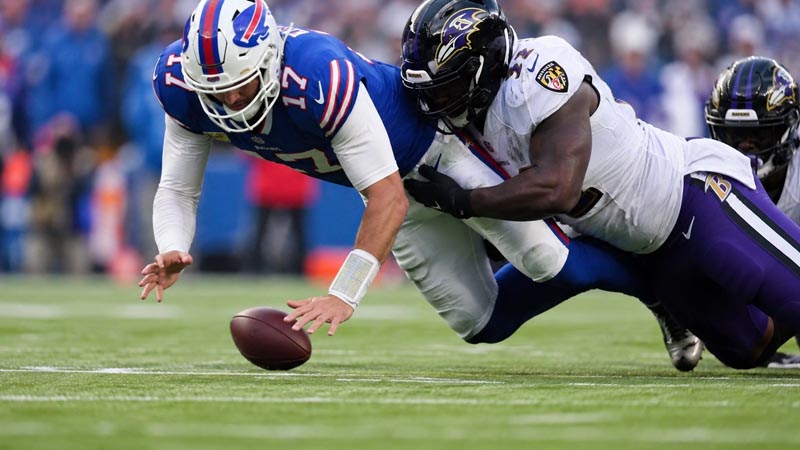
In the high-stakes environment of professional football, the difference between a championship-winning drive and a season-ending defeat often rests on a single point of failure: ball security.
The fumble is perhaps the most chaotic and transformative event on the field. Unlike a structured play or a calculated pass, a fumble introduces immediate, unscripted volatility.
This analysis explores the technical definitions, the regulatory framework governing ball recovery, and the strategic implications of fumbled possession in American and gridiron football.
Defining the Fumble: Possession and Control
At its core, a fumble is a specific failure in ball security during active play. A fumble occurs when a player who has established clear control and possession of the ball loses it before they are tackled to the ground, score a touchdown, or go out of bounds.
To understand the fumble, one must first understand legal possession. In professional standards, possession is not merely touching the ball; it requires “clear control,” which usually involves the player securing the ball against their body or firmly in their hands while performing an act common to the game, such as running or bracing for contact.
When that control is severed prematurely—without the play being whistled dead by an official—the ball enters a state of high-risk transition.
The timing of this loss is critical. If a player loses the ball after their knee or elbow has touched the turf (and they are down by contact), the play is dead, and no fumble has occurred. However, if the ball escapes their grasp while they are still upright or in the air, it becomes a “live” element of the game.
The “Live Ball” Distinction: Fumbles vs. Incomplete Passes
One of the most frequent points of confusion for casual observers is the distinction between a fumble and an incomplete pass. The regulatory consequences are diametrically opposed.
When a quarterback attempts a forward pass and the ball hits the ground without being caught, it is ruled an incomplete pass. The play immediately stops, the ball is “dead,” and the offense retains possession at the previous line of scrimmage.
Conversely, a fumbled ball is a “live ball”. This means the game clock does not necessarily stop, and the play continues regardless of whether the ball is rolling on the turf or bouncing through the air.
The “live” status of a fumble is what creates the frantic scrambles often seen in professional broadcasts. Because the play is active, every second the ball remains unrecovered is a second of extreme tactical vulnerability for the offense.
The Scramble: Rules of Recovery and Universal Eligibility
Once a fumble occurs, the traditional boundaries of player roles—such as “offensive lineman” or “defensive back”—largely disappear. The rulebook shifts into a mode of universal eligibility regarding the loose ball.
1. Universal Recovery
Any player from either team is legally permitted to jump on, catch, or scoop up the loose ball. This creates a “free-for-all” scenario where a 300-pound defensive tackle has the same right to the ball as a 180-pound wide receiver.
The physical struggle to recover a fumble, often referred to as “the pile,” is one of the most intense aspects of the sport, as players use their leverage to secure the ball beneath a mass of bodies.
2. Outcomes of Recovery
The eventual owner of the ball determines the trajectory of the game:
- Offensive Recovery: If the offensive team (the team that originally had possession) recovers their own fumble, they keep the ball. Depending on the down and the location of the recovery, they may continue their drive, though often at a loss of yardage.
- Defensive Recovery (The Turnover): If the defensive team recovers the ball, it becomes a turnover. This is the ultimate goal of a defense—terminating the opponent’s drive and giving their own offense a chance to score, often with advantageous field position.
The Forced Fumble: Defensive Strategy as an Art Form
While some fumbles are “unforced”—resulting from a player simply dropping the ball or slipping—the most celebrated fumbles in professional football are “forced.”
A forced fumble occurs when a defensive player hits or punches the ball out of the carrier’s hands. Modern defensive coaching places a massive premium on this skill.
Elite defenders are trained not just to tackle the player, but to “strip” the ball during the process of the tackle.
The Mechanics of the Strip:
- The Punch: Defenders often use a “hammer” motion to strike the ball directly, vibrating it loose from the carrier’s grip.
- The Rip: A defender may wrap their arm around the ball and pull upward or downward, using the carrier’s own momentum to dislodge the pigskin.
- The Helmet Strike: Occasionally, a defender’s helmet will make direct contact with the ball during a tackle, which almost always results in a fumble due to the sheer force of the impact.
Technical Nuances: Filling the Gaps in Official Play
Beyond the fundamental rules, several specific scenarios dictate how a fumble is handled under professional standards.
1. The “Ground Cannot Cause a Fumble” Rule
In most levels of competitive football, if a player is tackled and the ball comes loose only after the player hits the ground, it is not a fumble. The ground is considered the boundary that ends the play.
However, if the ball starts to come loose before the player hits the ground, even if it only fully exits their hands after impact, it may still be ruled a fumble upon official review.
2. Fumbles Out of Bounds
What happens if a ball is fumbled and rolls out of the side of the field? Generally, the ball is awarded to the team that last had clear possession.
However, there is a specific “Fourth Down Fumble Rule” and a “Two-Minute Warning” rule in professional leagues designed to prevent players from intentionally fumbling the ball forward to gain yardage or stop the clock. In these specific windows, only the player who fumbled the ball can recover it and advance it forward.
3. The End Zone Touchback
One of the most controversial rules in football involves fumbling into the opponent’s end zone. If an offensive player fumbles the ball near the goal line and the ball rolls into the end zone and then out of bounds, it is ruled a touchback.
Possession is awarded to the defensive team at their own 20-yard line. This is a “high-risk, high-reward” aspect of reaching for the pylon during a scoring attempt.
Strategic Impact: Why Ball Security is Non-Negotiable
From an analytical perspective, fumbles are “drive-killers.” Statistical models often show that losing a fumble can decrease a team’s win probability by as much as 10% to 20% in a single play, depending on field position.
The “Hidden” Yardage of Fumbles
Even if an offense recovers its own fumble, the play is usually a disaster. Because fumbles often bounce backward, an offense might lose 5, 10, or 15 yards of field position. This puts them “behind the chains,” making it much harder to convert the next first down.
Psychological Momentum
Beyond the scoreboard, fumbles provide a massive psychological boost to the defense. It validates their physicality and creates a sense of “defensive havoc” that can cause offensive players to play more tentatively, fearing the next big hit.
Frequently Asked Questions (FAQ)
Q: Can a fumble be returned for a touchdown? A: Yes. If a defensive player scoops up a fumble and has a clear path to the end zone, they can advance the ball and score. This is often referred to as a “Scoop and Score.”
Q: Is a muffed punt the same as a fumble? A: Technically, no. A “muff” occurs when a player touches the ball but never establishes “clear control and possession”. While the result is often the same—a live ball that the defense can recover—the rules for advancing a muffed punt differ from a standard fumble in some leagues.
Q: What is a “strip-sack”? A: This is a specific type of forced fumble where a defender tackles the quarterback behind the line of scrimmage (a sack) and simultaneously knocks the ball loose. It is considered one of the most impactful plays a defensive player can make.
Q: How do officials decide who recovered the ball in a “pile”? A: Officials must look into the mass of players to see who has firm control of the ball. This is often difficult and relies on the “bottom of the pile” determination. If the ball is not clearly visible, the official will eventually award possession to the player who emerges with it.
Training and Prevention: The Path to Excellence
To mitigate the risks of fumbling, professional teams engage in rigorous “ball security” drills. These include:
- The Gauntlet: Players run through a line of teammates who attempt to punch and rip the ball away.
- Points of Pressure: Coaches teach players to maintain “four points of pressure” on the ball: the hand, the forearm, the bicep, and the chest.
- Situational Awareness: Training players to “tuck” the ball and use two hands when navigating through heavy traffic or preparing for a high-impact tackle.
Conclusion: The Beauty of the Chaos
The fumble remains the ultimate equalizer in football. It is the moment where the best-laid plans of a coordinator are rendered irrelevant by a single hand, a well-timed hit, or a slippery blade of grass.
By understanding that a fumble is a live-ball situation where possession is fluid, and anyone is eligible to change the course of the game, fans and analysts alike can appreciate the thin line between success and failure on the gridiron.
In a game defined by inches and seconds, the ability to maintain clear control is the hallmark of a championship-caliber team. When that control fails, the resulting scramble is a testament to the raw, unscripted nature of the sport.