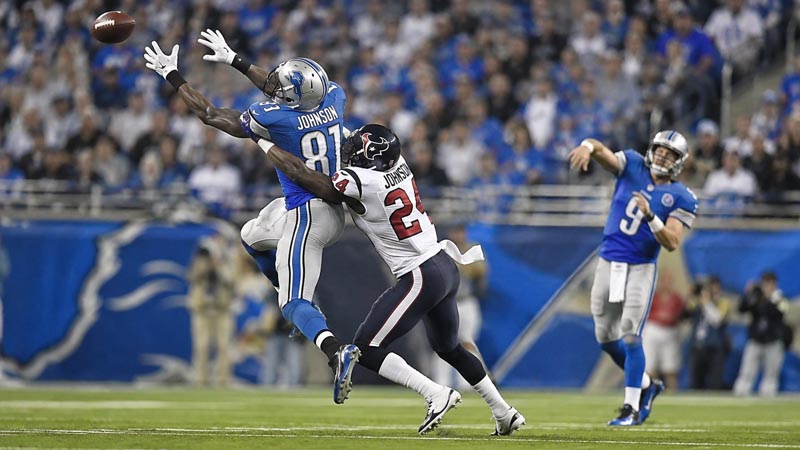
The modern passing game is a complex battle of physics, timing, and spatial awareness. At the center of this battle is one of the most critical and game-altering penalties in all of sports: Defensive Pass Interference (DPI).
When a quarterback unleashes a forward pass downfield, a highly regulated race begins between the receiver and the defender.
Both players have a right to the ball, but the rules dictate exactly how they can compete for it. Understanding where legal coverage ends and illegal interference begins is vital for players, coaches, and analytical fans who want to understand the modern game.
This analysis provides a highly structured, professional-grade breakdown of the mechanics, physical triggers, and rulebook variations governing defensive pass interference across different levels of football.
What is Defensive Pass Interference?
At its most fundamental level, defensive pass interference occurs when a defender illegally contacts an eligible offensive receiver downfield while a forward pass is in the air, thereby blocking that receiver’s fair opportunity to catch the pass.
To break this down into its technical components, three distinct conditions must be met simultaneously for a DPI penalty to be called:
- Eligible Receiver: The defender’s physical contact must be directed toward an offensive player who is legally eligible to catch a forward pass.
- Forward Pass in the Air: The contact must occur downfield while the forward pass is actively traveling through the air. Contact before the pass is thrown, or after the ball has already been touched, falls under different penalty categories (such as illegal contact, holding, or unnecessary roughness).
- Disruption of Opportunity: The physical contact must be illegal in nature and directly block or hinder the receiver’s chance to secure the football.
When these conditions are met, the officiating crew will throw a yellow flag, signaling a defensive infraction.
Because a single penalty can alter the field position by dozens of yards or instantly place the offense on the threshold of the goal line, DPI is widely considered one of the most high-stakes occurrences in football.
The Four Physical Triggers: Common Actions That Cause DPI
The boundary between tight, aggressive pass coverage and illegal defensive pass interference is often measured in inches.
Officials look for specific physical actions that disrupt the receiver’s route or physical mechanics. The provided documentation highlights four primary physical triggers that consistently result in a DPI flag:
1. Playing Through the Back
One of the most clear-cut infractions occurs when a defender runs into or pushes a receiver from behind before the football arrives.
- The Physics of the Infraction: A receiver must adjust their body, slow down, or jump to track and catch a pass. When a defender initiates physical contact through the receiver’s back, it alters the receiver’s momentum and equilibrium, making a clean catch physically impossible.
- The Official’s Viewpoint: Referees are trained to watch the space between the defender’s chest and the receiver’s back. If that space closes rapidly and contact is initiated from behind while the receiver is looking up at the ball, a penalty is immediately triggered.
2. Grabbing or Hooking
Defenders often attempt to recovery when they are beaten downfield by physically slowing the receiver down. This is typically done by pulling on the receiver’s arm, jersey, or body.
- The Physics of the Infraction: To catch a football, a receiver needs full range of motion in their arms and legs. Grabbing a jersey or pinning an arm restricts this movement, preventing the receiver from extending their hands or maintaining their stride.
- The Official’s Viewpoint: This is often spotted by watching the tension of the receiver’s jersey or the unnatural restriction of their arms. A “hook and turn” motion—where a defender wraps an arm around the receiver’s waist or shoulder to pull them around—is a highly visible cue that officials look for.
3. The Arm Bar
An arm bar occurs when a defender extends their arm horizontally across a receiver’s body to block their path.
- The Physics of the Infraction: A receiver has a legal right to run their route downfield to catch a pass. By extending a rigid arm across the receiver’s chest or midsection, the defender acts as a physical barrier, slowing down the receiver or forcing them off-path.
- The Official’s Viewpoint: Unlike normal side-by-side running contact, the extension of a stiff arm across the receiver’s torso is a highly deliberate motion. It is easily identified by sideline officials who have a clear view of the lateral space between the two players.
4. Not Playing the Ball
Perhaps the most crucial distinction in pass coverage is whether the defender is actively trying to make a play on the football. When a defender makes physical contact with the receiver instead of looking back or attempting to catch or bat away the incoming pass, they are guilty of not playing the ball.
- The Physics of the Infraction: A defender has an equal right to the football if they are tracking it. However, if they face the receiver and initiate physical contact without turning their head or raising their hands to contest the pass itself, the contact is deemed entirely illegal.
- The Official’s Viewpoint: This is assessed by watching the defender’s head and eyes. If the defender’s back is turned to the incoming ball and they plow into the receiver as the ball arrives, it is an automatic DPI. Conversely, if the defender turns their head and looks back at the ball, they are given much more leeway to make incidental contact while contesting the catch.
Ruleset Enforcement: How the Penalty is Assessed Across Football Levels
While the core definitions of illegal contact remain consistent, the actual penalty enforcement for defensive pass interference diverges drastically depending on the level of play.
The difference between professional rules and those used in amateur leagues completely alters game strategy, play-calling, and defensive risk assessment.
| Football Level | Enforcement Type | Penalty Metric | Key Exception / Nuance |
|---|---|---|---|
| Professional (NFL) | Spot Foul | Ball placed at the exact spot of the infraction; automatic first down. | If the foul occurs in the end zone, the ball is placed at the 1-yard line. |
| College (NCAA) | Capped Yardage | Strict 15-yard penalty from the previous line of scrimmage; automatic first down. | If the infraction occurs less than 15 yards downfield, it is assessed as a spot foul. |
| High School | Capped Yardage | Strict 15-yard penalty from the previous line of scrimmage; automatic first down. | If the infraction occurs less than 15 yards downfield, it is assessed as a spot foul. |
The Professional Standard: The NFL’s Spot Foul System
In the National Football League, the penalty for defensive pass interference is exceptionally severe.
It is enforced as a spot foul, which means the offensive team is awarded the ball at the exact location where the illegal contact occurred, accompanied by an automatic first down.
- The Strategic High Stakes: If a quarterback throws a deep pass 50 yards downfield, and the defender commits DPI at that 50-yard mark, the offense instantly gains 50 yards of field position. This makes DPI the most penalizing defensive infraction in the professional game.
- The End Zone Rule: Because a spot foul cannot physically be placed inside the end zone, the NFL has a specific exception for infractions that occur in the scoring area. If a defender commits pass interference in the end zone, the ball is placed directly at the 1-yard line, setting up an immediate goal-line opportunity for the offense.
- Tactical Impact: This ruleset incentivizes offenses to take deep downfield shots, knowing that even if the pass is incomplete, a defensive error can result in a massive gain. For defenders, it requires extreme discipline; a single mistimed grab can surrender half the length of the field.
The Amateur Standard: NCAA & High School Rulesets
In college and high school football, the ruleset is designed to prevent defensive mistakes from completely dictating the outcome of a game. At these levels, DPI is governed by a capped yardage system.
- The 15-Yard Cap: The standard penalty is a strict 15-yard penalty assessed from the previous line of scrimmage, along with an automatic first down. No matter how far downfield the foul occurs—even if it is a 60-yard pass—the defense is only penalized 15 yards.
- The Spot Foul Exception: There is a logical exception built into this system. If the illegal contact occurs close to the line of scrimmage—specifically, less than 15 yards downfield—the penalty is assessed as a spot foul instead of the full 15 yards. This ensures that the defense is not penalized more than the actual distance of the play.
- Tactical Impact: The 15-yard cap creates an interesting strategic dilemma for college and high school defenders. If a defender is beaten deep downfield and realizes a touchdown is highly likely, they may choose to deliberately commit a pass interference penalty. By pulling down the receiver, they trade a potential touchdown for a mere 15-yard penalty, keeping the offense out of the end zone and giving the defense another chance to hold.
Strategic Implications of Ruleset Differences
The divergence between the NFL’s spot-foul system and the NCAA’s capped system shapes how coaches construct their game plans and how players behave in high-pressure situations.
1. Professional Level: High-Risk, High-Reward Passing
In professional football, the presence of the spot-foul rule alters the mathematical risk profile of deep passing.
- Deep Ball Economics: A deep pass is inherently a lower-probability completion, but the threat of a spot-foul DPI significantly boosts the expected value of the play. Even if the receiver cannot make the catch, any slight physical disruption by a panicked defender yields the same field-position benefit as a completed pass.
- Defensive Conservative Play: Professional cornerbacks must play with immense control. Because the penalty for a deep foul is catastrophic to the defense’s field position, defenders are often trained to play slightly more conservatively on deep throws, preferring to yield a completion and make a tackle rather than risk pulling on a jersey or playing through the receiver’s back.
2. Collegiate Level: Defensive Risk Mitigation
In contrast, the NCAA ruleset shifts the strategic advantage back to the defense on deep passing plays.
- The “Tactical Foul”: When an NCAA defender is beat cleanly on a vertical route, the optimal business decision is often to commit an intentional foul. Grabbing the receiver’s jersey or pulling them down prevents an explosive touchdown. The resulting 15-yard penalty is a highly favorable outcome for the defense compared to giving up six points.
- Aggressive Downfield Coverage: Because the maximum penalty is capped at 15 yards from the previous spot, college defenders can play with significantly more physical aggression deep downfield. They can contest jump balls with physical contact, knowing that the worst-case scenario is capped at a manageable 15-yard infraction.
DPI Reference Guide
To help analysts, players, and fans quickly identify and understand these calls during a game, this reference framework outlines the key elements of defensive pass interference:
                  [ FORWARD PASS IS IN THE AIR ]
                                |
             +------------------+------------------+
             |                                     |
    [ ILLEGAL CONTACT ]                     [ LEGAL CONTACT ]
             |                                     |
  - Playing through the back          - Side-by-side running
  - Grabbing/Hooking jersey           - Incidental hand contact
  - Extending an arm bar              - Looking back & playing the ball
  - Not playing the ball
             |
             v
   =====================
     DPI IS TRIGGERED!
   =====================
             |
             +------------------+------------------+
             |                                     |
         [ NFL ]                                [ NCAA ]
             |                                     |
      - Spot Foul                       - 15-Yard Penalty
      - Automatic First Down            - Automatic First Down
      - End Zone = 1-Yard Line          - Spot Foul if < 15 Yards
Conclusion
Defensive pass interference remains one of the most thoroughly analyzed and discussed rules in modern sports.
By establishing clear boundaries against physical infractions like playing through the back, grabbing, arm-barring, and ignoring the ball, the rules ensure that the passing game remains dynamic, exciting, and fair.
However, as we have analyzed, the massive discrepancy in how this rule is enforced between the professional level and amateur levels creates entirely different tactical landscapes.
The NFL’s high-stakes spot-foul system demands absolute physical discipline from elite defenders, while the NCAA’s capped 15-yard system allows for aggressive downfield play and tactical decision-making.
Understanding these mechanics is the key to appreciating the complex chess match occurring on every single passing play.