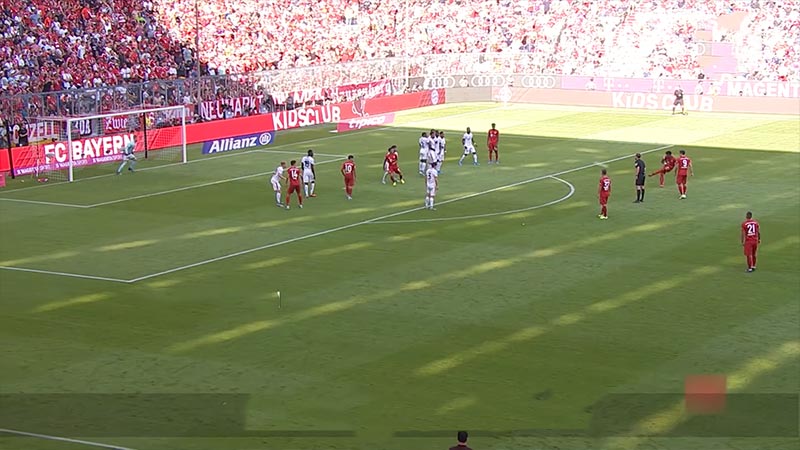
In the intricate architecture of a football formation, every role serves a specific tactical purpose. Among these, the left-back (LB) has undergone one of the most significant transformations in the modern era.
Once a position reserved for purely defensive-minded players, the modern left-back is now a multifaceted asset that balances defensive stability with offensive creativity.
Understanding what “LB” means in soccer requires looking beyond the basic definition and examining the physical, technical, and mental demands of this high-profile role.
The Core Definition: Defining the Left-Back
In soccer, LB stands for Left-Back. Positioned on the left side of a four-man defensive unit, this player is typically assigned the traditional shirt number 3.
Geographically, the left-back operates along the left flank, situated between the central defenders and the midfield line.
In standard formations such as the 4-4-2 or 4-3-3, the left-back is considered an indispensable link. They provide the necessary balance to the defensive system, ensuring the team is not vulnerable to attacks originating from the opponent’s right side.
This position is no longer just about standing at the back; it has become one of the most physically demanding roles on the pitch due to the sheer amount of ground the player must cover during a match.
The Defensive Foundation: Protecting the Flank
The primary and most fundamental responsibility of a left-back is to protect the team’s left flank from opposing attacks. This role is multifaceted and requires a high degree of defensive discipline.
1v1 Defensive Mastery
A left-back must be a reliable “stopper,” specialized in preventing opposing wingers or midfielders from delivering crosses into the penalty area.
They are frequently placed in high-pressure, one-on-one situations against fast and skillful right-sided attackers. To succeed, a left-back must:
- Maintain Distance: Avoid rushing in too early, which prevents being beaten by a quick dribble.
- Use Physicality: Effectively use their body to block the opponent’s movement and force them into less dangerous, non-central positions.
- Execute Precise Tackles: Regain control of the ball through accurate tackling, man-marking, and intercepting passes.
Tactical Covering and Awareness
Beyond confrontation, the left-back serves a crucial role in supporting the central defenders.
When the ball is on the opposite wing or in the center, the left-back must “tuck in” or close the gap between themselves and the center-backs. This creates a tightly linked, cohesive defensive unit that is difficult for opponents to penetrate.
The Modern Evolution: The Offensive Pivot
In the modern game, the left-back position is no longer confined to the defensive third of the field. Depending on the manager’s tactics, a player may transition from a pure defender into an attacking wing-back who provides essential width to the team’s offensive plays.
The Power of the Overlapping Run
One of the most effective tools in a left-back’s arsenal is the overlapping run. This occurs when the left-back runs past their own left winger, creating a two-on-one situation against the opposing defense.
This movement forces the opposing defenders to make a split-second decision: stay with the winger or track the advancing left-back. These runs are essential for breaking down compact defensive blocks.
Crossing and Playmaking
As they push higher up the pitch, left-backs become secondary playmakers. Their ability to deliver accurate crosses—both low and high—into the penalty box is a vital attacking weapon. An early cross can catch a defense out of position, creating decisive scoring opportunities for the forwards.
The Elite Skill Set: What Makes a Top LB?
To perform effectively at a professional level, a left-back must possess a unique blend of physical attributes and tactical intelligence.
Speed and Physical Endurance
Speed is a non-negotiable requirement. A left-back must possess long-distance running speed to transition from offense to defense throughout the full 90 minutes.
Additionally, short-burst acceleration is necessary to contest for loose balls or track a fast-breaking winger during a counter-attack. This constant movement is why the role is often cited as the most physically taxing on the field.
Tactical Intelligence and Reading the Game
A world-class left-back is not just fast; they are smart. The ability to anticipate the direction of an opponent’s attack allows them to position themselves correctly before a dangerous situation even develops.
Good positioning minimizes the need for risky, last-ditch tackles and reduces the chance of being dribbled past. This mental acuity is a decisive factor in maintaining a team’s defensive integrity.
The Technical Triangle
Effective left-backs do not work in isolation. They often form a tactical triangle with the left-center-back and the left winger.
This three-player unit works in tandem to control space, maintain possession, and dictate the flow of the game on that side of the pitch.
Formations and Tactical Flexibility
The specific duties of a left-back can shift based on the team’s formation:
- The Traditional 4-4-2: The LB focuses heavily on defensive stability and supporting the winger ahead of them.
- The Modern 4-3-3: The LB is often given more freedom to join the attack, acting as a primary source of width while the wingers move into central positions.
- The Defensive Anchor: In some systems, the LB remains a “pure defender,” rarely crossing the halfway line to ensure the team is never caught out on the break.
Common Questions: Understanding the LB Position
Does the LB always wear number 3?
While number 3 is the traditional shirt number for a left-back, players in the modern era may wear various numbers depending on club tradition or personal preference.
What is the difference between an LB and an LWB?
A Left-Back (LB) usually operates in a back four, with more emphasis on defensive duties. A Left Wing-Back (LWB) typically plays in a back five (or three) and is expected to operate almost like a winger, with even greater offensive responsibilities.
Can a right-footed player play as a left-back?
Yes, though it is less common. A right-footed left-back often plays as an “inverted” full-back, cutting inside to use their stronger foot for passing or shooting, rather than staying wide to deliver traditional crosses.
Conclusion: The Indispensable Link
The left-back is a cornerstone of modern football tactics. From acting as a “stopper” who nullifies the opponent’s most dangerous attackers to serving as a high-speed engine that drives the team forward, the role requires a rare combination of grit and grace.
Whether they are tucking in to cover the center or overlapping to provide a match-winning cross, the player occupying the LB position is a vital link in the team’s pursuit of victory.
Understanding the depth of this role provides a much clearer picture of how modern teams operate as a fluid, cohesive unit.