For decades, the standard of defensive excellence in football was measured by a singular, violent exclamation point: the sack.
When a defensive end broke through the offensive line and brought the passer to the turf, the stadium erupted, the box score updated, and the defensive player’s market value climbed.
However, as football analytics have matured, front offices, coaches, and analysts have realized that focusing solely on sacks is like evaluating a pitcher only by their strikeouts.
Sacks are rare, high-impact events that occur on only a small fraction of passing plays. To truly understand how a defense limits an opposing passing game, we must look at a much broader, more consistent metric: quarterback pressure.
The Anatomy of a Quarterback Pressure: The Four Core Components
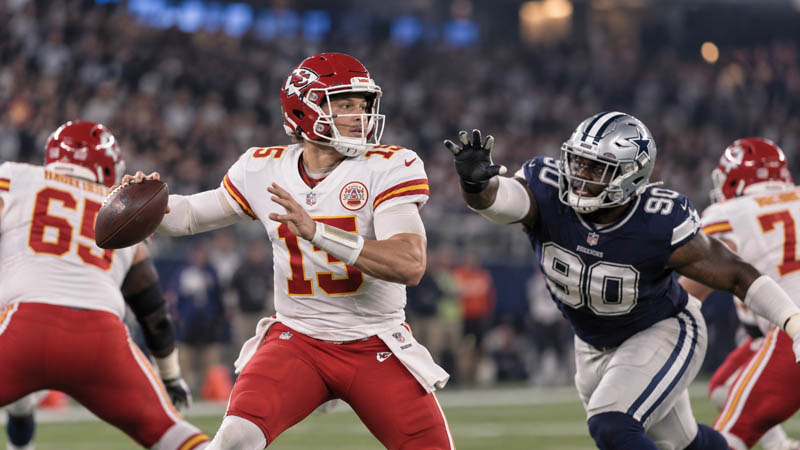
At its most fundamental level, a quarterback pressure is defined as a defensive action where a pass rusher gets close enough to disrupt the passer before they can execute a clean throw. Rather than being a single, isolated statistic, it serves as an overarching umbrella metric.
When an analytical outlet or NFL team tallies “total pressures,” they are aggregating four distinct defensive achievements: sacks, quarterback hits, knockdowns, and hurried throws.
To understand how a defensive front collapses a passing game, we must isolate each of these components.
                  ┌──────────────────────────────────────┐
                  │      QUARTERBACK PRESSURE (UMBRELLA) │
                  └──────────────────┬───────────────────┘
                                     │
         ┌───────────────────────────┼───────────────────────────┐
         ▼                           ▼                           ▼
     [SACKS]                 [HITS & KNOCKDOWNS]             [HURRIES]
Tackled behind LOS          Physical contact right        Forced to throw
before throw released       as or after release          early or off-balance
Sacks
The most absolute and celebrated form of pressure is the sack. This occurs when a defender tackles the quarterback behind the line of scrimmage before a pass can be thrown. Economically and tactically, sacks are devastating.
They not only result in a loss of a down but also strip away valuable yardage, putting the offense behind the chains and significantly reducing the mathematical probability of a successful drive.
Hits and Knockdowns
A quarterback hit or knockdown occurs when a pass rusher physically strikes or tackles the quarterback right as the ball is released, or immediately afterward. While a hit does not stop the throw from being made, its value is twofold:
- Immediate Disruption: The impending collision often forces the quarterback to alter their throwing mechanics, lowering their pass accuracy.
- Cumulative Physical Attrition: Repeated physical hits wear down a quarterback over four quarters, impacting their pocket confidence, decision-making, and deep-ball accuracy late in the game.
Hurries
A quarterback hurry is the most frequent—and analytically fascinating—element of pressure. A hurry occurs when a defensive player forces the quarterback to throw the ball earlier than intended or to release it from an unnatural, compromised posture.
When a defender penetrates the pocket, the quarterback must make a split-second business decision: hold onto the ball and risk a sack, scramble away to buy time, or throw the ball away to a checkdown option before the route concept has fully developed.
Subjective Charting vs. Next Gen Objective Tracking
While the football community widely accepts the value of pocket disruption, a fierce debate persists regarding how this statistic is actually measured.
To the average fan, determining whether a quarterback was “hurried” or “disturbed” seems highly subjective. Indeed, there are two distinct methodologies utilized to track pressures today: human-graded scouting and sensor-based physical tracking.
The Subjective Human Eye Test
Traditionally, counting pressures has been the domain of film study and charting companies. Human graders review every snap of a game, evaluating whether a defender’s movement genuinely “influenced” or “disturbed” the quarterback’s decision-making.
Under this subjective framework:
- If a quarterback snaps the ball and is forced to scramble or climb the pocket due to defensive penetration, a pressure is logged—even if the defender never actually touches the passer.
- Graders must evaluate the intent of the quarterback. Did the passer throw a quick slant because that was the primary read, or did they throw it because an edge rusher won their block in under two seconds?
Critics argue that this level of interpretation makes pressure stats noisy and inconsistent on a single-game basis. Because humans must infer what the quarterback was seeing and feeling, different charting outlets often produce different pressure totals for the same game. However, analysts counter that over a large sample size, these subjective discrepancies even out, allowing the true elite pass rushers to consistently rise to the top of the leaderboards.
The Objective Proximity Model
To eliminate human bias and establish a standardized baseline, the NFL’s Next Gen Stats system relies entirely on spatial tracking chips embedded in player equipment.
Rather than guessing whether a quarterback felt “hurried,” Next Gen Stats uses precise, coordinate-based tracking to calculate pressure through physical proximity.
Under this objective methodology, quarterback pressure is defined as:
- Any pass attempt or sack where a defender was within 2 yards of the quarterback at the moment of the forward pass.
- Any play where a defender was within 1.5 yards of the quarterback at any point during the entire play.
This spatial approach completely strips away the ambiguity of human interpretation. It does not care if the quarterback is a cool-headed veteran who stands tall in the pocket or a jittery young player who panics; if a defender enters those precise spatial zones, a pressure is mathematically recorded.
| Metric Type | Methodology | Key Benefit | Main Limitation |
|---|---|---|---|
| Subjective Charting | Human graders analyzing film to determine defensive influence. | Captures the nuance of why a quarterback threw early. | Subject to human error and variation between graders. |
| Next Gen Tracking | Microchips tracking physical proximity (2-yard & 1.5-yard rules). | 100% objective, standardized, and mathematically verifiable. | Cannot measure the psychological effect of a defender who is close but not within the radius. |
The Tactical Imperative: Why Pressure Rules Modern Football
The reason NFL front offices and coaching staffs spend tens of millions of dollars on elite edge rushers and interior defensive tackles is simple: pressure ruins offensive efficiency.
Modern passing games are built on absolute precision, timing, and rhythm. Quarterbacks take three-, five-, or seven-step drops, expecting their wide receivers to break at exact yardages at precise moments. When a defense successfully collapses the pocket, that timing is shattered.
Ruining Timing and Rhythm
When a pass rusher wins their battle early, the quarterback’s internal clock is accelerated. Instead of scanning the field from left to right to find a second or third progression, the quarterback is forced to react to the immediate threat in their face. This leads to off-schedule plays, hurried releases, and broken mechanics.
Forcing Costly Mistakes
The statistical correlation between pocket disruption and defensive success is overwhelming. Pressured quarterbacks are far more prone to throwing incomplete passes or turning the ball over via interceptions.
When forced to throw off-balance, under physical duress, or before routes are fully run, even elite quarterbacks experience a massive drop in their completion percentages and passer ratings.
Furthermore, defensive coordinators know that while sacks are highly volatile and depend on quarterback play style, consistent pressure is a highly stable and predictive metric of a defense’s long-term capability to stop the pass.
The Completion Controversy: The Battle Over Statistical Significance
As pressure metrics have entered the mainstream, they have sparked a contentious debate among fans, traditional analysts, and modern statisticians.
The core of this disagreement lies in a simple question: If a quarterback completes a pass while under duress, should the play still be counted as a pressure?
                       [ PASS ATTEMPT UNDER DURESS ]
                                     │
                  ┌──────────────────┴──────────────────┐
                  ▼                                     ▼
          [ PASS IS COMPLETED ]                [ PASS IS INCOMPLETE ]
                  │                                     │
     ┌────────────┴────────────┐                        │
     ▼                         ▼                        ▼
[SKEPTICS' VIEW]       [ANALYSTS' VIEW]           [UNIFIED AGREEMENT]
The pressure had no    The process was correct.   Defensive win. Timing
significance; credit   A great throw doesn't      disrupted, errors forced,
should not be given    negate the defensive       or turnover committed.
for a "failed" play.   win of collapsing pocket.
The Case Against Completed Pressures
Critics argue that counting pressures on completed plays can overstate a defender’s impact. If a quarterback calmly completes a big pass despite pressure, they believe the pressure had little effect on the outcome.
This view suggests analytics may sometimes over-credit pass rushers with high pressure totals while overlooking defenders who make actual tackles and sacks.
The Analytical Defense of Process over Outcome
Modern analysts argue that defensive performance should be judged by process, not just outcomes. A pass rusher who beats a blocker and disrupts the quarterback has done their job, even if the pass is completed.
Consistent pressure can create more defensive success over a season, making pressure metrics valuable for identifying elite disruptors beyond sacks and tackles alone.
Conclusion
Understanding quarterback pressure transforms how we watch football. Instead of watching the game with our eyes glued exclusively to the ball, tracking the battle along the line of scrimmage reveals the true narrative of defensive play.
A defense may not finish a game with five sacks, but if their defensive line is consistently collapsing the pocket, disrupting the quarterback’s timing, and forcing hurried throws, they are quietly controlling the game.
In a league governed by razor-thin margins, understanding the science of pressure is the key to unlocking the true value of defensive performance.