In modern football, offensive success depends on strategy, timing, and quick decision-making as much as physical ability.
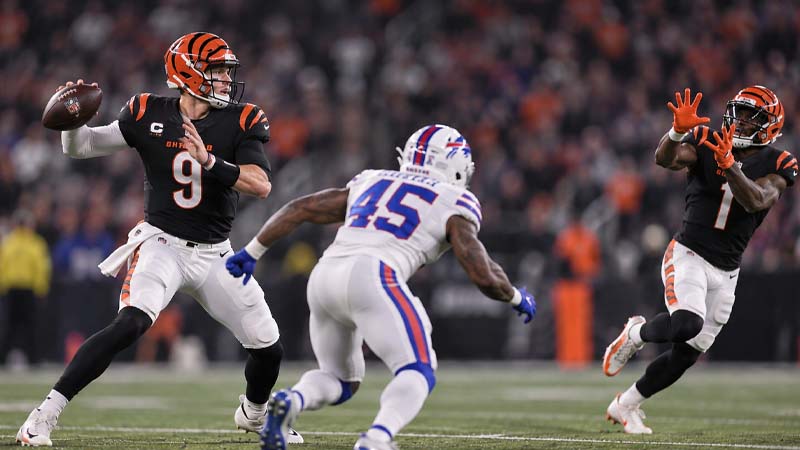
One of the defense’s most dangerous tactics is the blitz, which sends extra rushers to pressure the quarterback and disrupt the play.
To counter this threat, offenses use the hot route—a pre-snap adjustment that changes a receiver’s route based on the anticipated defensive pressure.
The quarterback communicates the adjustment before the snap, giving the receiver a quick, accessible target.
The goal is simple: get the ball out before the unblocked defender reaches the quarterback while exploiting the open space created by the blitz.
The Mathematics of Pass Protection and the “Free Rusher”
A hot route begins with the basic math of pass protection. Typically, five offensive linemen are responsible for blocking five potential rushers, creating balanced protection.
Offenses can add a running back or tight end as extra blockers, but doing so reduces the number of receivers available to run routes, limiting passing options.
Pass Protection Matrix:
+-------------------+---------------------+-------------------------+
| Eligible Blockers | Defensive Rushers   | Tactical Outcome        |
+-------------------+---------------------+-------------------------+
| 5 (O-Line)        | 5 or fewer          | Mathematically Balanced |
| 6 (O-Line + RB)   | 6                   | Accounted For           |
| 5 (O-Line)        | 6 (Blitz)           | One Free Rusher (Hot)   |
| 6 (O-Line + RB)   | 7 (Exotic Blitz)    | One Free Rusher (Hot)   |
+-------------------+---------------------+-------------------------+
When a defense sends more rushers than the offense can block, it creates a “free rusher”—a defender with an unblocked path to the quarterback. The quarterback generally has three options:
- Alter the Protection Scheme: A pre-snap adjustment can shift blocking assignments so the extra defender is accounted for.
- Keep Receivers in to Block: A running back or tight end can stay in the backfield to provide additional pass protection instead of running a route.
- Execute a Hot Throw: The quarterback can release receivers into their routes and quickly throw to a designated hot target before the free rusher reaches him.
These concepts are often confused:
- The Audible: A broad pre-snap change that replaces or modifies the original play based on the defensive alignment. An audible may include a hot route, but they are not the same thing.
- The Hot Route: A quick route adjustment designed to counter immediate pressure, giving the quarterback a rapid outlet against an unblocked defender.
- The Checkdown: A late safety valve, usually a running back or tight end, used after deeper routes are covered.
Tactical Synchronicity – The Quarterback-Receiver Connection
A hot route is not a solo maneuver; it requires absolute conceptual alignment between the quarterback and the receiving target.
If either player misinterprets the defensive presentation, the adjustment fails, leading to sacks, incomplete passes, or costly interceptions.
The Quarterback’s Operational Workflow
Before the snap, the quarterback studies the defense, identifying linebacker depth, safety alignment, cornerback leverage, and potential blitz threats.
However, a defender showing blitz does not guarantee they will rush; defenses often disguise coverage by dropping apparent rushers into zone coverage after the snap.
After the snap, the quarterback must quickly confirm which defenders are actually rushing and identify the “hot” defender—the unblocked rusher the protection cannot account for.
Once that defender commits, the quarterback must deliver the ball immediately to the open area, trusting that the receiver has recognized the same defensive adjustment.
The Receiver’s Operational Workflow
For the eligible receiver, the golden rule of managing pressure is to “replace the blitzer”. When a defensive player—such as a slot cornerback or an inside linebacker—abandons their spatial zone to rush the quarterback, they leave behind an open window of grass.
If the defense does not rotate another coverage defender into that specific space, the receiver must immediately break off their deep route path and sprint into that vacated area.
Visualizing "Replacing the Blitzer":

       [Safety]            [Safety]
          |                   |
          |                   |
  [CB]    v   [Linebacker]    v    [CB]
                 / (Blitzes)
                /
  [WR] --------> [Vacated Zone]  <--- Receiver runs here

              [Quarterback]
This rapid adjustment is often referred to as a “sight adjustment”. It demands that the receiver and quarterback read the defense with the exact same eyes.
If the receiver continues running a deep post route while the quarterback throws an immediate short pass based on a perceived blitz, the ball will sail into open territory, frequently resulting in a turnover.
The Hot Route Catalog – High-Efficiency Concepts
Offensive systems employ several short-area route concepts to defeat blitz packages. These routes are selected because they can be executed rapidly, allowing the receiver to present a clear target to the quarterback within three steps of the snap.
1. The Quick Slant
The quick slant is one of the most reliable weapons against aggressive pressure. To execute this route, the receiver takes one or two hard steps forward to threaten the defensive back vertically, then pivots sharply off their outside foot, slanting toward the middle of the field at a 45-degree angle.
- Why it works: By cutting inside, the receiver leverages their body against the defender, creating an immediate throwing lane. The quarterback delivers the ball the instant the receiver breaks. It is highly effective against man-to-man coverage where the defender is playing with outside leverage.
2. The Hitch and Quick Curl
The hitch and quick curl routes are designed to exploit defenses that are backing up or playing with a deep cushion to prevent big plays.
The receiver sprints forward aggressively for two or three steps, simulating a serious vertical threat, and then stops abruptly, curling back toward the line of scrimmage to face the quarterback.
- Why it works: When a defender is backing up rapidly to defend against a deep pass, the sudden stop creates natural separation. This provides the quarterback with a stationary, reliable target who is facing the backfield, making it an excellent security outlet.
3. The Flat and Speed Out
These routes attack the horizontal boundaries of the field, stretching the defense laterally. The receiver breaks immediately toward the sideline, running parallel to or slightly past the line of scrimmage.
- Why it works: Blitz packages often force second-level defenders (like linebackers) to vacate the flats. A quick out or flat route puts the ball in the hands of a playmaker in open space near the sideline, where they can turn upfield for a quick gain.
4. The Screen Route
Unlike traditional downfield routes, the screen route involves catching the ball behind or immediately at the line of scrimmage. The receiver takes a step into the backfield or slides horizontally to the side immediately after the snap, waiting for the pass.
- Why it works: On a designed screen, the offensive line intentionally invites pressure, letting the defensive rushers penetrate deep into the backfield. By throwing the ball over or around the rushers to a receiver flanked by blocking teammates, the offense turns the defense’s forward momentum against itself.
Strategic Counters – Decoy Pressure and Defensive Traps
Because hot routes are highly effective at neutralizing pressure, defensive coordinators do not simply accept their fate.
Instead, they design sophisticated defensive traps to exploit the quarterback’s reliance on these emergency outlets. This chess match between offensive execution and defensive deception is what defines high-level football.
The Bluff Blitz
One of the most common defensive tactics is the bluff blitz. In this scenario, multiple defenders crowd the line of scrimmage before the snap, making it appear as though they are bringing a heavy rush. This presentation is designed to trick the quarterback into making a pre-snap hot adjustment or calling an audible.
At the snap, however, the bluffing defenders drop back into coverage zones, while other defenders drop into the exact passing lanes the quarterback is expecting to target.
If the quarterback throws the hot route blindly based on the pre-snap look, they will often throw the ball directly to a waiting zone defender.
The Zone Exchange (Zone Blitz)
In a zone blitz scheme, the defensive coordinator sends an unexpected pressure package—such as an outside linebacker or a safety—but compensates for the vacated coverage space by dropping a defensive lineman or an opposite defender into that area.
For example, if the slot cornerback blitzes, the quarterback might expect the slot receiver’s hot slant to be wide open. However, the defense may drop an edge-defending defensive end or a dropping safety directly into that throwing window. If the quarterback fails to identify this rotation, the pass can easily be deflected or intercepted.
The Defense Fills the Void:
1. Slot CB blitzes from the left edge.
2. Quarterback expects the Slot Receiver to be open in the vacated space.
3. Defensive End drops back into that exact space, trapping the quick throw.
How to Spot These Interactions on Television
For analytical viewers watching a broadcast, identifying a true hot route adjustment requires focusing on three specific visual cues:
- Unblocked Edge Rushers: Watch the snap to see if a defender penetrates the backfield completely unblocked by design, rather than simply beating their blocker.
- Immediate Release: Observe the quarterback’s mechanics. If they plant their back foot and release the ball almost instantly without going through their deeper progression, they are throwing a hot pass.
- The Target’s Break: Look at the receiver’s route depth. If the ball is caught within five yards of the line of scrimmage, and the receiver broke off their route immediately to turn and face the quarterback, you are watching a coordinated pressure adjustment.
Virtual Execution – Mastering EA Sports College Football 26
The strategic complexity of hot routes is not confined to Saturday afternoons and Sunday stadiums; it is a primary gameplay mechanic in modern football simulations.
In EA Sports College Football 26, mastering the pre-snap adjustment system is essential for defeating aggressive online opponents and navigating difficult defensive looks.
Console Control Mapping (EA Sports College Football 26):
+------------------------------------+------------------------------------------+
| Action                             | Input Command                            |
+------------------------------------+------------------------------------------+
| Open Hot Route Menu                | Press Triangle (PS5) or Y (Xbox)         |
| Select Receiver                    | Press Receiver's Corresponding Icon      |
| Select New Route Assignment        | Move Left/Right Stick, D-Pad, or Trigger |
| Custom Route Stemming              | Modify depth of selected route path      |
+------------------------------------+------------------------------------------+
Step-by-Step Hot Route Execution
To modify a receiver’s route before the snap in College Football 26, use the following operational sequence:
- Initiate the Adjustment: Press Triangle (on PlayStation 5) or Y (on Xbox) to open the pre-snap adjustment menu.
- Identify the Target: Each eligible receiver will display their corresponding button icon above their head. Press the button of the receiver you want to modify.
- Select the Route: The hot route menu will appear on screen, offering up to 14 distinct route options. These options are selected using the left stick, right stick, directional pad (d-pad), and triggers of the controller.
The specific hot routes available to a player vary dynamically based on their position on the field and their physical archetype. A slot receiver will have access to different quick routes compared to a tight end or a running back lined up in the backfield.
Advanced Gameplay Techniques
To elevate your offensive efficiency against elite players, integrate these advanced tactics:
- Custom Route Stemming: This advanced feature allows players to manually adjust the depth of certain routes before the snap. If you expect your opponent to play tight coverage, you can shorten a curl or out route to make the pass release even faster.
- Setting Pass Protections: Before committing to a hot throw, check your pass protection menu to see if you can slide your blocking assignments to pick up the blitzing defenders. If you can successfully block the pressure, you can run your deeper play-call instead of forcing a short emergency throw.
- Pairing Audibles with Hot Routes: If the defense shows an overwhelming blitz look that you cannot block, you can use the audible system to switch to a quick-game play, then use individual hot routes to create the perfect combination of routes to beat their specific coverage.
Strategic Synthesis
Ultimately, the battle between the blitz and the hot route highlights the strategic depth of football. A blitzing defense attempts to use numerical superiority to disrupt the offensive rhythm.
The offense counters not by matching their physical force, but by using spatial intelligence and precise timing to make the defense’s aggressiveness their biggest weakness.
By mastering the protection math, building strong pre-snap communication between the quarterback and receiver, and learning how to adjust routes on both the physical field and the digital console, players can turn defensive pressure into explosive, game-winning plays.