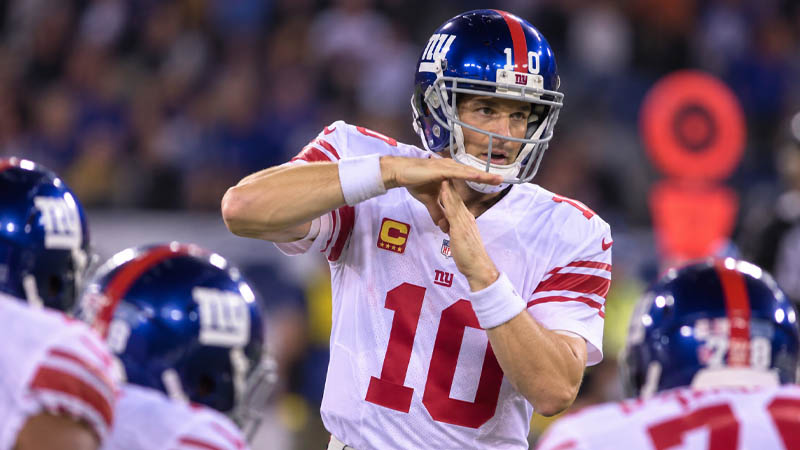
In the high-stakes arena of professional and collegiate athletics, strategic timing is often the thin line separating a defining victory from an organizational setback.
In American football, the game clock is not merely a passive counter of passing seconds; it is a dynamic element that coaching staffs must actively manage to secure a competitive advantage.
The ultimate tool in this temporal choreography is the timeout—a tactical stoppage that halts the clock and provides a brief window of critical adjustment.
Understanding the precise regulations governing timeouts, from their frequency and duration to their level-by-level variations, is crucial for analysts, executives, and coaching staffs alike.
This guide provides an exhaustive, multi-level analysis of football timeout mechanics, strategic applications, and the structural differences that define clock management across the National Football League (NFL), the National Collegiate Athletic Association (NCAA), and high school football.
The Core Architecture: Timeout Allocations Across All Levels
At its foundational level, American football structures its timing around a highly regulated allocation of stoppages.
Across the NFL, NCAA (college football), and high school levels, each participating team is permitted three timeouts per half, resulting in a total of six team-called timeouts throughout the course of a standard four-quarter regulation game.
+-----------------------------------------------------------+
|               REGULATION TIMEOUT ALLOCATION               |
+-----------------------------+-----------------------------+
|          FIRST HALF         |         SECOND HALF         |
|   (Quarters 1 & 2 combined) |   (Quarters 3 & 4 combined) |
+-----------------------------+-----------------------------+
|  Team A: 3 Timeouts         |  Team A: 3 Timeouts         |
|  Team B: 3 Timeouts         |  Team B: 3 Timeouts         |
+-----------------------------+-----------------------------+
|    * Unused timeouts from the first half do not carry over  |
+-----------------------------------------------------------+
The Non-Carry-Over Principle
This allocation is strictly bounded by half-game intervals. Any timeouts that remain unused at the end of the first half (encompassing the first and second quarters) are immediately forfeited. Unused timeouts do not carry over from the first half to the second half.
This lack of carry-over requires head coaches to exercise precise “use-it-or-lose-it” decision-making as the second quarter draws to a close.
A team cannot hoard first-half stoppages to deploy a flurry of six timeouts during the critical closing minutes of the fourth quarter. Each half must be managed as its own distinct temporal entity.
The Overtime Reset
When regulation play ends in a tie, the timing parameters reset under overtime rules. In the NFL, if a game extends into an overtime period, each team is immediately granted two additional timeouts specifically designated for the extra frame.
Crucially, this overtime allocation is entirely independent of previous play; teams receive these two overtime timeouts regardless of how many timeouts they had left at the end of the fourth quarter of regulation play.
This reset levels the playing field, ensuring that both teams enter the high-stakes overtime period with equal temporal resources to manage their drives and defensive stops.
Strategic Executions: How Modern Coaching Staffs Deploy Timeouts
To appreciate why these stoppages are so highly valued, one must examine how coaching staffs deploy them. A timeout is far more than a simple pause in play; it is a versatile strategic lever that can change the momentum of a game.
                      strategic timeout utility
                                  │
         ┌────────────────────────┼────────────────────────┐
         ▼                        ▼                        ▼
  physical rest          roster substitutions      tactical planning
  (reclaim energy)     (prevent penalties/errors)   (adjust schemes)
Athletic Recovery and Physical Rest
At its most immediate physical level, a timeout allows players to rest. Given the high-intensity, collision-based nature of American football, a brief recovery window can be vital. This is particularly true:
- During grueling, multi-play drives where the offensive line has marched the length of the field, leaving both offensive and defensive players winded.
- Following consecutive deep passing plays that fatigue the defensive secondary, leaving them vulnerable to deep-threat receivers.
- During extreme weather conditions where players require hydration to maintain peak physical performance.
Roster and Personnel Substitutions
Football relies on highly specialized personnel groups, including goal-line packages, nickel and dime defenses, and specific third-down passing units.
When an offense rapidly changes its alignment or executes a fast-paced “no-huddle” scheme, the defense may find itself with the wrong personnel on the field.
To avoid a catastrophic mismatch or an immediate penalty for having too many players on the field, a coach will call a timeout.
This allows the staff to safely execute necessary roster substitutions and ensure that the eleven players on the field are properly aligned to counter the opponent’s formation.
Strategic Coordination and Play-Calling Adjustments
Before critical downs—such as a fourth-and-goal conversion attempt or a crucial late-game two-point conversion—coaching staffs will call a timeout to go over strategy. This pause allows:
- The offensive or defensive coordinator to communicate the exact play design directly to the quarterback or defensive captain.
- The staff to ensure that every player on the field understands their blocking, coverage, or route-running assignments.
- The team to adjust its approach based on the specific defensive front or offensive alignment observed before calling the timeout.
Psychological Warfare: “Icing the Kicker” and Clock Limitations
One of the most widely debated tactical maneuvers in modern football is the practice of “icing the kicker”. This tactic occurs late in a half or at the very end of the fourth quarter when an opponent is preparing to attempt a potentially game-winning field goal. Just as the kicker is lining up or immediately before the ball is snapped, the opposing head coach will call a timeout.
                     "icing the kicker" sequence
                                  │
               [ Kicker lines up for a crucial field goal ]
                                  │
                                  ▼
             [ Opposing coach calls a strategic timeout ]
                                  │
                                  ▼
          [ Kicker is forced to wait, disrupting routine ]
                                  │
                                  ▼
           [ Play resumes; kicker attempts field goal under
                      heightened pressure ]
The Psychological Intent
The strategic intent behind this move is purely psychological: to throw off the opponent’s kicker. By forcing the kicker to wait on the field, walk back to the sideline, and spend extra time thinking about the upcoming kick, coaches attempt to disrupt the kicker’s mental rhythm and physical routine.
The Consecutive Timeout Restriction
To prevent coaches from exploiting this psychological tactic and causing excessive, fan-unfriendly delays, rule makers implemented strict limits on consecutive stoppages.
Under official regulations, teams are not allowed to use timeouts twice in a row on the same scrimmage down in an attempt to delay the game clock even further.
This consecutive timeout restriction is a critical rule that prevents a coach from “double-icing” a kicker. A coach cannot call a timeout, let the teams line up again, and immediately call a second consecutive timeout on the same down.
Once a timeout is called, play must resume, and at least one scrimmage play or down must occur before that same team can legally request another stoppage.
This rule maintains the competitive flow of the match and ensures that strategic maneuvers do not devolve into anti-competitive stalling tactics.
The Mechanics of Duration: 30-Second vs. 2-Minute Stoppages
A common point of confusion for spectators is the varying length of timeouts during a live broadcast. Under official rules, the duration of a timeout is not static; it adjusts dynamically based on the commercial status of the game and the specific circumstances under which the timeout was requested.
Football Timeout Duration
| 2-Minute Timeout | 30-Second Timeout |
|---|---|
| Used for standard TV commercial breaks | Not used for a TV commercial break |
| Allows television networks to air advertisements | Used when a second timeout is called during the same stoppage |
| May occur when the scheduled number of TV breaks has been exhausted | Can be used when the quarter’s allotted TV breaks are already complete |
| Provides a longer break in play | May be ordered by the referee when a shorter stoppage is appropriate |
The Two-Minute Media Timeout
A team-called timeout is typically two minutes long if utilized for a television commercial break. These extended stoppages allow broadcast partners to air advertisements while providing teams with a generous window to rest, hydrate, and conduct thorough tactical adjustments on the sideline.
The 30-Second Shortened Timeout
When a timeout is not used for a television commercial break, the duration is shortened to 30 seconds. This rapid turnaround ensures the game maintains a brisk pace and does not lose viewer momentum.
Furthermore, the rules dictate specific scenarios where a timeout is automatically restricted to a 30-second duration, regardless of standard broadcast considerations:
- The Second Stoppage Rule: If a team calls a timeout, and a second timeout is requested during that exact same stoppage, the subsequent timeout is restricted to 30 seconds.
- Exhausted Television Breaks: Each quarter has a predetermined set number of television commercial breaks. Once this set number of TV breaks has been fully utilized for that quarter, any subsequent team-called timeouts are restricted to 30 seconds.
- Referee Discretion: The head referee retains the ultimate authority to declare a 30-second timeout if they determine that a shorter break is necessary or appropriate under the current circumstances of the game.
Level-by-Level Variations: NFL, College, and High School Rules
While the baseline allocation of three timeouts per half remains consistent across the sport, significant structural differences emerge when comparing professional, collegiate, and secondary school levels.
| Level | Timeouts Per Half | Unique Timing Rules |
|---|---|---|
| NFL | 3 per half | 2 timeouts in overtime |
| College (NCAA) | 3 per half | Automatic two-minute timeout called by officials near the end of Q2 and Q4 |
| High School | 3 per half | Standard amateur rules without commercial broadcast halts |
National Football League (NFL)
NFL games adhere strictly to the standard three timeouts per half format, supplemented by the two-timeout allocation in the event of an overtime period.
Because the NFL operates under a highly commercialized broadcast structure, timeout durations are tightly coupled with media contracts and broadcast requirements.
College Football (NCAA)
In collegiate play, teams are similarly allocated three timeouts per half. However, a key timing differentiator in college football is the inclusion of an automatic two-minute timeout called by officials near the end of both the second and fourth quarters.
This official stoppage functions as a natural clock-stopper, allowing teams to preserve their team-called timeouts for the absolute final plays of the half or game.
High School Football
At the high school level, play is governed by the standard rule of three timeouts per half. Because high school games generally lack the television broadcast demands of professional and collegiate matchups, the timing dynamics remain focused purely on player safety, basic substitutions, and tactical coordination, without the commercial pacing adjustments seen in higher tiers.
The Calling Authority: Who Controls the Stoppage?
A fundamental aspect of timeout mechanics is the strict limitation on who can legally initiate a stoppage. The official rules dictate that only a head coach or an active player on the playing field is responsible for calling a timeout during a game.
This rule has profound strategic implications:
- Sideline Limitations: Assistant coaches located in the press box or on the sidelines cannot directly signal a timeout to the officiating crew; they must relay their recommendation to the head coach, who must then make the physical signal.
- Active Player Requirements: Players on the field must clearly communicate their request to an official. If a player on the sideline attempts to call a timeout, the officials will ignore the request, as only players active on the field of play during that specific down hold the legal authority to halt the clock.
Global Perspectives: Football Timeouts vs. Association Soccer
To fully appreciate the highly structured, tactical nature of the timeout system in American football, it is valuable to contrast it with international soccer (association football).
| American Football | Association Soccer |
|---|---|
| 3 team-called timeouts per half | No team-called timeouts allowed during regular play |
| Clock halts completely during a timeout | Clock runs continuously for 45-minute halves, plus stoppage time |
| Coach or active player can initiate | Referees may implement cooling breaks only in extreme heat for safety |
In soccer, there are no team-called timeouts during regular play. Once the whistle blows to start a half, the clock runs continuously for 45 minutes plus stoppage time, and managers have no authority to halt the action to adjust tactics, substitute players, or rest their squad.
The game must flow naturally, and any strategic changes must be communicated on the fly as players run past the technical area on the sideline.
The only exception to this continuous play occurs under extreme weather conditions. Referees may occasionally implement cooling breaks during matches played in extreme heat to protect player safety and prevent heat-related illness.
However, these are official-mandated safety breaks, not strategic tools at the disposal of the competing managers. This contrast highlights the highly structured, chess-like nature of American football, where temporal control is a core element of competitive coaching.
Conclusion
In American football, timeouts are far more than administrative pauses; they are precious strategic assets.
From managing physical fatigue and coordinating complex personnel substitutions to engaging in late-game psychological maneuvers against kickers, the timing and execution of these stoppages can directly dictate the final score.
By mastering the nuances of timeout allocations, durations, and level-specific variations, teams can effectively manipulate the game clock and position themselves for ultimate victory on the gridiron. Clock management is not just a secondary skill—it is a core pillar of championship-caliber football.