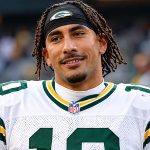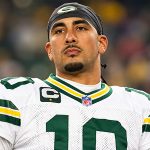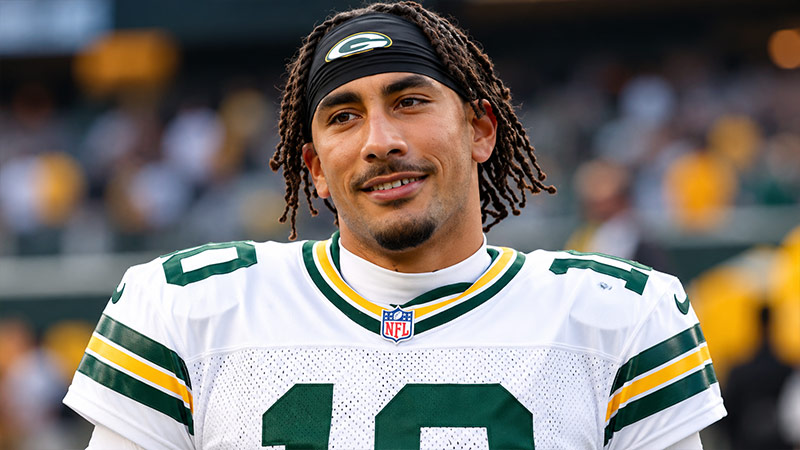
Jordan Love is American. The Green Bay Packers quarterback was born on November 2, 1998, in Bakersfield, California, United States. His nationality is American, while his hometown and early football background are rooted in California.
For fans who first discovered Love through an NFL broadcast, his background can raise several questions. Where did he grow up? How did he get from California to Green Bay? And is nationality the same thing as ethnicity?
Those questions concern different parts of his identity. Understanding the distinction makes it easier to describe his background accurately while also appreciating the journey that brought him to professional football.
Jordan Love’s Nationality at a Glance
Here are the key details about the quarterback:
| Detail | Information |
|---|---|
| Full name | Jordan Alexander Love |
| Nationality | American |
| Date of birth | November 2, 1998 |
| Birthplace | Bakersfield, California, United States |
| Hometown | Bakersfield, California |
| High school | Liberty High School |
| College | Utah State University |
| NFL team | Green Bay Packers |
| Position | Quarterback |
His official team biography identifies Bakersfield as his birthplace and Liberty High School as the school he attended before college. His professional profile connects those California beginnings with his later career in Green Bay.
Where Was Jordan Love Born?
Jordan Love was born in Bakersfield, California, a city in the United States. Bakersfield is therefore the answer to questions about his birthplace, while American is the answer to questions about his nationality.
These details are closely related, but they describe different things. A birthplace identifies a particular location. Nationality identifies a person’s national affiliation. In Love’s case, descriptions such as “Bakersfield native,” “California-born quarterback,” and “American football player” can all be accurate.
For readers outside the United States, the location can be understood in three parts:
- City: Bakersfield
- State: California
- Country: United States
California is a state within the United States. Calling Love a Californian describes his connection to that state; calling him American describes his nationality.
That distinction also helps explain why his association with Green Bay does not make Wisconsin his birthplace. Athletes frequently build professional careers far from the communities where they grew up.
Difference Between Nationality and Ethnicity?
Nationality and ethnicity often appear together in athlete profiles, but they answer different questions.
Nationality concerns a person’s connection to a country. Ethnicity concerns heritage, cultural background, and ancestry. Race is another related but distinct concept, usually discussed through broader social categories.
For Jordan Love, the direct answer to the nationality question remains American. Questions about his parents or family heritage require a separate explanation.
Public biographical reporting describes Love as biracial, with a Black father and a white mother. That family background does not change his American nationality. A person can have more than one ancestral background while sharing the same nationality as people with many other backgrounds.
It is also important to avoid guessing more specific ancestry from someone’s appearance, surname, or place of birth. Those details cannot establish a complete family history.
When writing or talking about Love, the clearest approach is to answer the question being asked: American for nationality, Bakersfield for birthplace, and separately verified information for family heritage.
Jordan Love’s Parents and California Upbringing
Jordan Love’s parents are Anna Love and Orbin Love. Reporting about his family describes their influence on his childhood and his development as an athlete.
Love has also discussed his upbringing in his own writing. In a personal essay for The Players’ Tribune, he explained that his father worked for the Bakersfield Police Department and his mother worked for the California Highway Patrol. His account places his childhood firmly within the California community where he grew up.
Family details add depth to a player’s biography, but they should be handled with care. They help explain the people and experiences behind a professional career; they do not justify assumptions about undocumented ancestry or additional nationalities.
For fans learning about Love for the first time, his California upbringing provides a useful starting point. Before he became associated with the Packers, his football story began with school, family, and local competition.
How Did Jordan Love Become a Green Bay Packers Quarterback?
The Green Bay Packers selected Jordan Love with the 26th overall pick in the first round of the 2020 NFL Draft. He entered the league after his college career at Utah State.
He later moved into the starting role as Green Bay transitioned from Aaron Rodgers in 2023. That change brought greater attention to Love’s performance, leadership, and personal background.
For newer fans, this career move helps explain why a California-born athlete is so strongly associated with Wisconsin. NFL teams select and employ players from across the United States and beyond.
The three main locations in Love’s football journey serve different purposes:
| Location | Connection to Jordan Love |
|---|---|
| Bakersfield, California | Birthplace, hometown, and high school background |
| Utah State University | College football development |
| Green Bay, Wisconsin | Professional football career with the Packers |
Together, these connections tell a fuller story than a nationality label alone.
Understanding the Person Behind the Quarterback
Jordan Love’s background connects a California childhood with college football at Utah State and a professional career in Green Bay. Knowing those distinctions makes his biography easier to follow, especially for international fans encountering the American football system for the first time.
To understand his journey beyond the basic facts, explore his college development, his transition into the Packers’ starting role, and his own reflections on the people who helped him along the way. Those chapters explain how the American quarterback from Bakersfield reached the NFL.