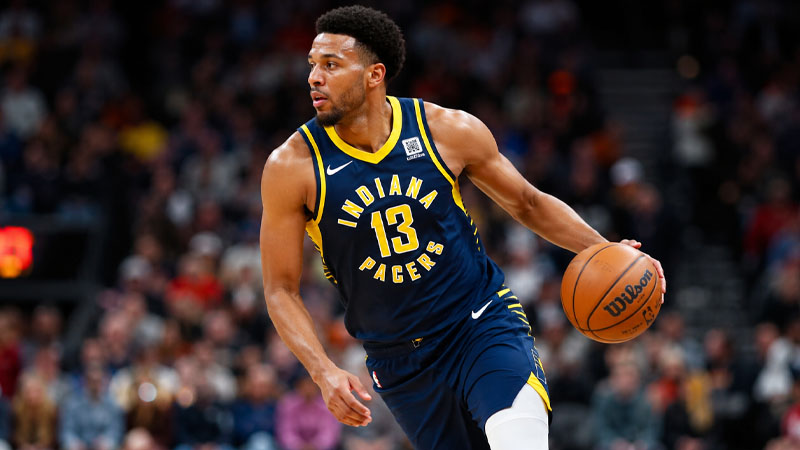
The mid-season departure of Tony Bradley from the Indiana Pacers in early 2026 stands as a textbook example of a “triple-win” strategic pivot in professional basketball.
By waiving the veteran center before his contract fully guaranteed, the Pacers secured vital luxury tax relief and flexibility ahead of the trade deadline.
Simultaneously, the move cleared a rotational logjam, allowing the organization to fast-track the development of promising young talent like Micah Potter.
Finally, Bradley transitioned from a bench-warmer to a key playoff contributor for the Atlanta Hawks, proving that strategic roster management can elevate every stakeholder involved.
How Did the Pacers Gain Financial Flexibility?
Navigating the complexities of the salary cap requires a blend of foresight and ruthlessness.
For the Indiana Pacers, the decision to waive Tony Bradley on January 5, 2026, was not a reflection of his on-court value but rather a masterful stroke of financial engineering designed to maximize organizational agility during a critical juncture of the season.
Immediate Cap Relief and Tax Avoidance
Prior to his waiver, Bradley was playing on a non-guaranteed veteran’s minimum contract that was set to become fully guaranteed on January 7.
By acting just two days before this deadline, the Pacers successfully reduced his cap hit from approximately $2.9 million to a dead-money charge of only $1.35 million.
This transaction yielded $1.55 million in immediate savings, a figure that carries significant weight when managing a professional roster.
Strengthening the Luxury Tax Buffer
The secondary effect of this $1.55 million saving was the creation of a substantial safety net. The move widened Indiana’s luxury tax buffer to roughly $5.8 million below the threshold.
In a league where “repeat-offender” taxes can be financially crippling, maintaining this distance from the tax line ensures that the front office can operate without fear of punitive fiscal penalties while still pursuing competitive upgrades.
Creating Roster Maneuverability
Opening the 15th roster spot was perhaps the most strategic element of the win for the front office.
An empty slot directly ahead of the February trade deadline is a valuable asset; it allows a team to act as a third-party facilitator, absorbing lopsided salary contracts in exchange for draft capital or other assets.
This maneuverability turned a static bench spot into a dynamic tool for future growth.
Why Was This Move Vital for Micah Potter’s Development?
In professional sports, a “logjam” at any position can be detrimental to the long-term health of a franchise.
When veteran depth begins to impede the progress of high-ceiling prospects, the organization must make a choice between short-term security and long-term sustainability.
Solving the Frontcourt Center Logjam
Before the pivot, the Pacers were carrying four dedicated centers in their rotation. This surplus meant that even in practice and garbage-time scenarios, minutes were being split too thinly to allow any single player to find a rhythm.
By removing Bradley from the permanent roster, the coaching staff was able to consolidate those developmental minutes and focus their resources on the athletes most likely to be part of the core future.
Providing Contract Security for Micah Potter
Micah Potter’s rapid development during the 2025–26 season made him an indispensable part of the team’s future plans. However, his path to permanent minutes and a guaranteed contract was partially obstructed by Bradley’s presence on the books.
Once the front office cleared Bradley’s salary, they were able to offer Potter the financial guarantees and consistent playing time his performance had earned, ensuring he remained a motivated and secure part of the roster.
Preserving the Growth of Young Assets
The departure of a veteran also serves as a protective measure for the entire young frontcourt. As key members of the young core returned from various injuries, they found a clear runway for their return-to-play protocols.
Without Bradley in the mix, there was no risk of “stunted development” caused by distributing minutes to a veteran who was not part of the long-term vision. This clarity of roles is essential for maintaining chemistry in a developing locker room.
How Did Tony Bradley Benefit from the Departure?
While being waived is often viewed through a negative lens, for a player of Tony Bradley’s caliber, it represented an escape from professional stagnation.
Staying in Indiana would have likely resulted in a spring spent on the bench as an inactive depth option or a victim of “DNP-CD” (Did Not Play – Coach’s Decision) status.
Leveraging the Power of Unrestricted Free Agency
By clearing waivers and navigating the end of his 10-day contracts on January 28, Bradley entered the market as an unrestricted free agent. This status granted him total autonomy over his next career move.
He was able to strategically wait through February and March, observing the league’s landscape until a team with a genuine “emergency structural deficit” in the frontcourt emerged.
Finding a High-Stakes Role in Atlanta
That opportunity arrived on April 6, 2026, when the Atlanta Hawks lost backup big man Jock Landale to injury. T
he Hawks needed immediate, physical paint depth for their upcoming playoff run. Bradley signed a rest-of-season minimum deal and was instantly thrust into a competitive environment.
This was a stark contrast to his situation in Indiana; instead of watching the postseason from the sidelines, he became the primary backup center for a playoff series.
Gaining Postseason Exposure Against the Knicks
Bradley’s impact was immediate and visible during the Eastern Conference First-Round series against the New York Knicks. He provided crucial minutes on the glass and bolstered the Hawks’ interior defense during high-pressure moments.
This level of exposure on a national stage did more for Bradley’s future contract value than another three months of practice in Indiana ever could have.
A Chronological Breakdown of the Strategic Pivot
The following timeline illustrates how a series of calculated moves over the course of a year culminated in this successful outcome for all parties involved.
| Date | Transaction Event | Strategic Impact |
|---|---|---|
| March 2025 | Initial 10-Day Signing | Bradley joins Indiana from the G-League and helps in the 2025 Finals run. |
| Offseason 2025 | Non-Guaranteed Deal | Indiana retains Bradley on a veteran minimum contract for depth. |
| January 5, 2026 | Official Waiver | Pacers clear $1.55M in cap obligations and open a roster spot. |
| January 8, 2026 | First 10-Day Contract | Bradley returns temporarily to provide depth during a thumb injury recovery. |
| January 19, 2026 | Second 10-Day Contract | The final permissible short-term deal is signed to maintain roster flexibility. |
| January 28, 2026 | Contract Expiration | Bradley becomes a free agent; Indiana permanently clears the roster spot. |
| April 6, 2026 | Atlanta Hawks Signing | Bradley joins the Hawks’ active playoff rotation following a roster injury. |
Analyzing the Strategic Use of 10-Day Contracts
The way the Pacers utilized the “10-day contract loophole” is a masterclass in modern roster management. It allowed the team to have their cake and eat it too—maintaining veteran depth during a period of injury while avoiding long-term financial commitment.
Navigating the January Guarantee Deadline
The most critical date in this entire saga was January 7, the day all NBA contracts become fully guaranteed. By waiving Bradley on January 5, the Pacers effectively hit the “reset button” on his financial impact.
This move required decisive action from the front office, as missing that window by even 48 hours would have locked in the full $2.9 million salary.
Maintaining Depth Without Long-Term Risk
Even after the waiver, head coach Rick Carlisle still required Bradley’s presence on the bench to cover for other frontcourt absences, including Bradley’s own recovery from a fractured thumb splint.
By re-signing him to two consecutive 10-day contracts (January 8 and January 19), the team maintained its depth through the hardest part of the winter schedule.
Once the second 10-day deal expired on January 28, league rules prevented a third signing, forcing the final separation that ultimately benefited both sides.
Lessons for Modern Roster Management
The Bradley transaction serves as a blueprint for how professional organizations can handle “marginal” roster moves with a high degree of empathy and strategic foresight.
It highlights that a player being “cut” does not have to be a negative ending; rather, it can be the start of a new, more productive chapter for everyone involved.
The Value of Empathy in Business Decisions
Because the Pacers handled the waiver with transparency—viewing it as a “purely mathematical” move rather than a critique of Bradley’s skill—they were able to maintain a positive relationship with the player.
This allowed them to bring him back on short-term deals without any “bad blood,” ensuring he remained a professional and engaged member of the locker room until a better opportunity appeared.
Prioritizing Future Flexibility Over Current Comfort
Many organizations fall into the trap of holding onto veteran players for too long out of a fear of “what if” scenarios regarding injuries.
The Pacers’ front office showed the courage to embrace a temporary roster vacancy in exchange for the $5.8 million tax buffer and the development of Micah Potter.
In the high-stakes world of professional basketball, the ability to prioritize the long-term vision over short-term depth is what separates elite management from the rest.
Frequently Asked Questions
Why did the Pacers waive Tony Bradley if he was a productive veteran?
The decision was primarily financial and developmental. By waiving him before January 7, the team saved $1.55 million against the luxury tax and cleared a roster spot for the trade deadline.
Additionally, his presence was creating a logjam that hindered the growth of Micah Potter.
How did Bradley end up playing in the playoffs for Atlanta?
After becoming an unrestricted free agent in late January, Bradley waited for a team with an immediate need. When the Atlanta Hawks lost Jock Landale to injury in April, they signed Bradley to fill their backup center role just in time for their series against the Knicks.
Could the Pacers have kept Bradley for the whole season?
Technically, yes. However, doing so would have fully guaranteed his $2.9 million salary and prevented the team from having the flexibility needed to finalize the development path for their younger big men.
Conclusion: A Blueprint for Success
The transition of Tony Bradley from the Indiana Pacers to the Atlanta Hawks is a rare example where every data point points toward success.
The Pacers achieved their goal of financial elasticity and youth development, while Bradley achieved his goal of meaningful postseason play.
This “triple-win” reminds us that in the business of sports, the most successful moves are often those that consider the needs of the organization, the prospects, and the veterans alike.
For any franchise looking to optimize their roster, the Bradley pivot serves as an enduring lesson in strategic agility.