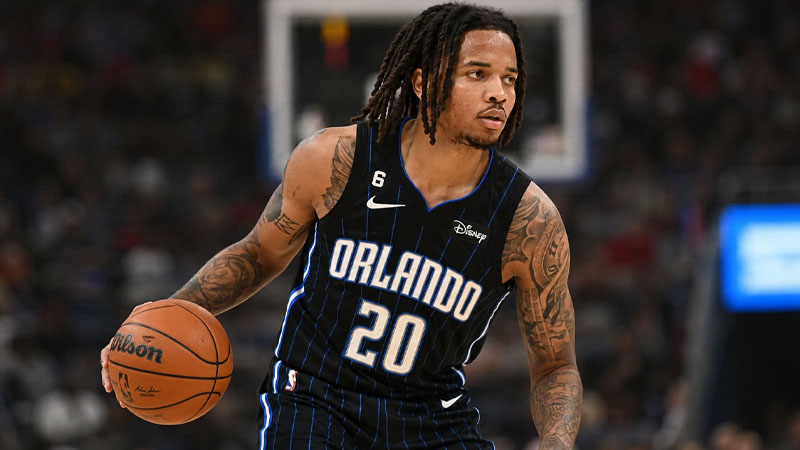
Markelle Fultz is often perceived as “bad” not because of a lack of inherent talent, but due to an unprecedented physical regression caused by Thoracic Outlet Syndrome and a subsequent string of severe injuries.
Originally the consensus No. 1 overall pick in 2017, Fultz was projected as an elite three-level scorer with zero weaknesses. However, a mysterious “shot glitch” saw his three-point accuracy plummet from 41.3% in college to a 28.0% career average in the NBA.
Mismanagement in Philadelphia and chronic knee fractures eventually transitioned him from a franchise savior to an unsigned free agent.
The Unprecedented Regression of a Number One Pick
To understand why Fultz’s career trajectory is considered one of the most drastic regressions in basketball history, one must look at the expectations placed upon him during the 2017 Draft.
He entered the league as a 6’4″ or 6’5″ guard with elite scoring ability, leading many to believe he was the best point guard prospect of the century.
The following subheadings explore how that immense promise quickly evaporated under the weight of physical and psychological pressure.
The Mystery of the “Shot Glitch”
Fultz literally forgot how to shoot a basketball almost overnight following his arrival in the NBA.
After demonstrating fluid mechanics at the University of Washington, his form devolved into a bizarre, multi-motion “hitch” where he would sometimes pump-fake his own free throws.
This “glitch” was so severe that it rendered him a spacing liability, as defenses would routinely sag off him by 10 feet because they knew he would not or could not shoot from the perimeter.
The Psychological Toll of the “Yips” Narrative
Because initial medical evaluations showed no structural damage, the media and the Philadelphia 76ers management heavily labeled Fultz’s struggles as “the yips”.
This narrative suggested that his inability to perform was purely a psychological block rather than a physical ailment.
This created a toxic environment that severely damaged the young player’s confidence and mental well-being, complicating his recovery and his standing within the league.
Thoracic Outlet Syndrome: The Invisible Career Killer
The core reason for Fultz’s struggles was eventually identified not as a mental failure, but as a rare and debilitating neurological condition.
This diagnosis provided the first concrete explanation for why a world-class athlete suddenly lost the ability to perform basic motor skills required for shooting.
- Definition: Thoracic Outlet Syndrome (TOS) involves the severe compression of nerves between the neck and shoulder.
- Physical Impact: The condition caused physical numbness in Fultz’s arms and fingers, making it impossible for him to feel the ball or lift his arms in a fluid motion.
- Shooting Compensation: To deal with the numbness, Fultz began altering his mechanics into an inefficient “push shot,” which permanently broke his shooting rhythm.
- Late Diagnosis: The diagnosis did not come until late 2018, meaning he spent over a year being criticized for a “mental” problem that was actually a nerve disorder.
A Timeline of Devastating Physical Setbacks
Even when Fultz showed flashes of his former self, his body continued to fail him through a series of significant injuries that sapped his athleticism. These setbacks prevented him from ever sustaining the momentum needed to rebuild his career as a starting-caliber guard.
| Injury Type | Timing | Impact on Performance |
|---|---|---|
| Thoracic Outlet Syndrome | 2017–2018 | Caused the “shot glitch” and loss of perimeter scoring. |
| Torn Left ACL | January 2021 | Robbed him of his elite first-step explosiveness and lateral quickness. |
| Left Knee Tendinitis | 2023–2024 | Led to persistent swelling and made him a defensive liability. |
| Knee Fracture | 2023–2024 | He played through a tiny fracture, further sapping his athletic floor. |
Did Roster Mismanagement Ruin Markelle Fultz?
Beyond the physical injuries, the organizational context in which Fultz began his career played a significant role in his perceived failure.
Many analysts believe he was drafted into a situation that was fundamentally incompatible with his development as a lead playmaker. The following sections detail how the team’s existing structure hindered his growth.
The Philadelphia 76ers and “The Process” Conflict
Fultz was drafted by a Philadelphia team that had already committed to “The Process,” which featured Ben Simmons as the primary point guard.
The front office traded up to get Fultz despite already having a ball-dominant guard, leading to a roster overlap that left no clear role for a second playmaker.
This lack of a defined spot on the roster prevented Fultz from working through his mechanical issues in a stable environment.
Mismanagement and the Ben Simmons Overlap
The 76ers’ coach at the time, Brett Brown, was forced to try and fit two non-shooting point guards into the same lineup.
Since Simmons was already established as the floor general, Fultz was often relegated to off-ball duties—a role he was ill-equipped for given his lost jump shot.
This poor fit hindered his future growth and eventually led to him being moved to Orlando, where he again faced competition from younger guards like Jalen Suggs and Anthony Black.
Overlooked Red Flags: What the Scouts Missed
In hindsight, there were subtle indicators that Fultz might struggle to adapt his game to the professional level, though these were largely ignored due to his elite college production.
While he was viewed as a “can’t-miss” prospect, a deeper dive into the data reveals potential warning signs. These insights help explain why his transition was more difficult than scouts anticipated.
The Free Throw Shooting Warning
While Fultz shot an impressive 41.3% from three in college, his free throw percentage was a much lower 64.9%. Historically, free throw shooting is considered a more accurate predictor of NBA shooting potential than college three-point percentage.
His sub-70% mark from the charity stripe was a major red flag that suggested his shooting mechanics might not be as robust as his highlight reels implied.
Team Success and Competitive Impact
A point of contention among scouts was Fultz’s impact on winning; his college team at the University of Washington finished with a dismal 9-22 record.
Some critics argued that elite guards usually lead their teams to the NCAA tournament, and the fact that his team was “garbage” should have tempered the hype.
This led to questions about whether he was a “winning” player or simply a high-usage talent on a bad team.
Frequently Asked Questions About Markelle Fultz
What is the current status of Markelle Fultz?
As of recently, Markelle Fultz is an unsigned free agent. His most recent stint was a 10-day contract with the Toronto Raptors, where he struggled significantly, averaging only 0.8 points on 18.2% shooting across five games.
Following the expiration of that contract, no other NBA team has signed him to a roster spot.
Could he have been a star if he stayed healthy?
Many experts believe so, noting that he was the best PnR operator seen in college for years. If not for the shoulder injury, some suggest he could have averaged 25 points, 10 assists, and 7 rebounds in his prime.
Even without a jump shot, he showed flashes of being a highly capable playmaker and mid-range slasher during his time in Orlando.
How did the “shot glitch” affect his team’s offense?
The loss of his jump shot created a massive floor-spacing liability. Because Fultz was a non-threat from the perimeter, opposing defenses would ignore him to double-team his teammates, effectively “ruining” the offensive spacing of any lineup he was part of.
Why did the 76ers trade him?
The combination of his mysterious injury, the toxic media coverage surrounding the “yips,” and his poor fit next to Ben Simmons made his presence in Philadelphia untenable.
The team eventually moved him to the Orlando Magic to get value for him before his stock dropped even further.
The Legacy of a Fallen Prodigy
Markelle Fultz’s career serves as a cautionary tale about the fragility of professional sports and the devastating impact of rare medical conditions.
He was not “bad” in the traditional sense of lacking skill; rather, he was a victim of a body in revolt and a series of organizational missteps.
From a projected superstar to a fringe player struggling to stay in the league, his journey remains one of the most complex and tragic stories in modern NBA history.
For fans and analysts alike, the “what if” regarding his health will always overshadow his actual on-court contributions.
His story highlights the importance of accurate medical diagnosis and the need for teams to prioritize roster fit over raw talent during the draft process.
While his time as a top-tier starter may be over, the mystery of his “shattered ascent” will be discussed by basketball historians for decades to come.