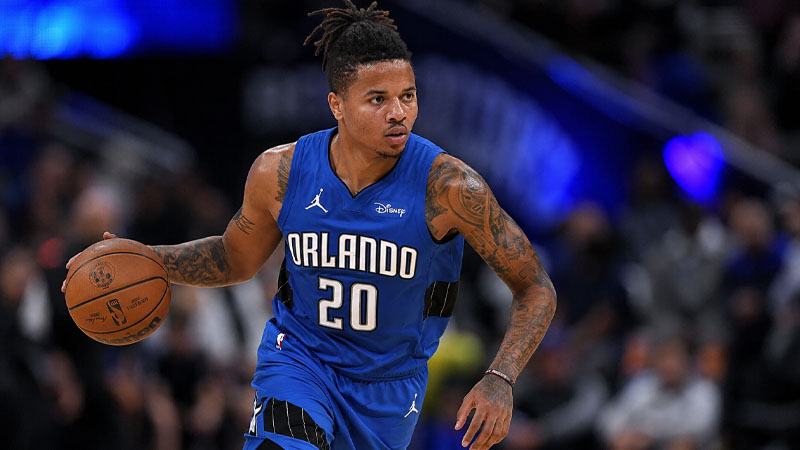
Markelle Fultz’s inability to shoot stems primarily from Neurogenic Thoracic Outlet Syndrome (TOS), a rare physical condition that compresses nerves between the neck and shoulder.
This injury caused numbness and a loss of motor control whenever he raised his arms, effectively dismantling his once-elite mechanics.
While many attributed his struggles to “the yips,” the root cause was a physical blockage that forced his body to adopt compensatory “hitches”.
Today, despite rigorous rehabilitation, the permanent nerve impact has transformed him into a driving playmaker rather than the perimeter threat seen during his college career.
The Transformation from College Star to NBA Mystery
The professional trajectory of Markelle Fultz remains one of the most analyzed cases in modern sports history due to the sheer discrepancy between his collegiate dominance and his early professional struggles.
At the University of Washington, he was the consensus best player in the country, showcasing a shooting profile that suggested he would be a perennial All-Star.
Dominance at the University of Washington
During his freshman year in college, Fultz was an offensive powerhouse, averaging 23.2 points, 5.7 rebounds, and 5.9 assists. Most importantly for his draft stock, he shot a blistering 41.3 percent from beyond the three-point arc.
He possessed a fluid, effortless jump shot that allowed him to score from anywhere on the floor, making him the obvious choice for the top selection in the draft.
The Philadelphia 76ers Trade and Expectations
The 76ers were so convinced of his talent that they traded the No. 3 pick in the 2017 draft and a future first-round pick just to move up to No. 1 and select him.
The expectation was that he would be the missing piece of a championship core, providing elite spacing and shot-creation.
However, upon his arrival in Philadelphia, the “dynamic” freshman who dominated the Pac-12 seemed to have vanished, replaced by a player who literally could not raise his arms to shoot the basketball.
The Immediate Mechanical Warning Signs
The warning bells began ringing early in his rookie season when his shooting form became unrecognizable, particularly at the free-throw line.
In his first four professional games, he made only 9 of 27 shots from the field and 6 of 12 from the line, showcasing a “bizarre” form that looked like someone who had never played the game before.
What is Neurogenic Thoracic Outlet Syndrome?
Understanding why a top-tier athlete suddenly loses a fundamental skill requires a deep dive into the medical reality of Neurogenic Thoracic Outlet Syndrome (TOS).
This was not a standard basketball injury like a sprained ankle or a torn ligament, which is why it eluded detection for so long.
Anatomy of the Brachial Plexus
Neurogenic TOS is a condition that specifically pinches the brachial plexus, which is a complex bundle of nerves traveling from the lower neck to the armpit. These nerves are responsible for sending signals from the spinal cord to the shoulder, arm, and hand.
When these nerves are compressed, the electrical signals required for fine motor skills—like the precise flick of a wrist during a jump shot—are interrupted or blocked entirely.
Why TOS is an “Invisible” Injury
One of the most frustrating aspects for Fultz was that TOS does not always cause structural damage that is visible on standard MRIs.
Because doctors initially found no tears or broken bones, the injury went undiagnosed for over a year while his shooting form fell apart in the public eye.
This delay in diagnosis led to a narrative of “mental weakness” when, in reality, his nerves were physically trapped.
The Impact on Professional Shooting Mechanics
Whenever Fultz attempted to raise his arms over his head to reach a shooting pocket, the nerve compression became acute. This triggered a cascade of physical failures: numbness, tingling, and profound muscle weakness.
For a basketball player, this meant that the brain would send the command to “shoot,” but the arm would not have the strength or coordination to follow through, resulting in the infamous “hitch”.
The Mechanical Breakdown: Scapular Dyskinesis
Before the official diagnosis of TOS was confirmed in December 2018, Fultz’s body began a series of subconscious adaptations to deal with the underlying nerve pain and muscle imbalances.
Muscle Imbalances and Physical “Guarding”
The initial symptoms were often dismissed as simple shoulder soreness. However, Fultz was actually suffering from scapular dyskinesis, an imbalance in the muscles that control the shoulder blade.
Because his shoulder was not functioning correctly, his body began “guarding” the area, which means other muscles had to overcompensate to perform basic movements.
The Evolution of the Infamous “Hitch”
This subconscious adaptation effectively erased the smooth muscle memory Fultz had cultivated throughout his life. In an attempt to play through the pain and help his team, he developed an unnatural “push-shot” release.
This was not a choice but a necessity; he literally could not raise his arms high enough to utilize his natural form, so his body created a secondary, awkward motion to propel the ball toward the rim.
The Psychological Impact of a Physical Failure
The sudden and unexplained loss of elite-level skill created a unique psychological burden that was arguably as damaging as the physical injury itself. Being the center of a media storm while your body refuses to cooperate is a recipe for immense mental strain.
Navigating the Media Storm and “Yips” Narrative
Because initial medical tests were inconclusive, the public and many media outlets speculated that Fultz had “the yips”—a psychological block where athletes suddenly lose basic motor skills.
This label was devastating because it shifted the blame onto the player’s mental fortitude. Early reports from his camp were also contradictory; his agent initially mentioned fluid being drained from the shoulder, but later clarified it was a cortisone shot for discomfort.
The Anxiety Cycle of a Top Pick
The pressure of being the #1 overall draft pick is already immense, but for Fultz, it was compounded by a physical inability he couldn’t explain.
This created a severe “anxiety cycle” where he would hesitate to shoot because he knew his body might fail him, which in turn made the mechanics even more erratic.
The hesitation seen on the court was a direct result of this intersection between physical nerve failure and the mental weight of expectation.
Comparing College Performance vs. Early Professional Struggles
To truly grasp the impact of the injury, one must look at the statistical cliff Fultz fell off during his transition to the professional level. The following data highlights the drastic change in his efficiency.
| Metric | University of Washington (College) | Early NBA Career (76ers) |
|---|---|---|
| Points Per Game | 23.2 | Significant Decline |
| Field Goal Performance | Dominant Offensive Threat | 9 of 27 (First 4 Games) |
| 3-Point Percentage | 41.3% | Effectively 0% (Ceased Shooting) |
| Free Throw Percentage | 64.9% | 50.0% (6 of 12) |
| Shooting Mechanics | Elite / Fluid | “Bizarre” / Unrecognizable |
The Long Path to Rehabilitation and Recovery
After the TOS diagnosis in late 2018, the path forward required more than just rest; it required a total reconstruction of how Fultz used his upper body.
Rebuilding Muscle Memory from Scratch
Fultz spent years working with specialized physical therapists to address the nerve compression and the resulting muscle imbalances.
This process was grueling because it required unlearning the “bad” habits and “hitches” his body had developed during the year he played through undiagnosed pain.
Reclaiming a jump shot after the nerves have been compromised is an uphill battle that few athletes have ever successfully navigated.
Pivoting the Playing Style for Long-term Success
While Fultz was never able to fully recover his deep perimeter jump shot due to the permanent nature of the nerve alterations, he did not let the injury end his career.
He successfully pivoted his game, leaning into his elite athleticism and court vision to become a highly capable driving and playmaking guard.
By accepting that his college shooting form might never return, he was able to build a new identity that allowed him to remain a valuable contributor in the league.
Frequently Asked Questions
Did Markelle Fultz ever have the yips?
While many speculated he had “the yips,” his struggles were primarily rooted in a physical medical condition called Thoracic Outlet Syndrome. The psychological hesitation he showed was a secondary effect of his nerves failing to control his muscles.
Can Thoracic Outlet Syndrome be cured?
TOS can be managed and treated through physical therapy or surgery, but for elite athletes, the nerve damage can permanently alter the fine motor control needed for high-level shooting. Fultz had to rebuild his mechanics from scratch because of this.
Why did it take so long to diagnose his injury?
TOS is often called an “invisible” injury because it doesn’t always show up on standard MRIs that look for structural damage like tears. It requires specialists to identify the nerve compression in the brachial plexus.
What were Markelle Fultz’s college stats?
At Washington, Fultz was an elite prospect, averaging 23.2 points and shooting 41.3% from the three-point line. He was considered a complete offensive player before the injury occurred.
Conclusion: A Cautionary Tale of Health and Pressure
The story of Markelle Fultz is not one of a player who “forgot” how to shoot, but rather a tragic intersection of a rare medical condition and the extreme pressures of professional sports.
His journey highlights the critical importance of specialized medical diagnoses and the deep connection between physical health and mental performance.
While he may never be the 40% three-point shooter the 76ers envisioned, his ability to persevere through a debilitating nerve condition and remain a productive professional athlete is a testament to his resilience.
For fans and analysts, his case serves as a reminder that what looks like a mental block is often a physical battle we cannot see.