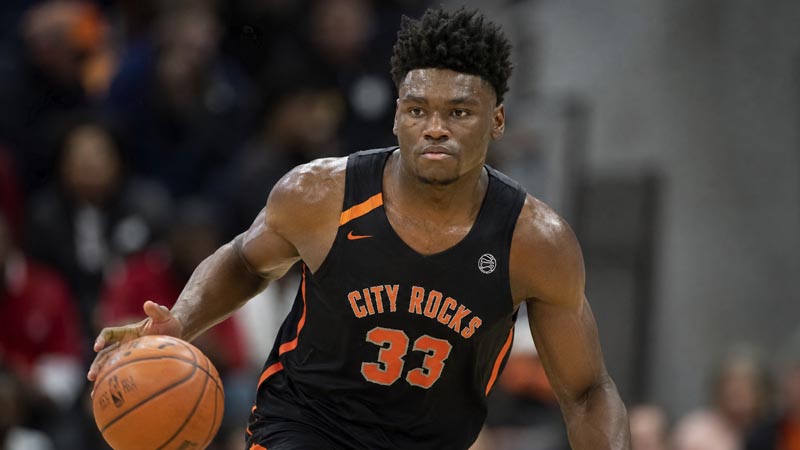
Isaiah Stewart wears the number 33 as a profound tribute to NBA Hall of Fame center Patrick Ewing. Growing up, Stewart idolized Ewing’s physical, high-motor, and gritty style of play, spending countless hours studying his highlights.
This connection is deeply personal, rooted in their shared Jamaican heritage; Stewart’s father, Dela, and Ewing bonded instantly over these cultural ties during Stewart’s recruitment process.
While he wore 33 throughout high school and college, a professional stint in Detroit required a temporary shift to number 28. Following a 2026 trade to Memphis, Stewart now has the opportunity to reclaim his signature identity.
Why Isaiah Stewart Wears 33: The Ewing Connection
Isaiah Stewart’s decision to wear the number 33 is not a mere aesthetic choice; it is a calculated homage to one of the most dominant forces in basketball history.
For Stewart, the number serves as a daily reminder of the standard of excellence he strives to achieve on the hardwood.
By donning the same digits as Patrick Ewing, Stewart bridges the gap between the legendary era of 1990s physical basketball and the modern, high-intensity game he brings to the court today.
Modeling the Gritty Post Presence
The primary driver behind this tribute was Ewing’s specific brand of basketball. Known for a “gritty,” high-motor style, Ewing defined what it meant to be an anchor for a championship-contending defense.
Stewart, often praised for his own relentless motor and physical presence, saw a blueprint in Ewing’s career.
This wasn’t just casual admiration; Stewart spent a significant portion of his youth analyzing Ewing’s footwork, defensive positioning, and intimidating presence in the paint.
The YouTube Film Sessions and Advocacy
In an era where many young players were looking toward perimeter-oriented stars, Stewart was deep in the archives. He reportedly spent hours watching Ewing’s New York Knicks highlights on YouTube, absorbing the nuances of the legendary center’s game.
This dedication translated into vocal support; Stewart was known to passionately defend Ewing in basketball debates, asserting the legend’s dominance against other historical greats.
This intellectual and emotional investment in Ewing’s legacy made the selection of number 33 an inevitable choice for his own career.
The Shared Jamaican Heritage and Family Ties
Beyond the X’s and O’s of basketball, the link between Stewart and Ewing is solidified by a deep-seated cultural connection.
Both men represent the Jamaican-American experience, a factor that played a significant role in Stewart’s development and his family’s view of the sport.
This shared background transformed a fan-athlete relationship into a genuine bond between families, adding layers of meaning to the jersey number that go far beyond the box score.
Dela Stewart’s Influence and the Immigrant Experience
Isaiah’s father, Dela Stewart, immigrated to the United States from Jamaica, carrying with him the values of hard work and resilience.
Seeing a fellow Jamaican-American like Patrick Ewing reach the pinnacle of professional sports provided a sense of pride and a tangible goal for the Stewart family.
The cultural shorthand shared between Dela and Ewing created an environment where Isaiah’s choice of an idol was supported by his heritage and family identity.
The Georgetown Recruitment and Meeting a Legend
The connection became even more personal during Stewart’s high school years. As one of the top recruits in the country, Stewart was pursued by Ewing himself, who was then serving as the head coach at Georgetown University.
During the recruitment visit, the basketball world and the Stewart family’s personal history collided. While Isaiah ultimately chose to play for the University of Washington, the visit was landmarked by how quickly his father and Ewing bonded over their common roots.
This face-to-face meeting with his idol confirmed that the number 33 was the only choice for his amateur career.
Isaiah Stewart’s Jersey Number History and Roster Logic
To understand the journey of the number 33 in Stewart’s career, one must look at the various stages of his development. While 33 has always been his preference, the business and history of the NBA sometimes necessitate change.
The following table outlines the evolution of his jersey numbers and the specific reasoning behind each shift.
| Career Stage | Team | Jersey Number | Reason for Choice |
|---|---|---|---|
| High School | McQuaid Jesuit / La Lumiere | No. 33 | Direct tribute to Patrick Ewing. |
| College | University of Washington | No. 33 | Continuity of the Ewing tribute. |
| NBA (2020–2026) | Detroit Pistons | No. 28 | No. 33 was retired (Grant Hill). No. 28 was a random selection. |
| NBA (Current) | Memphis Grizzlies | TBD / No. 33 | Opportunity to reclaim 33 after the June 2026 trade. |
The Detroit Pistons Exception: Why Number 28?
When Stewart entered the NBA in 2020, fans were surprised to see him deviate from the number that had defined his rise through the amateur ranks. The shift to number 28 in Detroit was not a change in heart or a cooling of his admiration for Ewing.
Instead, it was a matter of franchise history and respect for those who came before him. In Detroit, the number 33 was off-limits, forcing Stewart to find a temporary numerical identity.
Respecting the Legacy of Grant Hill
The Detroit Pistons have a storied history, and part of that history involves honoring the legends who shaped the franchise. The number 33 is effectively retired in Detroit to honor Grant Hill, one of the most versatile and impactful players in Pistons history.
Out of respect for Hill’s legacy and the team’s traditions, Stewart could not wear his preferred number. This is a common occurrence in the NBA, where young players must often wait for a change in scenery to reclaim their “preferred” identity.
The Logic Behind Selecting Number 28
Forced to choose a new number, Stewart did not put the same level of emotional weight into his selection for the Pistons as he did for his tribute to Ewing. He selected number 28 largely at random.
His primary criteria for the choice was simply its rarity; he noted that very few players in the league wore 28, making it a unique, if not deeply symbolic, placeholder while he navigated his early years in the professional ranks.
Looking Forward: The Memphis Grizzlies and the Return of 33
In June 2026, a major trade sent Isaiah Stewart to the Memphis Grizzlies, marking a new chapter in his career and a potential return to his roots.
The move to Memphis is seen by many analysts as a perfect cultural fit, as the city’s “Grit and Grind” identity mirrors the very “gritty” style that Stewart admired in Ewing.
With this change of scenery comes the highly anticipated possibility of Stewart returning to the number 33.
- Roster Availability: Stewart’s ability to wear 33 in Memphis depends entirely on whether the number is currently occupied or retired by the Grizzlies organization.
- A Full-Circle Moment: Reclaiming the number would represent a homecoming for Stewart’s personal brand, aligning his NBA jersey with the one he wore during his dominant high school and college years.
- Symbolic Synergy: Wearing 33 in a city like Memphis—known for valuing physical, high-energy post play—would be the ultimate culmination of the Ewing tribute.
Frequently Asked Questions About Isaiah Stewart’s Number
Why couldn’t Isaiah Stewart wear 33 with the Detroit Pistons?
He was unable to wear number 33 in Detroit because the organization retired the number to honor franchise legend Grant Hill. As a result, Stewart chose number 28 as a random alternative during his tenure there.
Does Isaiah Stewart have a personal relationship with Patrick Ewing?
Yes. Ewing recruited Stewart heavily for Georgetown during his high school years. While Stewart chose a different college, the two bonded over their shared Jamaican heritage, and Ewing spent significant time with Stewart’s father, Dela, during the recruitment process.
What number will Isaiah Stewart wear for the Memphis Grizzlies?
As of June 2026, his number for the Memphis Grizzlies is still to be determined. However, sources indicate that he may reclaim number 33 if it is available on the team’s active roster.
How did Isaiah Stewart’s father influence his choice of number?
Stewart’s father, Dela, is a Jamaican immigrant. His pride in Patrick Ewing’s success as a Jamaican-American helped foster Isaiah’s admiration for the Hall of Famer. This cultural bond made wearing 33 a point of family pride.
Is number 33 significant in college basketball for Stewart?
Absolutely. Stewart wore number 33 during his standout season with the University of Washington Huskies, maintaining the tribute he started in high school.
Conclusion: The Enduring Legacy of the 33
Isaiah Stewart’s journey with the number 33 is a testament to the power of representation in sports. For a young athlete of Jamaican descent, seeing Patrick Ewing dominate the NBA provided more than just a highlight reel—it provided a blueprint for a life and a career.
Whether he is battling in the paint in Detroit or starting a new journey in Memphis, the spirit of the “gritty” number 33 remains the heartbeat of Stewart’s game.
As he moves forward, the potential return of his signature number signals not just a change in jersey, but a reconnection with the heritage and heart that define him as a player.