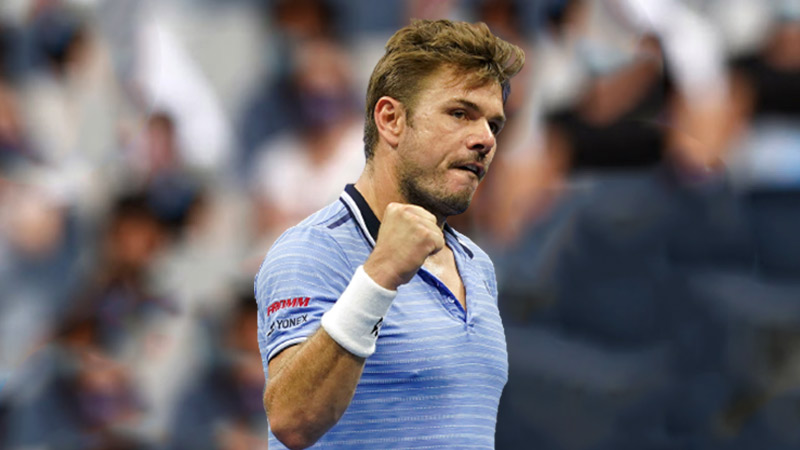
Stan Wawrinka is famous for his extraordinary ability to disrupt the dominance of tennis’s “Big Three”—Roger Federer, Rafael Nadal, and Novak Djokovic—during their absolute peak.
Known as “the Stanimal,” he secured three Grand Slam titles by defeating the world’s top-ranked players in every final.
His fame is rooted in a legendary one-handed backhand, widely considered the most powerful in history, and a resilient “big-match” mentality that propelled him to victory when the stakes were highest.
Beyond individual success, his 2026 farewell tour marks the end of a career defined by Olympic gold and national glory.
How Did Stan Wawrinka Defeat the Big Three in Their Prime?
Wawrinka achieved legendary status by winning his majors when the most dominant trio in the history of the sport was at its absolute zenith.
While many contemporaries struggled to even reach a final, Wawrinka became the ultimate outlier by physically and mentally overpowering these icons on the grandest stages.
The World No. 1 Finals Formula
One of the most statistically significant reasons for Wawrinka’s fame is his perfect 3-0 record in Grand Slam finals. In each of these victories, he did not just win; he defeated the active World No. 1 player to capture the trophy.
This level of performance under extreme pressure cemented his reputation as a “giant killer”. His path to glory was rarely easy, often requiring him to navigate what analysts call “brutal draws” where he had to conquer multiple members of the Big Three in a single tournament.
Breaking the Australian Open and French Open Hegemony
In 2014, Wawrinka captured his first major at age 28 at the Australian Open. To do so, he had to overcome Novak Djokovic in a historic five-set quarterfinal and subsequently defeat Rafael Nadal in the final. This victory was a tectonic shift in the tennis landscape.
He followed this with a stunning performance at the 2015 French Open, where his aggressive baseline power left Djokovic without answers in the final.
By the time he claimed the 2016 US Open title, again defeating Djokovic, he had secured three distinct Grand Slam titles, a feat unmatched by almost any other player of his generation.
What Makes Stan Wawrinka’s Backhand the Best in History?
Wawrinka possesses what many experts and tennis coaches—including Patrick Mouratoglou—rank as the greatest and most powerful one-handed backhand of all time. While his compatriot Roger Federer was known for an elegant, rolling backhand, Wawrinka’s version was defined by its sheer, brutal violence.
Generating Raw Power from the Baseline
The technical brilliance of Wawrinka’s backhand allowed him to generate overwhelming pace from almost any position on the court. He was famous for his ability to hit clean winners from deep behind the baseline, even off “dead balls” that lacked pace.
This weapon was essential for breaking through the historic defense of players like Novak Djokovic, as Wawrinka could essentially blast his way through a point when others would be forced into an error.
Elegance Meets Explosive Mechanics
Despite the “Stanimal” nickname, there is a distinct technical beauty to his stroke play. The mechanics of his single-handed backhand combined fluid preparation with an explosive follow-through.
This combination of physical endurance and raw power baseline hitting allowed him to maintain a high level of intensity throughout long, grueling five-set matches. His backhand wasn’t just a shot; it was a statement of intent that often dictated the tempo of the match.
Why Is Stan Wawrinka’s Samuel Beckett Tattoo So Iconic?
Wawrinka’s fame is as much about his mental journey as it is about his physical trophies. He popularized a specific philosophy of resilience that resonated with fans worldwide, perfectly encapsulated by the ink on his left arm.
The “Fail Better” Philosophy
The tattoo features a quote from Samuel Beckett: “Ever tried. Ever failed. No matter. Try again. Fail again. Fail better”. This mantra defines his legacy because Wawrinka was not a child prodigy who dominated the tour from his teens.
Instead, he was a late bloomer who had to endure numerous setbacks and heartbreaks before finding his peak. His career serves as a testament to the idea that failure is not the end, but a necessary step toward eventual greatness.
Redlining and Mental Toughness
Wawrinka’s reputation was built on his ability to “redline” his game—playing at his absolute maximum risk and reward level—during high-stakes moments.
While his week-to-week consistency on the ATP tour was famously volatile, often resulting in early losses at smaller tournaments, he possessed an unmatched ability to show up for five-set marathons.
This mental toughness and “big-match” mentality allowed him to reach a career-high of World No. 3 and remain competitive long into his late 30s.
Analyzing Stan Wawrinka’s Professional Career Statistics
To understand the scale of Wawrinka’s impact, one must look at the hard data. His career is characterized by significant peaks that align with the most prestigious events on the tennis calendar.
| Statistic / Achievement | Career Detail |
|---|---|
| Highest ATP Ranking | World No. 3 (Reached January 2014) |
| Grand Slam Titles | 3 (Australian Open, French Open, US Open) |
| Masters 1000 Titles | 1 (2014 Monte-Carlo Rolex Masters) |
| Total ATP Singles Titles | 16 Career Titles |
| Overall Match Record | 589 Wins – 389 Losses |
| Total Career Prize Money | Over $38.4 Million |
| Olympic Achievement | Gold Medal in Men’s Doubles (2008) |
How Did Wawrinka Contribute to Swiss National Success?
Beyond his individual accolades, Wawrinka is a revered hero in Swiss sporting history for his contributions to team events. He often played in the shadow of Roger Federer, yet he was instrumental in achieving milestones that the country had never reached before.
Olympic Gold and the Federer Partnership
In 2008, Wawrinka teamed up with Federer at the Beijing Olympics to win the Gold Medal in men’s doubles. This victory was a precursor to his later individual success and showed his ability to perform on the global stage under the Olympic flag.
It remains one of the most celebrated moments in Swiss sports, highlighting a unique synergy between the two Swiss legends.
Anchoring the 2014 Davis Cup Victory
Wawrinka was the driving force in leading Switzerland to its historic first-ever Davis Cup title in 2014. During that campaign, he stepped out of the shadow of others to anchor the team, proving he could handle the pressure of representing an entire nation.
His commitment to the national team further solidified his status as a beloved figure in Switzerland.
When Is Stan Wawrinka Retiring from Professional Tennis?
As all legendary careers eventually conclude, Wawrinka has entered the twilight of his time on the ATP tour. His departure is being handled with the same grace and grit that defined his playing style.
The 2026 Farewell Tour
At 41 years old, Wawrinka officially announced that the 2026 season would mark his final year as a professional. Throughout the year, he has been honored with emotional farewell ceremonies at Grand Slams and local tournaments.
These events have allowed fans to pay tribute to a player who provided a rare alternative to the Big Three dominance for over a decade.
The Final Goodbye at Gstaad
One of the most poignant moments of his retirement occurred at the EFG Swiss Open Gstaad, where his professional journey originally began. Saying an emotional goodbye to his home fans, Wawrinka brought his career full circle.
As he transitions away from the competitive circuit, his legacy as the ultimate “Giant Killer” and the owner of the most explosive backhand in the game remains firmly intact.
Frequently Asked Questions About Stan Wawrinka
Why is Stan Wawrinka called “Stanimal”?
The nickname “Stanimal” was given to him to reflect his aggressive, powerful style of play and his incredible physical endurance during long, grueling matches.
How many Grand Slams has Wawrinka won?
He has won three Grand Slam titles: the 2014 Australian Open, the 2015 French Open, and the 2016 US Open.
Is Stan Wawrinka better than Roger Federer?
While Federer has more total titles and a higher ranking, Wawrinka is famous for his specific “big-match” peaks and his more powerful, offensive one-handed backhand.
What is the meaning of his tattoo?
The tattoo is a quote by Samuel Beckett about the necessity of trying and failing until one can “fail better,” representing his resilient career path.
Experience the Legacy of the Stanimal
Stan Wawrinka’s career is a masterclass in perseverance and power. Whether you are a budding tennis player looking to emulate his world-class backhand or a sports fan who admires the grit required to take down legends, his story is one of the most compelling in modern sports.
As he completes his final tour in 2026, take the time to re-watch his historic Grand Slam runs and appreciate the man who proved that even in the era of giants, a “Stanimal” could reign supreme.
Stay updated on the latest tennis legends and technical breakdowns by subscribing to our newsletter today.