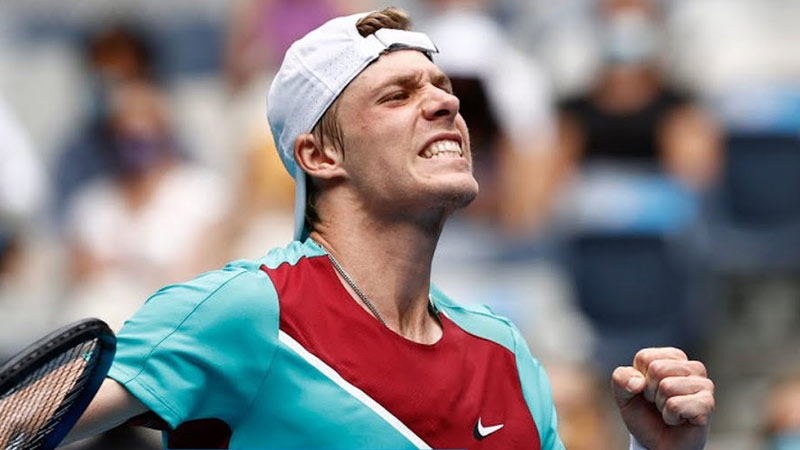
Denis Shapovalov is an elite professional tennis player defined by a rare combination of raw left-handed power and high-risk shotmaking that allows him to defeat the world’s best on any given day.
He reached a prestigious career-high of world No. 10 and famously advanced to the Wimbledon semifinals, proving his ceiling is among the global elite.
While he currently holds an official ranking of No. 39, his game remains characterized by extreme volatility and explosive athleticism.
Ultimately, Shapovalov is a world-class talent whose peak performance is undeniably “good,” even if his consistency remains a challenge.
How Good is Denis Shapovalov Actually?
To determine the true standing of Denis Shapovalov, one must look beyond the weekly ranking fluctuations and examine the technical depth of his game.
He is widely considered one of the most gifted athletes on the ATP Tour, possessing a unique toolkit that makes him a nightmare for defensive-minded opponents.
The Verdict on His Elite Status
Shapovalov is objectively “good” because he has achieved milestones that only a fraction of professional players ever reach. Achieving a top-10 world ranking is a definitive marker of elite status in a global sport.
His career is marked by four ATP singles titles and a deep run at Wimbledon, which confirms his ability to perform under the highest levels of pressure on the biggest stages in tennis.
The Paradox of High-Risk Talent
The debate surrounding his skill level usually stems from his “high-risk, high-reward” philosophy. This style ensures that when his timing is precise, he is nearly unplayable, “blasting through defensive walls” that stop other players.
However, this same intensity leads to significant unforced error counts and double faults when his rhythm falters, making his performance levels vary wildly from match to match.
Breaking Down the Elite Weapons of Denis Shapovalov
Shapovalov’s success is built upon a foundation of specific athletic “goldmine” weapons that distinguish him from the standard baseline grinder.
These technical advantages are what allow him to maintain a competitive edge against the top seeds in major tournaments.
The Left-Handed Serve Advantage
One of his most potent tools is his natural left-handed mechanics. He utilizes a sliding serve that swerves sharply away from the backhand side of right-handed opponents, creating angles that are difficult to return.
He routinely crosses the 200 km/h mark with his pace, making him an elite ace generator who outperforms 86% of the tour in raw serve metrics.
The Iconic Airborne One-Handed Backhand
His signature shot is undoubtedly the single-handed backhand, which he often strikes while leaping completely off the ground. This “airborne” technique allows him to generate extreme power and steep downward angles that catch opponents off guard.
Unlike many modern players who use a safe two-handed backhand, Shapovalov uses his full-swing mechanics to transform this shot into a primary offensive weapon.
Athletic Footwork and Hip Rotation
Even when forced into defensive positions, Shapovalov utilizes advanced back-foot pivot mechanics on his forehand. By coiling his hips and rotating off his back leg, he can transform a defensive scramble into a winning offensive shot.
This explosive athleticism is paired with soft hands at the net, allowing him to execute spectacular diving volleys that few other players would even attempt.
Key Statistics and Career Achievements
A data-driven analysis of his career highlights the heights he has reached and the challenges he currently faces in the professional rankings.
| Metric | Performance Data |
|---|---|
| Career-High Ranking | World No. 10 (September 2020) |
| Current Official Ranking | No. 39 |
| ATP Singles Titles | 4 Titles (including Los Cabos & Dallas) |
| Grand Slam Peak | Semifinals at Wimbledon (2021) |
| Career Prize Money | Over $15.2 Million USD |
| 2026 Match Win Rate | 39.1% |
Why Does Denis Shapovalov Struggle with Inconsistency?
While his peak is world-class, his career is also defined by recurring struggles that have prevented him from maintaining a permanent spot in the top 10. These flaws are often a direct byproduct of the aggressive mindset that makes him so dangerous.
The Downside of High-Risk Aggression
Shapovalov adheres to a style of play that leaves very little room for error. Because he constantly targets the lines and hits with maximum power, he frequently suffers from high numbers of unforced errors.
If his timing is even slightly off, he can give away dozens of points in a single match, making it difficult to find a rhythm against steady opponents.
Tactical Inflexibility and Lack of a “Plan B”
A common critique from commentators is his lack of a secondary strategy when his primary power game fails. He rarely slows down rallies or engages in patient, defensive point-building.
This tactical rigidity means that when his “Plan A” isn’t working, he often continues to go for low-percentage winners rather than adjusting his depth or spin to stay in the match.
Second Serve Vulnerabilities and Double Faults
His aggressive mindset extends to his second serve, where he continues to target lines under pressure. This frequently results in costly double faults at critical moments in a set.
Statistics show that his live ranking has recently fluctuated as low as No. 67, largely due to a tough stretch where these service and error-related inconsistencies have compounded.
The Developmental Secrets Behind His Explosive Game
Shapovalov’s unique style did not happen by accident; it was the result of specialized coaching and a developmental philosophy that encouraged aggression from a very young age.
Tessa Shapovalov and the Matrix Training
His mother, Tessa, a former professional player, coached him from the age of five and was instrumental in building his trademark mechanical framework.
She focused on developing his explosive backhand at her academy in Canada, ensuring he had the technical foundations to support his natural athletic gifts.
The “Good Miss” Psychological Philosophy
Unlike many junior programs that emphasize safety and consistency, Shapovalov’s developmental team instituted a “Good Miss” philosophy.
Instead of making him fearful of making mistakes, they encouraged him to miss aggressively near the lines rather than missing out of hesitation. This training preserved his absolute fearlessness, allowing him to play with the attacking mindset he carries today.
The Junior Baseline Rule Strategy
To channel his early aggression into a structured format, his junior coaches utilized the “Baseline Rule”. If his feet were inside the baseline, he was cleared to attack the ball with full power; if he was behind it, he was forced to inject spin and maintain depth.
This tactical discipline helped him understand when to pull the trigger on his most dangerous shots.
Is Denis Shapovalov Better in Team Competitions?
One of the most interesting aspects of his career is his performance in team formats. While his individual results can be volatile, he often finds a higher level of “clutch” performance when playing for Canada.
Leading Canada to Global Titles
Shapovalov thrives in environments where national pride and crowd energy fuel his emotions. He was a vital element in leading Team Canada to historic victories in both the Davis Cup and the ATP Cup.
These triumphs demonstrate that when he is mentally locked in and supported by a team, he is capable of playing disciplined, world-beating tennis against the best nations in the world.
The Emotional Factor in Performance
His results in team play suggest that his “goodness” is closely tied to his emotional state. In team formats, his typical mental lapses are often minimized by the support of his teammates and coaching staff, allowing his raw talent to shine more consistently than it might in the isolated environment of the individual tour.
What is Denis Shapovalov’s Current Ranking Trajectory?
Understanding where he stands today requires looking at both his official standing and his live performance data.
| Ranking Type | Position | Context |
|---|---|---|
| Official ATP Ranking | No. 39 | His current validated standing on the tour. |
| Live ATP Ranking | No. 67 | Reflects a recent stretch of dropped points. |
| Win Rate Trend | 39.1% | His match win percentage for the 2026 season. |
Frequently Asked Questions About Denis Shapovalov
Why is Denis Shapovalov considered a high-risk player?
He is a high-risk player because he prioritizes power and aggressive shotmaking over safety. He tries to dictate every point from the baseline and frequently goes for winners even when in a defensive position, leading to high unforced error counts.
What is his best surface in professional tennis?
Fast grass courts are widely considered his most dangerous surface. His massive first serve, flat groundstrokes, and attacking style are perfectly suited for grass, which led to his historic junior title and senior semifinal run at Wimbledon.
How does his lefty serve affect his opponents?
His lefty mechanics create a natural sliding effect that swerves away from a right-handed player’s backhand. This makes his serve difficult to read and return, allowing him to generate a high volume of aces and short-ball opportunities.
Who were the primary influences on his coaching?
His mother, Tessa, was his primary coach from age five and built the foundation of his game. He also grew up mimicking the attacking mindset of his idol, Roger Federer, which influenced his desire to end points quickly at the net or with powerful groundstrokes.
The Final Verdict on the “Airborne” Lefty
Denis Shapovalov remains one of the most polarizing and entertaining figures in modern tennis. Is he good? The data and his career achievements say yes.
He has reached the highest tiers of the sport, won major team titles for his country, and possesses technical weapons that are the envy of the tour.
While his consistency and “Plan B” are areas for improvement, his ability to produce “volatile brilliance” ensures he remains a threat to any opponent in the world.
For fans of aggressive, creative, and athletic tennis, Shapovalov represents the peak of what is possible when raw talent is allowed to flourish without fear.