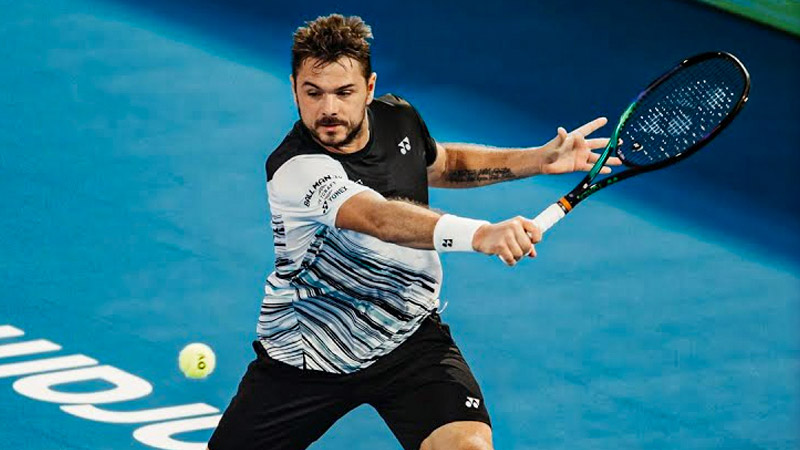
Stan Wawrinka is primarily Swiss, though he holds dual Swiss-German citizenship. Born and raised in Lausanne, Switzerland, he has exclusively represented the Swiss flag throughout his professional career, including his three Grand Slam titles and Olympic Gold.
While his father’s German nationality granted him a second passport at birth, Wawrinka’s cultural identity is deeply rooted in the French-speaking region of Switzerland. He does not speak German and identifies as 100% Swiss.
This unique heritage, combining a Swiss upbringing with German and Slavic ancestry, creates a complex profile for one of tennis’s most enduring and respected international champions.
Why Does Stan Wawrinka Have Dual Citizenship?
The question of legal status is often the first point of inquiry for fans looking into the background of this elite athlete. Wawrinka’s status as a dual national is a direct result of his diverse family lineage, blending different European heritages from the moment of his birth.
The Role of Parental Nationality
Wawrinka’s mother, Isabelle, is a Swiss national who has spent her life contributing to the local community as an educator and biodynamic farmer.
Conversely, his father, Wolfram Wawrinka, is a German citizen. Under international law, Stan was automatically granted German citizenship at birth because of his father’s nationality.
This dual nationality is a common legal occurrence in Europe, allowing him to hold both Swiss and German passports simultaneously, though his primary allegiance has never been in doubt.
A Career Defined by One Flag
Despite the legal benefits of a German passport, Wawrinka has never considered representing any nation other than Switzerland. From his early days in junior circuits to his rise on the ATP Tour, he has always competed under the Swiss banner.
His commitment to his home country was most visible when he served as the national flag bearer during the 2012 London Olympics.
This honor is reserved for the most respected figures in Swiss sports, solidifying his status as a national icon regardless of his secondary citizenship.
Navigating Dual Identity in Professional Sports
In the world of professional tennis, players often have complex backgrounds, but Wawrinka has been consistent in his messaging. He views his German citizenship as a legal fact of his ancestry rather than a defining characteristic of his persona.
For Wawrinka, nationality is defined by the soil he was raised on and the culture he breathes daily, which remains firmly centered in the Swiss Alps.
Where is Stan Wawrinka Originally From?
To truly grasp the essence of Wawrinka’s identity, one must look beyond legal documents and focus on his upbringing in the Vaud canton of Switzerland.
His hometown and childhood environment played a pivotal role in shaping the man who would eventually be known as “Stan the Man.”
Growing Up in Lausanne and Saint-Barthélemy
Wawrinka was born in the city of Lausanne but spent his formative years in the nearby village of Saint-Barthélemy. This region is part of the Romandy, the French-speaking part of Switzerland.
His daily life, education, and social circles were entirely French-oriented, which explains why he is fluent in French but does not speak German. This linguistic divide is a key reason why he feels little cultural connection to his paternal homeland of Germany.
Life on the Ferme du Château
His childhood was spent in a unique and grounded environment on an organic, biodynamic farm called Ferme du Château.
This was not a standard agricultural enterprise; the farm serves as a residential care center dedicated to helping individuals with intellectual disabilities.
Wawrinka’s parents managed this facility, and growing up alongside residents with various challenges gave him a unique perspective on life.
He often credits this grounded, empathetic upbringing for providing him with the inner strength and mental resilience required to compete at the highest levels of professional sports.
Local Roots and Personal Passions
Despite his global fame, Wawrinka remains closely connected to his local roots. He attended the Rudolf Steiner School in Crissier, an educational system that emphasizes holistic development.
Furthermore, his local identity is reinforced by his passionate support for the Lausanne Ice Hockey Club. Whether he is training in Monte Carlo or competing in New York, his heart remains tied to the local traditions and sports teams of his youth in Switzerland.
Understanding the Stan Wawrinka Heritage and Surname
The name “Wawrinka” often sparks curiosity because it does not sound typically Swiss or German. The family history reveals a story of migration and resilience that spans several Eastern and Central European borders.
Slavic Roots and Polish Origin
The surname “Wawrinka” is of Polish origin, which points to a paternal lineage that stretches far beyond Germany. His paternal great-grandfather lived in Silesia, a border region that has historically shifted between Poland and the former Czechoslovakia.
This heritage introduces a layer of Czech and Polish descent into his family tree, reflecting the complex geopolitical history of 20th-century Europe.
The Family’s Move to Germany
The connection to Germany began in 1946 when his paternal ancestors fled from Silesia to Germany following the upheavals of World War II.
It was this migration that established the German nationality for his father, Wolfram, which was eventually passed down to Stan.
While the family settled in Germany, the Slavic roots remained a part of their historical identity, even as Wolfram eventually moved to Switzerland to start a life with Isabelle.
A Truly Continental European Lineage
When analyzing Wawrinka’s background, we see a tapestry of European history:
- Swiss: Maternal side and place of birth/upbringing.
- German: Paternal nationality and legal citizenship.
- Polish/Czech: Ancestral roots and surname origin.
This blend of cultures has created a player who is celebrated for his diversity but remains a singular hero for his home nation of Switzerland.
The Controversy of Wawrinka’s German Identity
While Wawrinka is clear about his identity, the international media has sometimes tried to claim him, leading to notable moments of public debate and nationalistic friction.
The Bild Tabloid Incident
One of the most famous instances of “nationality grabbing” occurred after Wawrinka’s historic victory at the 2014 Australian Open. The German tabloid Bild ran a headline calling him “The German Tennis Sensation”.
The publication leaned heavily on his German passport to claim his success as a win for Germany, largely ignoring that he had never lived in Germany or represented the country in any capacity.
The Protective Response of Swiss Fans
The headline sparked an immediate and protective backlash from Swiss media and fans. They were quick to assert that Wawrinka is a Swiss sporting icon, pointing to his years of service in the Davis Cup and his Olympic achievements under the Swiss flag.
This controversy highlighted the disconnect between legal nationality on paper and the cultural identity that a player presents to the world. For the Swiss people, Wawrinka is an inseparable part of their national sporting fabric.
Notable Career Milestones Representing Switzerland
Wawrinka’s professional resume is a testament to his dedication to Swiss athletics. His greatest triumphs have all been achieved while wearing the national colors of Switzerland, often alongside other legends of the game.
| Achievement | Year | Team/Context |
|---|---|---|
| Olympic Gold Medal (Doubles) | 2008 | Partnered with Roger Federer |
| Swiss Olympic Flag Bearer | 2012 | London Summer Games |
| Australian Open Champion | 2014 | First Grand Slam Title |
| Davis Cup Champion | 2014 | Team Switzerland Victory |
| French Open Champion | 2015 | Defeated World No. 1 |
| US Open Champion | 2016 | Third Grand Slam Title |
Wawrinka’s success in the 2014 Davis Cup was particularly significant for his national identity. Playing alongside Roger Federer, he helped secure Switzerland’s first-ever title in the competition.
This victory united the country and cemented Wawrinka’s status as a national hero who could deliver under pressure for his homeland.
Linguistic and Cultural Identity
National identity is often tied to language, and in this regard, Wawrinka is quintessentially Swiss-Romande. His linguistic profile further separates him from his German legal status.
Language as a Barrier to German Identity
Despite holding a German passport, Wawrinka does not speak German. In a country like Switzerland, where there are four national languages, the linguistic region you are raised in heavily dictates your cultural leanings.
Because he grew up in the French-speaking canton of Vaud, his cultural touchstones are French, not German.
Communication on the Global Stage
Wawrinka is a multilingual athlete, but his choices reflect his professional and personal journey. He is fluent in French, English, and Spanish. His Spanish fluency was aided by his time training in Spain during his developmental years.
The absence of the German language in his repertoire is perhaps the strongest evidence that his “German-ness” exists only as a legal formality.
Frequently Asked Questions About Wawrinka’s Nationality
Is Stan Wawrinka more German or Swiss?
Culturally and professionally, he is 100% Swiss. He was born, raised, and educated in Switzerland, and he represents Switzerland in all international competitions. His German status is purely a legal result of his father’s nationality.
Why do some people think he is Polish?
The confusion stems from his surname, Wawrinka, which is of Polish origin. Additionally, his paternal great-grandfather was from Silesia, a region with deep Polish and Czech roots. However, Stan himself does not hold Polish citizenship.
What is the Ferme du Château?
It is the organic farm where Stan grew up in Saint-Barthélemy, Switzerland. It is notable because his parents used the farm as a residential center for people with intellectual disabilities, an environment Stan credits for his mental toughness.
Did Stan Wawrinka ever consider playing for Germany?
There is no public record of Wawrinka ever considering a switch to the German tennis federation. He has been a staple of the Swiss Davis Cup team and Olympic squads since the beginning of his career.
Conclusion: A Swiss Icon with a Global Story
Stan Wawrinka’s nationality is a perfect example of the modern, interconnected world. While his legal identity includes a German passport, his soul, his language, and his professional legacy are undeniably Swiss.
He has carried the Swiss flag at the Olympics, won Grand Slams for his nation, and remained loyal to the small village where he grew up on a biodynamic farm.
Wawrinka’s story proves that identity is not just about the documents you carry, but about the community you choose to represent and the home you hold in your heart.
He remains a beloved figure in Switzerland and a global ambassador for the sport, proving that a diverse heritage only adds to the richness of a champion’s story.