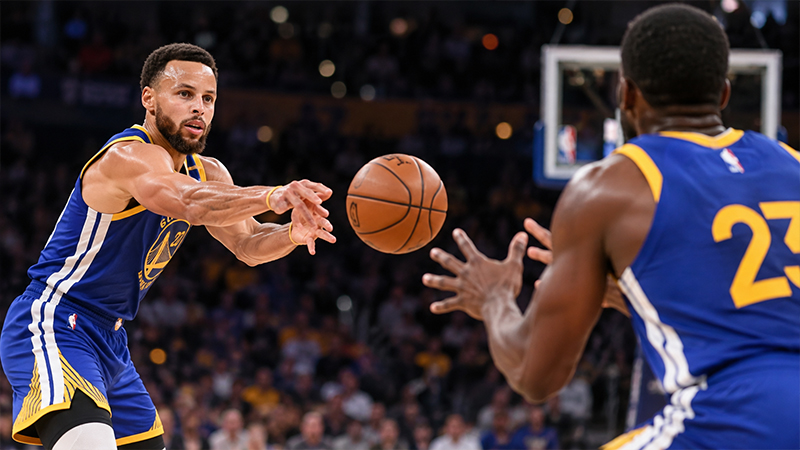
The art of the basketball assist is a study in selflessness, vision, and timing. While the box score records it as a simple “AST,” the lexicon of the hardwood recognizes it by a far more evocative name: the dime.
In the high-stakes environment of the NBA, where every possession is scrutinized by advanced data and every movement is tracked by high-speed cameras, the “dime” remains one of the most enduring pieces of terminology in the sport. But why a dime? Why not a nickel, a quarter, or a buck?
The answer lies at the intersection of mid-century technology, the grit of the American underworld, and the rhythmic evolution of 1970s urban playground culture. To understand the dime is to understand the history of communication and the transformation of language itself.
The Mechanical Foundation: The Ten-Cent Connection
Before the era of digital connectivity, the public payphone was the primary lifeline for those on the move. In the mid-20th century, the standard cost to initiate a local call from one of these public booths was exactly ten cents.
This physical requirement—the necessity of a ten-cent coin to establish a connection—became a foundational element of American vernacular.
The act of “dropping a dime” into the slot of a payphone was the literal and metaphorical start of a transmission. You could not share information, seek help, or make a deal without first providing that small silver coin.
This mechanical necessity linked the dime to the concept of facilitating a result. In basketball, this mirror is striking. Just as the coin facilitated the call, the passer facilitates the score. Without the initial “drop,” the final connection cannot be made.
The Darker Roots: Slang of the Underworld
To truly grasp the weight of the term, one must look toward the shadow side of its history. In the decades leading up to its adoption by basketball players, “dropping a dime” carried a much more treacherous meaning. In the criminal underworld, to drop a dime meant to inform on someone to the authorities.
The logic was straightforward: a snitch would go to a public payphone, drop a ten-cent coin into the machine, and call the police to provide a tip or “give up” information on a peer. During this era, the phrase was synonymous with betrayal. It was a clandestine act of delivery.
However, language is a living entity, constantly being reclaimed and repurposed by the communities that use it.
As the phrase moved through the decades, the emphasis shifted from the betrayal to the delivery. The core of the action remained the same: one person was providing something valuable—information—that led to a specific outcome.
The Great Flip: 1970s Playground Culture
The transformation of the “dime” from a term of derision to a mark of basketball excellence occurred primarily in the 1970s.
This was an era where the ABA and NBA began to merge not just as leagues, but as cultural forces. The flashy, improvisational style of the urban playgrounds began to seep into the professional game.
Urban playground culture in this period was famous for linguistic “flips”—taking words with negative connotations and turning them into badges of honor. In this environment, “dropping a dime” was disconnected from its snitching roots and reattached to the unselfish act of the pass.
Instead of giving up a person to the police, the player was “giving up” the ball to a teammate. It was still an act of delivery, but the recipient was now a brother-in-arms rather than the authorities.
By the time the 1970s reached their peak, a player who could “drop dimes” was seen as a master of the game’s most subtle art: the ability to see a play before it happened and deliver the ball with pinpoint accuracy.
The Anatomy of the Metaphor: Why It Still Works
Language often discards metaphors that no longer make sense, yet the “dime” has survived long after the payphone became a relic of the past. There are three primary reasons why this specific piece of currency remains the gold standard for describing a pass.
1. The Precision of the “Drop”
There is a specific aesthetic associated with a great pass. A passer doesn’t just throw the ball; they “drop” it into a teammate’s shooting pocket with surgical precision.
The imagery of a coin falling into a narrow slot perfectly captures the tight windows through which NBA playmakers must operate.
Whether it is a bounce pass through a crowded paint or a lob over a retreating defender, the ball must be “dropped” exactly where it needs to be to be effective.
2. The High-Percentage Value
In currency, a dime is a small but essential unit of value. In basketball, the “dime” represents a high-value play.
A perfect pass doesn’t just result in a shot; it results in a high-percentage shot. By delivering a dime, a player is effectively “paying” for a teammate’s basket. The assist is the investment; the two or three points are the return.
3. The Helpful Connection
At its heart, both a phone call and a basketball pass are about making a connection to complete a task. A playmaker acts as the central hub of an offense, connecting individual players into a cohesive unit.
When a point guard drops a dime, they are literally “making the call” on how the play will end. They are the facilitator of the team’s communication.
The Evolution of the “Dime-Dropper”
In the modern NBA, the definition of a dime-dropper has expanded. In the 1980s, the term was most closely associated with the “Showtime” era of the Los Angeles Lakers.
Players like Magic Johnson turned the assist into a headline-grabbing event. For Magic, a pass wasn’t just a utility; it was a performance. He didn’t just drop dimes; he dropped them with no-look flair and behind-the-back audacity.
Then came the Stockton era, where the dime became a matter of relentless, robotic efficiency. John Stockton’s dimes weren’t always flashy, but they were inevitable. He viewed the “ten-cent connection” as a fundamental requirement of the point guard position.
Today, we see the “Point Center” revolution. Players like Nikola Jokić have proven that you don’t need to be a small, speedy guard to be an elite dime-dropper.
Jokić uses his height to see over defenses, dropping dimes from the high post that traditional guards could only dream of. The terminology has stayed the same, but the delivery systems have become more diverse.
Frequently Asked Questions
Does a “dime” relate to the ten-foot height of the rim?
While it is a common theory, there is no historical evidence linking the term to the height of the hoop. The linguistic consensus points squarely at the ten-cent payphone call.
Is every assist considered a dime?
Technically, yes, but in the vernacular of the game, a “dime” usually implies a certain level of difficulty or style. A simple hand-off might be an assist, but a “dime” is typically reserved for a pass that displays vision and precision.
Why don’t we call it a “quarter”?
As payphone prices rose to 25 cents in later years, the slang was already firmly entrenched in the culture. The “dime” had already made its transition from the phone booth to the hardwood, and the linguistic momentum was too strong to change.
The Enduring Legacy of the Pass
The basketball dime is more than just a slang term; it is a bridge between generations. It connects the world of mid-century payphones and street-level grit to the modern, multi-billion-dollar spectacle of the NBA. It reminds us that at the core of this complex, athletic game is a simple act of human connection.
When a player drops a dime today, they aren’t thinking about payphones or underworld informers. They are thinking about the open man, the closing window of the defense, and the perfect trajectory of the ball.
Yet, every time the term is used, the history of that ten-cent coin lives on. It remains the ultimate symbol of the unselfish teammate—the player who recognizes that the most valuable thing you can do on a court is to help someone else succeed.
In a world increasingly focused on individual scoring and “iso-ball,” the dime stands as a testament to the power of the assist. It is the most unselfish play in sports, delivered ten cents at a time.