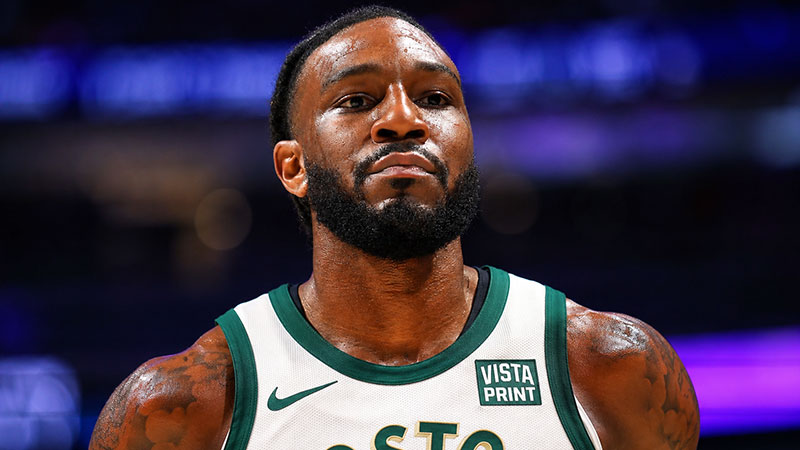
People hate Jae Crowder because he embodies the polarizing “villain” archetype: a hyper-aggressive enforcer who thrives on getting under his opponents’ skin.
The animosity primarily stems from high-profile clashes with superstars like LeBron James—most notably his mocking salsa dance—and a reputation for “flopping” despite his gritty branding.
Furthermore, Crowder has alienated his own supporters through public disputes, including a 2017 Twitter rant against Boston fans and his 2022 “quiet quitting” saga in Phoenix.
Ultimately, fans despise his combination of physical instigation, constant officiating complaints, and perceived lack of loyalty during role disputes.
When Did the Jae Crowder Hate Officially Start?
The shift in public perception regarding Crowder was not an overnight occurrence but rather a calculated descent into villainy that began during his tenure with the Boston Celtics.
While he entered the league as a respected underdog, his sensitive reaction to team maneuvers and fan interactions created a rift that never truly healed.
This era marked the transition from a valued role player to a combative personality who was willing to challenge the very people who cheered for him.
The 2017 Boston Celtics Twitter Fallout
The “starting date” for the widespread backlash is widely cited as January 3, 2017, when the Utah Jazz visited Boston. During the game, Celtics fans loudly cheered for Jazz star Gordon Hayward, whom the team hoped to sign in free agency.
Crowder, who occupied the same position as Hayward, viewed this as a direct personal insult rather than a strategic team move. He took to Twitter in a late-night rant, arguing with fans and explicitly stating he would have “no problem leaving” Boston.
This interaction overnight changed his reputation from a hard-working wing to an overly sensitive athlete.
The John Wall “Nose Poke” Incident
Shortly after the Twitter drama, Crowder solidified his status as an instigator during a game against the Washington Wizards on January 11, 2017. Following the final buzzer, Crowder confronted John Wall, aggressively poking the Wizards star in the nose.
The situation escalated so severely that a physical scuffle broke out, requiring five police officers to stand guard between the locker rooms to prevent further violence.
This moment proved to the league that Crowder was not just talk; he was actively seeking out high-stakes confrontation with rival stars.
Why Do NBA Fans Consider Him a “Flopper”?
A recurring theme in the criticism against Crowder is the perceived hypocrisy in his style of play. While he markets himself as an “old-school” enforcer who plays with grit and toughness, many viewers see a different reality on the court.
This disconnect between his branding and his actual behavior on the hardwood is a primary driver of fan frustration, especially among those who value traditional physical defense.
| Playstyle Trait | Fan Perception | Crowder’s Perspective |
|---|---|---|
| Physicality | Seen as “instigating” and “cheap shots.” | Self-branded as a gritty “3-and-D” enforcer. |
| Contact | Criticized as a “flopper” who exaggerates fouls. | Using tactical intelligence to draw whistles. |
| Officiating | Constantly complaining after every whistle. | Advocating for fair treatment on the court. |
| Mental Game | Dismissed as “psychological warfare” or annoyance. | Getting under the skin of the opponent’s best player. |
This double standard is what makes him so infuriating to watch for opposing fanbases. He will deliver a hard foul one minute and then theatrically fall to the floor the next to draw a charge, often following up both actions by lecturing the referees.
For many, this combination of physical instigation and theatrical embellishment is the ultimate recipe for being disliked.
The Rivalry with LeBron James and the Salsa Incident
No single relationship has defined Crowder’s reputation more than his ongoing feud with LeBron James. Over multiple playoff series with teams like the Celtics, Heat, and Suns, Crowder has engaged in a relentless campaign of psychological warfare against the “King”.
This rivalry transitioned from standard playoff intensity to deep-seated personal animosity, creating a massive wave of hatred from the global Lakers fanbase.
Psychological Warfare on the Biggest Stage
Crowder’s approach to defending LeBron James often involves hard fouls and constant trash talk designed to disrupt James’s rhythm.
On the Suns’ subreddit, fans have noted that while Crowder’s tactics are frustrating to opponents, they are essential for a team trying to dethrone a champion.
However, to the average viewer, these tactics often come across as “dirty” or unnecessary, especially when paired with his tendency to complain about calls going against him.
The Salsa Dance That Broke the Internet
The climax of this rivalry occurred on June 3, 2021, during the elimination game of the Western Conference First Round.
With the Phoenix Suns seconds away from knocking out the defending champion Lakers, Crowder performed a mocking salsa dance directed at LeBron James.
This was a direct jab at James’s recent commercial appearances, and although Crowder was ejected for the stunt, the damage was done. He became “public enemy number one” for Lakers fans, a status that remains solidified years later.
Did Jae Crowder “Quit” on the Phoenix Suns?
The transition from being a beloved “unsung hero” in Phoenix to a pariah among Suns fans happened with startling speed.
In September 2022, the Suns organization informed Crowder that he would be moving to a bench role to allow younger forward Cam Johnson to start.
Crowder’s reaction to this demotion created one of the most controversial holdouts in recent NBA history, leading to accusations that he abandoned his teammates.
The 2022 Contract and Role Dispute
Crowder was reportedly upset not only by the move to the bench but also by a lack of progress on a contract extension. He felt that his contributions to the Suns’ 2021 Finals run earned him more respect than a secondary role.
However, the organization’s focus on developing younger talent created a stalemate. Rather than competing for his spot or playing through the final year of his deal, Crowder chose a path that many fans interpreted as a betrayal of the collective goal.
Five Months of “Quiet Quitting”
For nearly five months, Crowder refused to report to the team, essentially sitting at home while waiting for a trade. This move was particularly damaging to his reputation because the Suns were still championship contenders.
Fans who had previously celebrated his intensity now viewed him as selfish and unprofessional for “quitting” on a winning roster.
Even after he was eventually traded, the bitter taste remained, as he had effectively sidelined himself during his prime years over a bruised ego.
How Did He Alienate the Milwaukee Bucks?
When Crowder finally landed with the Milwaukee Bucks, many expected him to be the “missing piece” for another title run. However, history repeated itself as Crowder found reasons to be unhappy with his situation almost immediately after their playoff exit.
- Public Complaints: Following the Bucks’ early elimination from the playoffs, Crowder publicly questioned why he was even brought to the team.
- Role Confusion: He expressed deep confusion regarding his purpose on the roster, stating he didn’t understand his lack of playing time.
- Fan Backlash: Milwaukee supporters, already reeling from a postseason loss, found his post-game complaints to be self-centered and poorly timed.
- Poor Performance: Despite his demands for more minutes, Crowder struggled to produce when he was on the floor, averaging only 8 minutes per game in the postseason.
Frequently Asked Questions About Jae Crowder
Is he really a “dirty” player?
While opinions vary, his history of “nose pokes” and hard fouls against stars leads many to label him as an instigator.
Why do his own fans eventually turn on him?
Most fanbases love him initially but become frustrated by his “quiet quitting” tendencies and public complaints about playing time.
Does he actually help teams win?
Despite the hate, Crowder has been a key starter for multiple Finals teams (Heat, Suns), proving his 3-and-D utility is highly valued by coaches.
What was the “salsa dance” incident?
It was a mocking gesture toward LeBron James during the 2021 playoffs, which earned him a permanent ejection and the hatred of Lakers fans.
Final Verdict: The Villain the NBA Needs?
Ultimately, Jae Crowder fits the classic sports paradox: he is the player you absolutely love to have on your roster but utterly loathe to play against. His hyper-aggressive style, while polarizing, has made him a staple on winning teams for over a decade.
Whether he is mocking a legend like LeBron James or arguing with his own fans on social media, Crowder remains one of the most authentically provocative figures in professional basketball.
The “hate” directed at Crowder is often a sign of his effectiveness; if he weren’t getting under people’s skins, he wouldn’t be doing his job as a defensive pest.
However, his reputation for abandoning teams when things don’t go his way is a harder pill for fans to swallow. As his career progresses into its later stages, Crowder will likely remain a lightning rod for criticism, a role he seems more than happy to play.