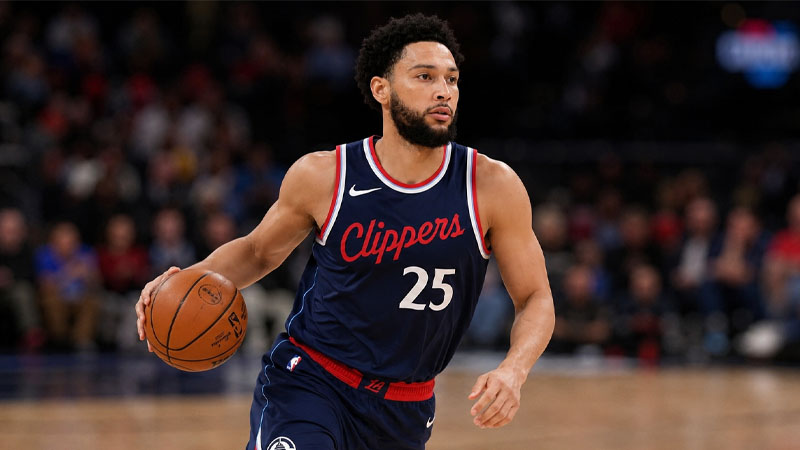
Why do people hate Ben Simmons? Public animosity toward the former All-Star stems from a combination of stagnant skill development, high-profile playoff failures, and a perceived lack of professional accountability.
Once hailed as the next LeBron James, Simmons became a polarizing figure after passing up a crucial dunk in the 2021 playoffs and subsequently holding out for a trade while earning a maximum contract.
This perceived entitlement, coupled with a transition from basketball to professional sportfishing before a 2026 comeback attempt, has led fans to label him as a prime example of wasted generational talent in modern professional sports history.
The Stagnation of a Generational Talent
The frustration surrounding Ben Simmons often begins with the immense expectations placed upon him as the #1 overall pick in 2016. Standing 6’10” with elite speed and playmaking abilities, he possessed the physical tools to dominate the league for a decade.
However, his refusal to evolve as an offensive threat became a central theme of his career’s decline.
The Refusal to Develop a Perimeter Game
Despite entering the league with massive hype, Simmons never developed a reliable outside jump shot. Over several seasons, his game remained statistically stagnant, particularly regarding his shooting range.
Opposing defenses exploited this by backing off him completely in half-court sets, essentially daring him to shoot from the perimeter.
Because he rarely attempted these shots, it became increasingly difficult for his team to maintain offensive fluidity in high-stakes environments.
Impact on Offensive Spacing and Teammates
This refusal to shoot created severe spacing issues that “clogged the paint” for his star teammates, most notably Joel Embiid. For years, the team’s offensive efficiency was hampered because defenders could ignore Simmons when he wasn’t near the rim.
Reports suggest that Embiid even had to change his playing style to accommodate Simmons’ limitations, yet Simmons was viewed as unwilling to reciprocate by expanding his own game.
Comparing Work Ethic to Other Superstars
Critics often point to other “point forwards” like Giannis Antetokounmpo as a contrast to Simmons.
While Giannis also entered the league with shooting deficiencies, he is widely recognized for his relentless work ethic and willingness to attempt shots to keep defenses honest.
In contrast, Simmons was perceived as complacent, relying solely on his raw natural talent rather than putting in the necessary work to fix the glaring holes in his offensive repertoire.
Why Was the 2021 Atlanta Hawks Series a Turning Point?
While the lack of a jump shot was a long-standing grievance, the 2021 Eastern Conference Semifinals against the Atlanta Hawks served as the definitive “breaking point” for fans and the Philadelphia franchise.
It was during this series that Simmons’ offensive passivity shifted from a strategic flaw to a psychological barrier.
The Infamous Passed-Up Dunk in Game 7
The most cited moment in the “Ben Simmons hate” narrative occurred late in the fourth quarter of Game 7. Simmons had a wide-open dunk that could have tied the game or given his team a crucial lead; instead, he passed the ball to teammate Matisse Thybulle.
Many analysts believe he was terrified of being fouled and sent to the free-throw line, where he was shooting a historically poor 34% during that postseason. This single play came to symbolize a lack of “heart” and a fear of the moment.
The Public Fallout with Coaches and Stars
Following the Game 7 loss, the internal culture of the franchise fractured publicly. When asked if Simmons could be a championship-level point guard, head coach Doc Rivers responded, “I don’t know the answer to that right now”.
Joel Embiid also pointed to the passed-up dunk as the turning point of the game. These comments were viewed by Simmons and his camp as a betrayal, leading to a permanent rift that eventually resulted in his trade request and subsequent holdout.
Perceived Lack of Accountability and Professionalism
A major driver of the animosity toward Simmons is the way he handled criticism and professional setbacks. Instead of addressing his flaws on the court, his actions off the court often reinforced the narrative that he was more interested in his lifestyle than winning basketball games.
The Holdout and “Cell Phone” Practice Incidents
After the 2021 playoffs, Simmons requested a trade and refused to report to training camp, racking up millions in fines. When he finally made a brief return to practice, he was thrown out for refusing to participate in drills.
Fans were particularly incensed by photos showing Simmons practicing with a cell phone clearly visible in his pocket, which was interpreted as a blatant show of disrespect to his teammates and the organization.
Locker Room Insights and Teammate Frustrations
Locker room reports have painted a picture of a player who struggled to connect with his peers. Former teammate Georges Niang described Simmons as a “cancer” in the dressing room who would return to the facility and refuse to acknowledge or speak to anyone.
Other reports indicated that his inability to get along with stars like Jimmy Butler played a role in Butler’s departure from the team. This perceived arrogance led many to believe he viewed himself as a celebrity first and a basketball player second.
The Australian Boomers and International Commitments
The frustration also extended to his home country of Australia. Simmons repeatedly committed to playing for the Australian national team, the Boomers, only to withdraw before major tournaments like the Olympics or the World Cup.
This pattern of behavior led many Australian fans to view his commitments as empty promises, further damaging his global reputation as a dedicated athlete.
Maximum Contracts vs. On-Court Availability
The financial aspect of Simmons’ career has fueled significant public resentment. For many fans, the sight of an athlete earning hundreds of millions of dollars while seemingly refusing to play is the ultimate sign of entitlement.
Earning Millions While Sidelined
In 2019, Simmons signed a massive $177 million contract extension. Across the lifespan of that deal, which included his time with the 76ers, Brooklyn Nets, and LA Clippers, he earned over $203 million despite missing massive stretches of basketball.
Prominent analysts have gone as far as to label him a “thief” for collecting maximum paychecks while contributing very little on the court. In his final active stretch with the Clippers, his production plummeted to a mere 2.9 points per game.
The “Socialite” Lifestyle and Media Perception
The term “socialite” became a common pejorative used against Simmons. Critics frequently pointed to his Instagram posts featuring luxury Ferraris and high-profile relationships as evidence that he lacked the “fire” required for elite competition.
The optics of being “piss drunk at Wimbledon” during what fans considered the most important offseason of his career further cemented the image of a player who had lost his hunger for the game once his financial future was secured.
The Physical and Mental Realities of His Decline
While much of the criticism focuses on his character, it is important to acknowledge the genuine physical and psychological hurdles Simmons faced. Some fans argue that the hate has overshadowed the reality of his debilitating injuries.
Chronic Back Injuries and Microdiscectomy Surgeries
Simmons’ decline was not purely psychological; he suffered from chronic nerve issues in his back that required multiple microdiscectomy surgeries.
These injuries stripped him of the elite lateral quickness and explosive speed that had once made him an All-Defensive First Team selection.
Many people overlook that his physical body was no longer capable of performing at an All-Star level, regardless of his mental state.
Psychological Barriers and Mental Health Struggles
Simmons also cited mental health struggles as a primary reason for his inability to play in Philadelphia.
While he described a psychological block against scoring, many fans viewed the timing of these claims with cynicism, believing it was an excuse to avoid hostile crowd atmospheres.
This disconnect highlights an “attribution error” in social psychology, where fans attribute his failures to innate character flaws rather than recognizing the external physical and mental forces at play.
The 2026 Comeback and the Sportfishing Detour
After a period of significant turmoil, Simmons’ career took a highly unconventional turn. His recent activities have only added to his status as one of the most unique figures in professional sports history.
- The Fishing Gap Year: For the 2025–26 season, Simmons rejected a veteran-minimum contract to focus on his professional sportfishing team, the South Florida Sails.
- Competitive Success: He proved his competitive drive in a different arena, winning the Walker’s Cay Blue Marlin Open in May 2026.
- Professional Reset: Simmons stated that the time away from the court was necessary to “find himself” and heal from the intense media scrutiny.
- The 2026 Bid: In mid-2026, he announced a rigorous training program, claiming to work out 4.5 hours a day to facilitate an NBA return.
- Potential Destinations: He has expressed interest in a reunion with the Philadelphia 76ers or joining the Miami Heat, though front offices remain skeptical of his current value.
Frequently Asked Questions
Is Ben Simmons still in the NBA?
As of mid-2026, Simmons is an unrestricted free agent attempting a comeback after sitting out the 2025–26 season to focus on professional sportfishing.
How much money has Ben Simmons made?
Simmons has earned over $203 million in career salary despite missing significant time due to injuries and holdouts.
What happened to Ben Simmons’ back?
He suffered from chronic nerve issues and underwent multiple microdiscectomy surgeries, which significantly impacted his athleticism and defensive capabilities.
Why did he stop playing for the Philadelphia 76ers?
The relationship fractured after the 2021 playoffs due to public criticism from his coach and teammates, leading to a trade request and a lengthy holdout.
What is Ben Simmons’ team in 2026?
While he does not currently have an NBA contract, he is the co-owner of the South Florida Sails, a professional sportfishing team.