In the high-stakes environment of professional athletics, every component of the field of play is designed with meticulous intent.
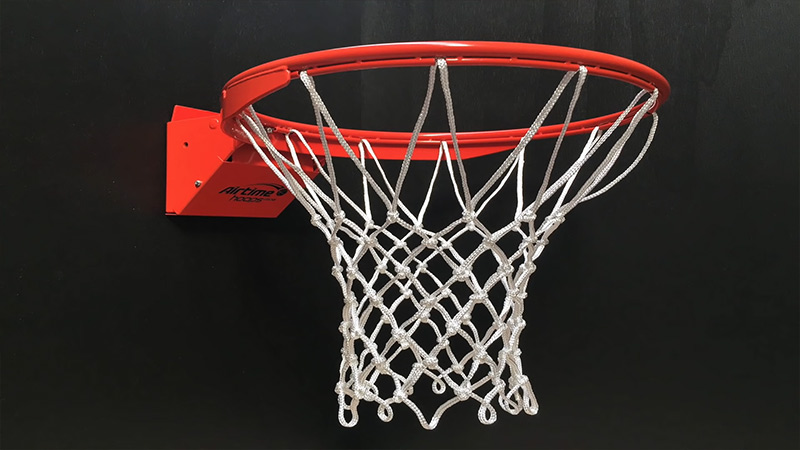
While the backboard and the rim provide the primary targets for scoring, the basketball net serves as the critical interface that bridges the gap between a physical action and a confirmed outcome.
Far from being a mere aesthetic addition, the net is a sophisticated tool of mechanical functionality, safety, and psychological reinforcement.
The Historical Evolution: From Peach Baskets to Precision Mesh
The genesis of basketball was marked by manual inefficiencies that the modern spectator would find unrecognizable. When Dr. James Naismith invented the game in 1891, the original targets were literal peach baskets secured to balcony railings.
The primary drawback of this early design was that the baskets were closed-bottomed, requiring a person to climb a ladder to retrieve the ball after every successful score.
As the pace of the game intensified, the need for efficiency led to the removal of the basket’s bottom. Eventually, these baskets were replaced with metal rims. However, a rim alone introduced a new problem: ambiguity.
In the heat of competition, it was often difficult to determine if a ball had passed through the hoop or merely struck the edge. The addition of the net was the definitive solution to this problem, accelerating the game’s flow and providing the clarity required for competitive play.
Mechanical Functionality: The Physics of Scoring Confirmation
The most immediate technical requirement of a basketball net is to provide visual and audible confirmation of a goal. In a fast-paced professional setting, the ball often travels at high speeds and follows complex trajectories.
1. Visual Indicators and Dispute Mitigation
Without a net, it is frequently impossible for players, officials, and fans to discern whether a ball passed cleanly through the rim or skimmed the outer edge.
The net functions by momentarily creating friction as the ball passes through, slowing its descent just enough to make the score visibly obvious from any angle on the court.
This visual cue is vital for referees to make accurate real-time decisions and reduces on-court disputes regarding the score.
2. Ball Control and Retrieval Efficiency
Beyond confirmation, the net serves an essential role in ball dynamics. When a ball enters a bare rim, its exit trajectory is unpredictable; it can ricochet off the interior metal and bounce far into the stands or toward the opposite end of the court.
The funnel-like design of the net captures the ball and directs it straight downward. This “controlled drop” ensures the ball lands predictably under the hoop, facilitating rapid retrieval and allowing the game to proceed without unnecessary delays.
The Psychological Feedback Loop: The Science of the “Swish”
The sensory experience of basketball is deeply tied to the net. The distinct auditory “snap” or “swish” produced by a perfect shot is more than a satisfying sound; it is a critical feedback mechanism for the athlete.
1. Sensory Rewards and Performance Feedback
Athletes rely on immediate feedback to calibrate their technique. The sound of the ball hitting the mesh provides an instant sensory reward that confirms the player’s aim, trajectory, and release were optimal.
This auditory confirmation helps players fine-tune their muscle memory and timing during both practice and live competition.
2. Motivation and Confidence Building
The psychological impact of the net cannot be overstated. Coaches and sports psychologists observe that players often develop a stronger emotional connection to the game when they receive clear, positive reinforcement from their environment.
The visual and auditory cues of a successful shot act as natural rewards, encouraging focus and boosting the confidence required to perform under pressure.
Safety and Risk Mitigation in High-Impact Play
In modern basketball, play often occurs at the rim. Layups and dunks bring players’ hands into proximity with the metal apparatus. Here, the net acts as a crucial safety barrier.
When players reach for the rim, the presence of the net provides a buffer that can prevent fingers or hands from catching directly on the metal edge or the hooks used to secure the net.
By serving as a protective screen, the net reduces the risk of lacerations and joint injuries that could occur during high-flying maneuvers.
Maintaining the integrity of the net—ensuring it is free of tangles or fraying—is therefore a matter of player safety as much as it is of game aesthetics.
Materials Science: Selecting the Right Composite for the Environment
The performance and longevity of a basketball net are dictated by its material composition. Different playing environments require specific properties to withstand wear, weather, and usage intensity.
1. Nylon: The Industry Standard
Nylon is the most prevalent material for basketball nets due to its superior balance of flexibility, durability, and weather resistance. High-quality nylon nets are engineered to withstand constant friction from the ball while maintaining their shape.
Indoor versions often use a blend of cotton and nylon to produce a quieter, smoother “swish,” whereas outdoor versions are treated to resist UV degradation and moisture.
2. Metallic Chain: Durability in Public Spaces
On outdoor public courts and playgrounds where maintenance may be infrequent, chain nets are the preferred choice. These metal nets are resistant to vandalism and can endure extreme weather conditions without fraying or rotting.
While they lack the soft auditory feedback of nylon and can occasionally pinch the ball if the links become twisted, their resilience makes them an economical choice for heavy-use environments.
3. Polyester Alternatives
Heavy-duty polyester is often used as an alternative to nylon for outdoor hoops. It offers high tensile strength and is less prone to stretching over time, ensuring the net maintains its regulation length even under the stress of outdoor elements.
Professional Regulations and Global Standards
To ensure uniformity across all levels of play, professional basketball organizations have established rigorous standards for net construction and dimensions.
1. FIBA and USA Basketball Requirements
Regulation nets must adhere to specific length and attachment criteria to prevent the ball from becoming lodged or passing through too quickly.
Organizations like the International Basketball Federation (FIBA) and USA Basketball mandate that nets be made of white cord and measure between 15 and 18 inches (38 and 45 cm) in length.
2. Attachment and Tension
The net must be attached to the rim at 12 evenly spaced points. The tension of the mesh is designed to be “stiff enough” to check the ball momentarily as it passes through, but flexible enough to ensure the ball does not get caught.
This standardization ensures that a player’s experience remains consistent, whether they are competing in a professional arena or a local community center.
Cultural Significance: The Ritual of the Net
Beyond its technical and mechanical roles, the net occupies a hallowed place in basketball culture. It is the ultimate symbol of achievement.
1. The Tradition of Cutting the Net
One of the most iconic rituals in sports is the act of cutting down the nets following a championship victory. This tradition, common in both collegiate and professional basketball, represents the culmination of a team’s collective effort and the ultimate mark of triumph.
2. An Iconic Visual Identity
A basketball hoop without a net feels incomplete. The net provides the finishing touch that transforms a simple metal ring into a professional court. It adds a sense of rhythm and style to the game, serving as a visual focal point for both players and spectators.
Maintenance and Asset Management
For facility managers and backyard enthusiasts alike, the maintenance of the net is essential for preserving the quality of play. Over time, exposure to sunlight and moisture can cause materials to discolour or become brittle.
- Regular Inspections: Nets should be checked periodically for fraying, knots, or tears that could impede the ball’s movement or present a safety hazard.
- Replacement Cycles: Replacing a worn net is a cost-effective way to immediately improve the aesthetics and functionality of a hoop.
- Seasonal Adjustments: In regions with harsh winters, some facilities swap nylon nets for chain versions or remove them entirely during the off-season to extend the lifespan of the equipment.
Enhanced FAQ: Expert Insights into Basketball Nets
Q: Why does the net narrow toward the bottom?
A: The funnel shape is intentional. It creates the necessary friction to slow the ball down, providing the visual “pause” that confirms a score. If the net were a straight cylinder, it would not provide sufficient resistance to control the ball’s exit trajectory.
Q: Can playing without a net damage my basketball?
A: While it won’t directly damage the ball, the lack of a net leads to more frequent impacts with the ground or surrounding structures as the ball ricochets off the rim. Over time, this increased environmental impact can lead to faster wear on the ball’s surface.
Q: What is the most durable net for an outdoor backyard hoop?
A: For most homeowners, a heavy-duty, weather-treated nylon net offers the best combination of the “pro feel” and durability. If the hoop is located in a high-salt coastal area or an environment with extreme temperature swings, a zinc-plated chain net may offer superior longevity.
Q: Are there different sizes of nets for different rims?
A: Yes. Standard regulation rims are 18 inches in diameter and require a 12-loop net. However, smaller “pro-style” indoor mini-hoops or youth hoops may require specialized nets with fewer loops and shorter lengths. Always verify the rim size before purchasing a replacement.
Conclusion: The Unsung Hero of the Court
The basketball net is a masterpiece of functional design. It resolves the ambiguity of high-speed play, protects the physical well-being of the athletes, and provides the sensory feedback that turns a game into an experience.
Whether it is the professional-grade nylon mesh of the NBA or the rugged steel chains of an urban playground, the net is what makes the game recognizable, fair, and satisfying.
For any organization or individual looking to optimize their athletic space, the net should never be an afterthought. It is the component that confirms victory, ensures safety, and delivers the iconic sound of success.