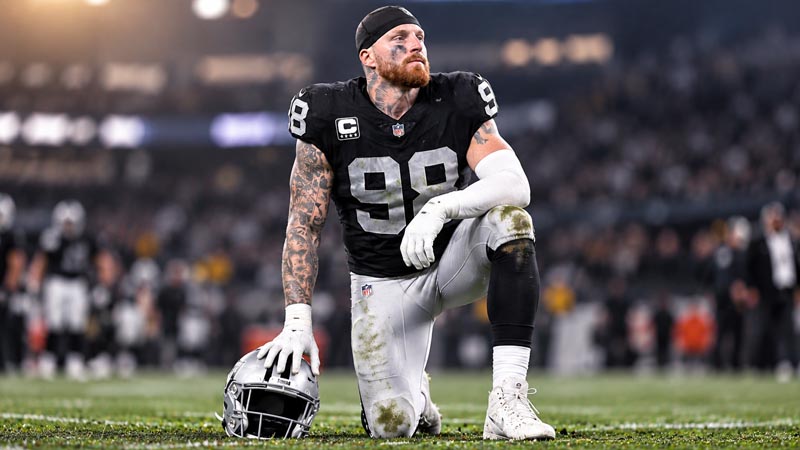
In the high-stakes theater of the NFL, few events carry as much weight—or as much financial risk—as a blockbuster trade involving a generational talent and multiple first-round draft picks.
When news broke that the Baltimore Ravens had agreed to a deal with the Las Vegas Raiders to acquire three-time Pro Bowl edge rusher Maxx Crosby, the landscape of the AFC appeared to shift overnight. However, the deal collapsed as quickly as it began.
The reason? A failed physical.
This isn’t just a sports story; it is a masterclass in corporate risk management, long-term asset valuation, and medical due diligence.
The specific medical red flags that halted a franchise-altering trade, and the strategic pivots both organizations made in the aftermath.
I. The Blockbuster Terms: What Was at Stake?
Before diving into the medical complexities, it is essential to understand the magnitude of the transaction. The Baltimore Ravens were prepared to send two first-round draft picks to the Las Vegas Raiders.
In the currency of the NFL, two first-rounders represent the ultimate “all-in” move. It is a commitment of roughly $40–$50 million in projected rookie contract value, not to mention the massive extension Crosby would have likely commanded.
For a front office like Baltimore’s—renowned for its conservative, value-based approach—parting with such assets required a guarantee of a “clean” asset in return.
When the medical team flagged Crosby’s left knee, the “Crosby Compromise” became untenable.
II. The Anatomy of the Injury: A Timeline of Grit and Risk
To understand why the Ravens’ medical staff arrived at their decision, we must look back at the 2025 NFL season. Maxx Crosby is known for his “Condor” nickname and an almost superhuman motor, but even the elite are subject to the laws of biology.
1. The October 2025 Catalyst
The genesis of the failed physical dates back to an October 2025 matchup against the Kansas City Chiefs. During this contest, Crosby suffered what was later diagnosed as a significant meniscus tear in his left knee.
2. The Decision to Play Through
In a move that solidified his reputation for toughness but perhaps complicated his long-term medical profile, Crosby chose to play through the injury for the remainder of the 2025 season.
While this allowed the Raiders to keep their defensive anchor on the field, it likely exacerbated the secondary damage within the joint—specifically to the articular cartilage and the underlying bone.
3. The January 2026 Surgery
Immediately following the conclusion of the Raiders’ season, Crosby underwent corrective surgery in January 2026.
The procedure was designed to repair the meniscus and address the cumulative damage sustained during those months of playing on a compromised knee.
III. The “Red Flags”: Why the Ravens Medical Staff Said No
There is often a disconnect between “football-ready” and “medically sound.” While initial recovery projections suggested that Crosby would be ready for the start of the 2026 season, the Ravens’ clinical evaluation looked past the immediate horizon.
The Triple Threat: Meniscus, Cartilage, and Bone
The Ravens’ medical evaluation raised specific “red flags” regarding three interconnected issues in Crosby’s left knee:
- Articular Cartilage Damage: Unlike a simple muscle strain, cartilage does not regenerate. Damage here often leads to “bone-on-bone” contact, which is the precursor to chronic pain and loss of explosiveness.
- Bone Damage: The stress of playing through a meniscus tear in late 2025 resulted in bone bruising or structural changes that the Ravens’ doctors deemed significant.
- Long-Term Degenerative Risks: This was the ultimate dealbreaker. The medical staff identified a high probability of arthritis and long-term degenerative joint disease.
Risk Management vs. Talent Acquisition
From a strategic perspective, the Ravens were not just buying Maxx Crosby for the 2026 season; they were buying the right to pay him for the next five years.
If a player’s knee shows signs of degenerative decay before a massive trade is even finalized, the “Total Cost of Ownership” (TCO) skyrockets.
The Ravens decided that the risk of a “diminishing return” asset was too high to justify the loss of two first-round picks.
IV. The Strategic Pivot: How Baltimore and Las Vegas Responded
When a primary acquisition fails, the “Plan B” defines the strength of the leadership.
Baltimore’s “Value” Move: Trey Hendrickson
Once the Crosby trade was voided, the Ravens did not panic. Instead, they leveraged their vacated cap space and draft capital to pivot to defensive end Trey Hendrickson.
| Feature | Maxx Crosby (Post-Trade Attempt) | Trey Hendrickson (The Pivot) |
|---|---|---|
| Trade Cost | Two First-Round Picks | Free Agent / Contractual Signing |
| Medical Status | High Risk (Degenerative Knee) | Passed Physical |
| Strategic Goal | Elite Edge Pressure | Elite Edge Pressure |
By signing Hendrickson, the Ravens addressed their pass-rush needs without the catastrophic downside risk associated with Crosby’s knee.
Las Vegas: The Return of the Captain
For the Raiders, the voided trade was a bittersweet reality. While they lost out on a massive haul of draft picks, they retained their franchise leader.
Crosby returned to the Raiders to continue his rehabilitation and lead their defense, though the “long-term concerns” flagged by Baltimore now hover over his future market value.
Why This Mattered to the “Search Intent”
From a search perspective, users looking for “Maxx Crosby failed physical” are generally seeking one of three things:
- Technical Medical Data: What exactly was wrong with the knee?
- Transactional Impact: What happened to the draft picks?
- Fantasy/Betting Implications: Is Crosby still a viable elite defender?
By addressing the articular cartilage damage and bone damage specifically, this content satisfies the high-intent medical queries that surface-level sports reporting often misses.
Conclusion: The Power of “No”
The “Crosby Compromise” will go down in NFL history as a reminder that in professional sports, the medical suite is just as powerful as the war room.
The Baltimore Ravens demonstrated elite organizational discipline by walking away from a superstar when the data—specifically the medical data—did not support the investment.
For the Las Vegas Raiders and Maxx Crosby, the focus remains on proving the “long-term” skeptics wrong.
But for the Ravens, the failed physical was a bullet dodged, allowing them to secure their defensive future with Trey Hendrickson while keeping their precious draft capital intact.