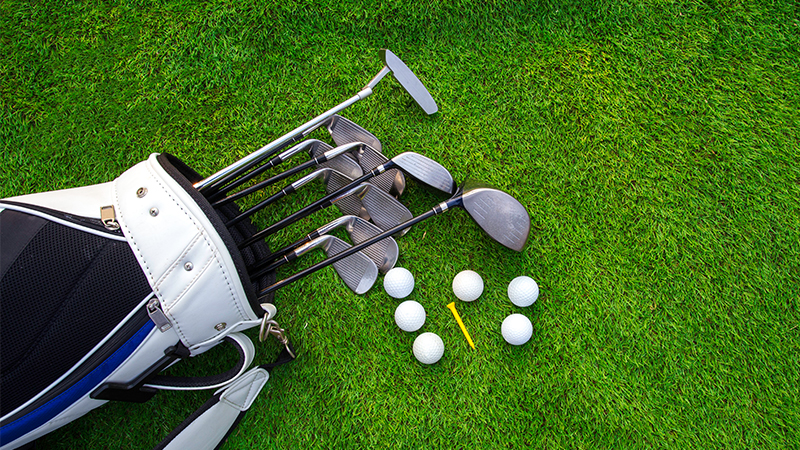
In the high-stakes world of competitive and recreational golf, equipment is often the thin margin between a record-breaking round and a day of frustration on the links.
For years, the industry focused on a “standard” build that catered to a specific height demographic, often leaving shorter golfers—specifically women—at a distinct disadvantage.
However, as data-driven fitting becomes the cornerstone of modern play, the shift toward specialized petite golf clubs has transformed from a niche preference to a technical necessity for performance optimization.
Defining the Petite Category: Beyond Marketing
The term “petite” in golf is not merely a branding exercise; it is a technical classification based on specific physical archetypes. Petite golf clubs are engineered for women who generally fall under the height of 5’3″ to 5’4″.
While height is the primary indicator, elite fitters also look at the wrist-to-floor measurement. If this distance is under 29 inches, a petite set is technically recommended to ensure the golfer can maintain a neutral, athletic stance throughout the swing.
Standard clubs are typically built for a taller frame, and using them without modification can lead to a cascade of mechanical errors that are often misdiagnosed as “poor form” rather than “poor fit.”
The Anatomy of a Perfect Fit: Technical Specifications
When transitioning from a standard set to a petite set, the differences may seem subtle on paper, but they are transformative on the course.
1. Length and Leverage
Petite clubs are typically 0.5 to 1 inch shorter than standard women’s club lengths. In physics terms, a shorter shaft decreases the radius of the swing arc, which for a shorter golfer, allows for better control over the clubhead’s path.
When a club is too long, the golfer is forced to stand too upright or move too far away from the ball, leading to “thin” hits or “topping” the ball.
2. Weight and Balance
It is a common misconception that shorter clubs are simply “cut down” versions of standard clubs. High-quality petite sets are engineered with calibrated swing weights.
If you were to simply cut an inch off a standard club, you would significantly lighten the “head feel,” making it difficult for the golfer to sense where the club is during the backswing.
Specialized petite clubs maintain the proper balance, ensuring that the golfer can feel the clubhead’s momentum.
The “Choke Down” Fallacy: Why Modification Fails
For decades, the standard advice for shorter golfers was simply to “choke down” on the grip. While this technically shortens the functional length of the club, it introduces a host of technical drawbacks.
As noted in current fitting research, choking down negatively affects the balance and swing weight of the club.
The grip of a golf club is also tapered; by holding it lower, the golfer is gripping a thinner portion of the shaft, which can lead to excessive “handiness” or overactive wrists during the swing.
Specialized petite clubs eliminate this need, allowing for a full, secure grip at the top of the handle where the club was designed to be held.
Biomechanical Advantages: Posture and Power
The primary goal of petite clubs is to help smaller golfers achieve proper posture and improved swing mechanics. When equipment fits the frame, several biomechanical benefits occur:
- Consistent Contact: Correctly sized clubs ensure that the golfer can strike the ball in the “sweet spot” of the face more consistently.
- Spine Angle Retention: A proper fit allows the golfer to maintain a consistent spine angle. If a club is too long, the golfer often “stands up” during the downswing to compensate for the extra length, leading to erratic shots.
- Reduced Physical Strain: Standard clubs can feel heavy or force an awkward, unnatural stance. Over time, this “fighting” with the equipment can lead to lower back pain or wrist strain. Petite clubs offer immediate relief and a more natural movement pattern.
Navigating the “In-Between” Height (The 5’4″ Dilemma)
One of the most common questions in the fitting bay arises from golfers who stand exactly at 5’4″. At this height, a golfer technically sits on the border of “Standard” and “Petite”.
If you find yourself in this category, the decision should be based on two factors: arm length and comfort.
If your wrist-to-floor measurement is on the lower end (near 29 inches), or if you frequently find yourself struggling with the weight and length of standard clubs, the petite set is often the superior recommendation.
The goal is increased enjoyment and control, and for many “in-between” golfers, the slightly shorter shaft provides the confidence needed to swing aggressively.
The Psychological Edge: Confidence and Consistency
Golf is as much a mental game as a physical one. When a golfer uses equipment that feels “too big,” it creates a subconscious hesitation.
The fear of hitting the ground before the ball (fat shots) or losing control of a heavy clubhead often leads to a “guiding” swing rather than a “releasing” swing.
By switching to petite clubs, golfers often report an immediate boost in confidence. The club feels like an extension of the arm rather than a cumbersome tool.
This psychological ease leads to better swing mechanics and increased enjoyment of the game.
Enhanced FAQ: Expert Insights for the Petite Golfer
Q: Can I just have a professional cut down my current standard clubs?
A: While possible, it is not ideal. Shortening a club by an inch can change the flex of the shaft, making it significantly stiffer. It also reduces the swing weight, making the clubhead feel “weightless.”
Unless a professional builder also adds weight back to the head, you will lose the intended feel of the club. Investing in a set specifically engineered for petite dimensions is generally the more effective route for performance.
Q: Does being “petite” mean I have to use “Senior” or “L-Flex” shafts?
A: Not necessarily. “Petite” refers to the geometry (length) of the club, while “flex” refers to the speed of your swing.
While many petite sets come with flexible graphite shafts to help with distance, high-swing-speed petite golfers can—and should—order petite-length clubs with stiffer shafts if their mechanics require it.
Q: Is the “Wrist-to-Floor” measurement more important than total height?
A: Yes. Two golfers who are both 5’3″ may have very different arm lengths. One may have long arms and require petite clubs, while another with shorter arms might actually fit better into a standard length. The 29-inch wrist-to-floor threshold is a critical metric for determining if a petite set will truly improve your posture.
Q: Will I lose distance by using a shorter club?
A: On a launch monitor, a longer shaft technically creates more potential clubhead speed. However, this is only true if you hit the center of the face.
For shorter golfers, the improved accuracy and center-face contact provided by petite clubs almost always results in a “net gain” in distance and significantly better “dispersion” (accuracy).
Strategic Summary and Next Steps
If you are a golfer 5’3″ or shorter, or if you have struggled with the feeling that your clubs are “working against you,” it is time to evaluate your equipment through a technical lens.
The checklist for your next fitting:
- Measure your height: If you are 5’3″ or shorter, start with petite sets.
- Measure wrist-to-floor: If under 29 inches, petite is your technical match.
- Assess comfort: Do you feel forced into an awkward stance? If so, the clubs are likely too long.
- Prioritize mechanics over “standard” sizing: Don’t be afraid to size down to move your game up.
Conclusion: Precision in Every Inch
In the pursuit of a better handicap, we often look at swing tutorials or new ball technology, yet we overlook the fundamental interface between the player and the game: the club length.
Transitioning to petite golf clubs is not about settling for “smaller” equipment; it is about choosing precision-engineered tools that align with your unique biomechanics.
By prioritizing proper fit, you eliminate the need for compensations like “choking down,” allowing you to focus on what truly matters—your swing, your strategy, and your enjoyment of the game.