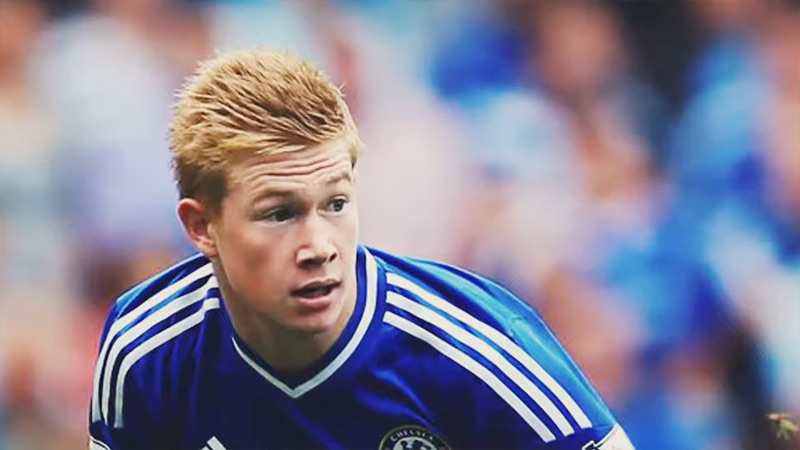
In the world of modern football, few names carry as much weight as Kevin De Bruyne. Known as the “midfield maestro” for Manchester City and the Belgian national team, his vision on the pitch is often described as supernatural.
However, while fans are well-acquainted with his assists and world-class strikes, there is a deep curiosity about the man behind the genius. Specifically, many fans ask: Who is the biological father of Kevin De Bruyne?
Understanding Kevin’s roots is essential to understanding his resilience and his unique approach to the game. His story is one of multicultural heritage, unwavering parental support, and a childhood challenge that could have broken a lesser athlete.
The Identity of Kevin De Bruyne’s Biological Father: Herwig De Bruyne
The answer to the most-searched question is straightforward: Kevin De Bruyne’s biological father is Herwig De Bruyne.
Unlike some professional athletes who have distant or complicated relationships with their parents, Herwig has been a constant and foundational presence in Kevin’s life.
He is not just a father in name; he has been deeply involved in the strategic management of Kevin’s professional journey.
Herwig’s Role in Kevin’s Professional Career
Herwig De Bruyne is often seen as a protective and vocal advocate for his son. In the high-stakes world of the Premier League, where players are often treated as commodities, Herwig has provided a layer of family-based security.
He has been known to publicly comment on Kevin’s career decisions, providing insights into his time at Manchester City and discussing potential future moves for the midfielder.
This involvement suggests a relationship built on trust. For a player like Kevin, who famously prefers to let his football do the talking, having a father like Herwig to navigate the media and transfer speculation has been a vital component of his career longevity.
The Multicultural Roots: Anna De Bruyne and the Burundi Connection
To fully answer the question of Kevin’s biological origins, one must also look at his mother, Anna De Bruyne. Her story adds a fascinating multicultural dimension to Kevin’s identity that many fans are unaware of.
Anna De Bruyne was born in Burundi, a landlocked country in East Africa. This heritage makes Kevin De Bruyne a multicultural athlete, blending European and African roots.
While Kevin represents Belgium on the international stage, the influence of his mother’s background is a significant part of his private world.
This diverse upbringing likely contributed to the “global” perspective Kevin maintains, both in his personal life and his professional interactions in the diverse locker rooms of the Premier League.
The Crucible of Character: The Foster Family Incident at Genk
One of the most defining moments in the life of Kevin De Bruyne—and a reason why his bond with his biological parents, Herwig and Anna, is so strong—occurred during his youth career at Genk.
While many young players live in academies, Kevin lived with a foster family during his time with the Belgian club.
However, this period was marked by significant emotional challenges. In a move that would shape his personality forever, the foster family eventually asked him to leave.
The “Difficult” Label
The reason given by the foster family was that Kevin was “too difficult to handle”. For a teenager living away from his biological parents, this rejection was a devastating blow. It was a public and private critique of his character at a vulnerable age.
However, rather than letting this rejection derail his career, Kevin used it as fuel. This “difficult” label was likely a misunderstanding of his intense focus and introverted nature—traits that would later make him a world-class competitor.
This incident is a traditional insight into his “prove them wrong” mentality. The rejection by a temporary family solidified the importance of his biological family, Herwig and Anna, as his true pillars of support.
Why Herwig and Anna’s Support Was the Turning Point
When the foster family incident occurred, Kevin returned to his biological parents. It was within the safety of the home provided by Herwig and Anna that Kevin was able to process this rejection and transform it into professional motivation.
- Resilience through Herwig: Herwig’s continued involvement in Kevin’s career today is a testament to the stability he provided after the Genk incident.
- Perspective through Anna: Anna’s background and the strength required to navigate different cultures likely provided Kevin with the emotional tools to handle being an “outsider” in his youth.
The Private World vs. The Public Icon
Kevin De Bruyne remains one of the most private stars in football. This is a deliberate choice. Based on his family history, it is clear that Kevin values the inner circle of his biological family above the noise of fame.
Herwig De Bruyne’s willingness to speak on his son’s behalf regarding transfer moves and Manchester City career milestones shows a father who is shielding his son from the more draining aspects of the sports industry.
This allows Kevin to focus entirely on the pitch, knowing that his biological father is managing the narrative in the background.
Conclusion: A Legacy Built on Family
Who is the biological father of Kevin De Bruyne? He is Herwig De Bruyne, a man who has stood by his son from his early days in Belgium to his legendary status in England.
Alongside Kevin’s mother, Anna, Herwig has provided the DNA of success: a mix of African heritage, European discipline, and the resilience to overcome early-life rejection.
Kevin De Bruyne’s story is a reminder that even the greatest “geniuses” in sport rely on a foundation of family.
The “difficult” boy from Genk became the King of Manchester, largely because he had the unwavering support of Herwig and Anna De Bruyne behind him.