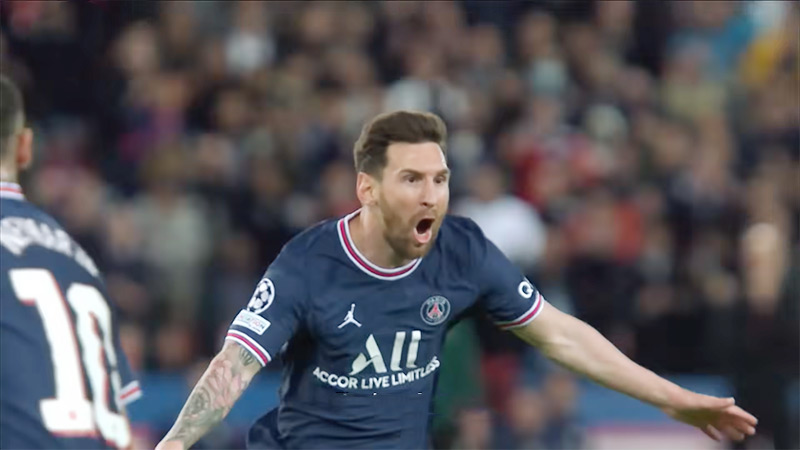
The arrival of Lionel Messi at Paris Saint Germain on August 10, 2021, sparked an unprecedented media frenzy that gripped the football world.
Reporters and fans alike watched in disbelief as the legendary attacker joined forces with Kylian Mbappé and Neymar to create a dreamlike offensive line.
While his two year tenure produced two league titles, the debate regarding his impact remains deeply polarized. To understand if he was truly good in the French capital, one must look beyond the scoresheet.
This analysis examines the statistical brilliance, tactical hurdles, and emotional disconnect of his Parisian chapter.
The Numbers Behind the Magic: Was He Statistically Good?
Evaluating the Argentine icon based on raw data provides a compelling case for his continued excellence at the highest level. During his time in the French capital from 2021 to 2023, he maintained elite production that few players in history could replicate.
His final tally included 32 goals and 34 assists across 75 total appearances. This equates to nearly one direct goal contribution per match. Such figures are considered very good for any world class forward to produce.
If these statistics belonged to any other player, the tenure would likely be viewed as an unqualified success. However, because he is held to his own astronomically high standards, these numbers are often viewed through a more critical lens.
A Tale of Two Seasons: From Transition to Dominance
The performance of the legendary playmaker varied significantly between his first and second years due to physical and tactical factors. His initial campaign was marked by external hurdles that hampered his typical rhythm on the pitch.
In the 2021/22 season, he struggled with a lack of a proper pre season and a mid season recovery from COVID 19. These challenges resulted in just 6 league goals, a figure many fans labeled as a disasterclass.
By the 2022/23 season, he had fully adjusted and appeared much more comfortable in his role. He registered 16 goals and 16 assists in Ligue 1 alone, pulling the strings as one of the premier playmakers in Europe.
| Competition | Appearances | Goals | Assists |
|---|---|---|---|
| Ligue 1 | 58 | 22 | 30 |
| Champions League | 14 | 9 | 4 |
| Other Cups | 3 | 1 | 0 |
| Total | 75 | 32 | 34 |
The Champions League Bottleneck and Tactical Realities
Despite winning domestic titles, his stint is frequently remembered negatively due to the club’s failures in European competition. The primary reason for his signing was to secure the elusive Champions League trophy.
The team crashed out in the Round of 16 in both seasons, falling first to Real Madrid and then to Bayern Munich. These exits left a bitter taste for supporters who expected the super team to dominate the continent.
The lack of success in high stakes matches led many to question whether the tactical setup could truly accommodate three offensive superstars. This created a structural imbalance that the coaching staff struggled to resolve over two years.
The Big Match Vanishing Act
Critics often point to his performance in crucial knockout fixtures as a major point of contention. He failed to record a goal or an assist in four separate Champions League knockout matches during his tenure.
A pivotal moment often cited by fans is his penalty miss against Real Madrid in the first season. Many supporters believe this single moment sums up his time in Paris and fueled the eventual rift with the ultras.
For a player viewed as a god of football, appearing human in these moments was difficult for the fan base to accept. The expectations were so high that anything short of a tournament win was considered a massive failure.
Defensive Liability and Systemic Issues
A persistent complaint from the Parisian faithful was his perceived lack of defensive contribution. Some fans felt the team was essentially playing with ten men during defensive phases because the front three rarely tracked back.
The sight of the forward line walking while the opposition attacked caused significant tactical frustration among observers. This lack of intensity was viewed as a lack of respect for the shirt and the club’s history.
Adding him to an already offensive squad while having a struggling midfield was seen by some as a poor sporting decision. The team lacked the necessary chemistry to support his specific playstyle effectively.
The Emotional Rift: Why Paris and Messi Never Clicked
The relationship between the player and the local supporters was characterized by a coldness that never truly thawed. This disconnect was rooted in his difficult exit from Spain and his struggle to embrace his new surroundings.
Many fans felt he was a player who needed to enjoy himself to play at his best, and he clearly did not enjoy his time in Paris. He never seemed to integrate with the supporters or celebrate with them after matches.
This distance made it impossible for the fans to offer him the patience they might give to a player who showed more love for the badge. The bond felt transactional rather than emotional for both parties involved.
The Shadow of Barcelona and Personal Unhappiness
It was no secret that he did not want to leave Barcelona in the first place. He arrived in the French capital in tears, and this emotional baggage followed him throughout his stay.
He later admitted in interviews that he and his family struggled heavily to adapt to the city. He stated that he was not happy on a daily basis during his two years abroad.
This personal misery likely affected his ability to perform consistently at his peak level. Fans could sense his lack of passion for the project, which fueled the cycle of boos and criticism.
The World Cup Training Camp Narrative
A common perception among the French public was that he used the club primarily to stay fit for the 2022 World Cup. His form peaked dramatically in the months leading up to the tournament in Qatar.
After achieving his ultimate goal with Argentina, many felt his performance and effort levels dropped significantly. The fact that he defeated France in the final made it even harder for the local fans to support him.
Supporters felt used by a legend who achieved personal glory while their own club ambitions were sidelined. This narrative transformed him from a celebrated icon into a figure of resentment for the ultras.
Comparison with Global Standards and Legacy
When viewed alongside other top players, his contributions remain remarkably high despite the negative perception. Some argue that he was unfairly treated as a scapegoat for broader club failures.
He was one of the few players in Europe to finish a season with double digits in both goals and assists. Other players like Angel Di Maria had similar outputs and were viewed as successful components of the team.
The physical nature of Ligue 1 presented a significant adjustment for a player accustomed to the softer style of the Spanish league. At his age, maintaining his level of production in such a demanding environment was a feat in itself.
| Category | Impact and Observation |
|---|---|
| Domestic Success | Won two league titles and one Trophée des Champions. |
| Individual Brilliance | Scored a memorable bicycle kick against Clermont that earned a standing ovation. |
| Strategic Value | Provided 20 Man of the Match performances in his second season. |
| Teammate Impact | Mbappé became his second most assisted player in just two years. |
Frequently Asked Questions
Was Messi’s time at PSG considered a failure?
Statistically, he was highly successful with 66 direct goal involvements. However, in terms of the club’s goal to win the Champions League and his relationship with fans, the tenure is often viewed as a disappointment.
Why did the fans turn on him?
The friction was caused by consecutive European exits, his perceived lack of defensive work, and a missed penalty against Real Madrid. Fans also felt he lacked an emotional connection to the club and its supporters.
Did he play better in his second season?
Yes, after a difficult transition year, his second season saw a return to elite playmaking form. He registered 16 goals and 16 assists in the league and was instrumental in the team’s attack before the World Cup.
How did the World Cup affect his PSG career?
He used the high level competition in France to stay sharp and in peak condition for the tournament. While he succeeded with Argentina, his perceived drop in intensity afterward and his victory over France led to further tension with PSG fans.
Final Verdict: An Era of Paradoxes
The chapter of Lionel Messi in Paris will likely be remembered as a massive paradox in sporting history.
On one hand, he provided consistent world class production and several moments of technical magic that lit up Ligue 1. He proved that even in his mid thirties, his vision and playmaking ability remained unmatched on the global stage.
On the other hand, the emotional and tactical cost of his presence was high for a club seeking a cohesive identity. The failure to progress in Europe and the lack of a bond with the supporters left a shadow over his statistical achievements.
He was an exceptional player in an environment that was perhaps not built to maximize his specific genius at that stage of his career.
Ultimately, his time in France was a strategic success for his personal career goals, leading directly to his World Cup coronation. For the club, it was a marketing triumph that brought unprecedented attention to the league, even if the ultimate sporting trophy remained out of reach.
The history of his time in Paris will continue to be debated as a clash between elite data and the complex reality of footballing passion.
If you are interested in a deeper look at his tactical evolution, feel free to explore our detailed player breakdowns.
You can also sign up for our newsletter to receive the latest updates on global football icons. Join the conversation today and let us know your thoughts on this legendary era.