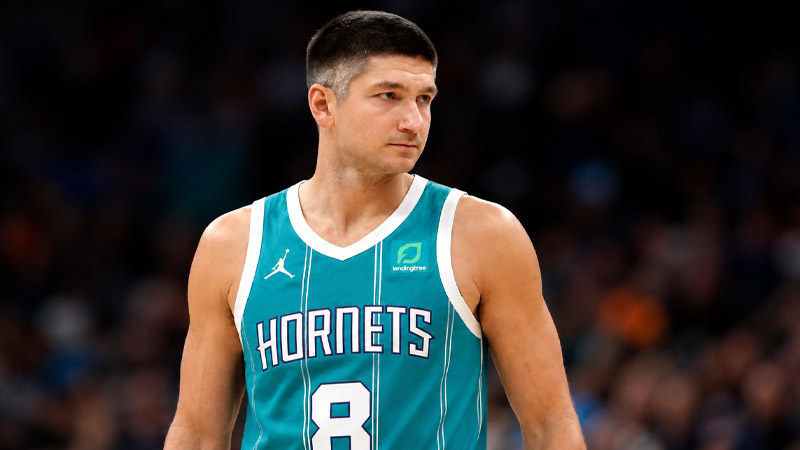
Grayson Allen is currently facing a career crossroads characterized by a major trade, persistent injuries, and a controversial reputation.
On June 28, 2026, the Phoenix Suns traded Allen to the Charlotte Hornets following a frustrating season where he missed 31 games due to lower-body ailments. This physical decline caused his elite three-point shooting to drop from a 40.3% career average to 34.9%.
Beyond the box score, Allen’s “villain” status remains a focal point, fueled by a history of dangerous plays dating back to his disciplined tenure at Duke University.
Why Was Grayson Allen Traded to the Charlotte Hornets?
The decision to move Grayson Allen on June 28, 2026, was a centerpiece of a blockbuster deal between the Phoenix Suns and the Charlotte Hornets.
This transaction signaled a significant shift in team building for both organizations, moving a veteran shooter into a retooling environment.
The Phoenix Suns’ Pursuit of Athletic Versatility
The Phoenix Suns initiated this trade to acquire forward Miles Bridges, seeking to bolster their championship-contending core with more athletic wing play. In the exchange, the Suns packaged Allen alongside Royce O’Neale and a 2033 first-round draft pick.
For Phoenix, moving Allen was a strategic sacrifice; while he provided high-level scoring, his lack of availability during the 2025–26 season made him a luxury the team could no longer afford during their title window.
By trading him, the Suns prioritized a more durable and versatile defensive presence in Bridges to complement their primary stars.
Allen’s Strategic Integration into the Hornets Roster
For the Charlotte Hornets, acquiring Allen is a move designed to inject veteran experience into a young, developing rotation.
Allen is expected to transition from a high-pressure starting environment to a critical role off the bench, providing leadership alongside emerging guards like Tre Mann.
This “rebuilding” phase in Charlotte offers Allen a lower-intensity environment to focus on his physical recovery without the immediate weight of championship expectations.
The Hornets view his decade of professional experience and historical shooting prowess as vital components for stabilizing their second unit as they look to build a competitive foundation.
Understanding Grayson Allen’s 2025–26 Performance Dip
While Grayson Allen managed to average a career-high 16.5 points per game, his 2025–26 campaign was statistically overshadowed by a massive collapse in efficiency and availability.
The root cause of what went “wrong” with his game was a series of compounding, non-preventable physical setbacks.
A Timeline of Persistent Lower-Body Injuries
Allen’s season was derailed by three primary injuries that prevented him from finding any consistent rhythm on the hardwood. Out of 82 regular-season games, he was only able to suit up for 51, missing nearly 40% of the year.
- Severe Right Quad Contusion: This initial injury sidelined him early, limiting his explosive movement and lateral quickness.
- Right Knee Sprain: Resulting from “weird” landings and awkward twists, this sprain further compromised his stability.
- Left Hamstring Strain: Occurring in an April game against the Lakers, this tear forced him to sit out the end of the regular season and enter the playoffs visibly limited and limping.
The Biological Impact on Shooting Mechanics
The constant disruption to Allen’s lower-body health had a direct, measurable impact on his performance as an elite marksman. Basketball shooting relies heavily on the “kinetic chain,” where power is generated from the legs and transferred through the core to the release.
With a compromised quad, knee, and hamstring, Allen’s shooting mechanics became inconsistent. This physical breakdown saw his three-point accuracy plummet to 34.9%, a sharp and uncharacteristic decline from his 40.3% career benchmark.
For a player whose primary value is floor spacing, this inability to convert at his usual rate made his presence on the floor less threatening to opposing defenses.
Why Is Grayson Allen Labeled an On-Court “Villain”?
The critique of Grayson Allen often transcends his statistical performance, focusing instead on a decade-long history of controversial and dangerous on-court incidents. This reputation has earned him a title as one of the ultimate “villains” in modern professional basketball.
The Duke University Tripping Controversy
Allen’s polarizing reputation began during his tenure at Duke University (2014–2018), where he became infamous for a recurring habit of tripping opponents.
In 2016, he earned flagrant fouls for tripping Louisville’s Ray Spalding and Florida State’s Xavier Rathan-Mayes. The situation reached a boiling point in December 2016 against Elon, when Allen explicitly kicked out at Steven Santa Ana.
Following an emotional tantrum on the bench, Coach Mike Krzyzewski was forced to strip Allen of his captaincy and issue an indefinite suspension.
Even as a senior in 2018, he was assessed a flagrant foul for an intentional collision with UNC’s Garrison Brooks, cementing his status as a “dirty” player before he even reached the professional level.
Escalation of Physical Fouls in the NBA
Instead of shedding the narrative in the professional ranks, Allen’s history of hostility followed him through several high-profile incidents.
- 2019 Summer League: While playing for Utah, he was ejected after back-to-back flagrant fouls, including an unnecessary blindside shoulder check on Grant Williams.
- The Alex Caruso Incident (2022): While with Milwaukee, Allen committed his most condemned foul by dragging down an airborne Alex Caruso. The resulting fall fractured Caruso’s wrist, requiring surgery. Allen’s visible smirking on the sideline after the ejection intensified the public backlash.
- Conflict with Trae Young: Atlanta’s Trae Young publicly called out Allen on social media for an alleged attempt to trip him during a perimeter screen.
- 2025 NBA Cup Ejection: While in Phoenix, Allen was slapped with a Flagrant 2 foul for pushing Chet Holmgren hard to the hardwood, triggering a major on-court scuffle and reinforcing that his aggressive tendencies remain active.
Evaluating the Paradox of His Competitive Intensity
Analysts are often frustrated by Grayson Allen because his reckless physical oversteps frequently overshadow his undeniable basketball talent. He is described as a hard-working player who possesses the skills to succeed without resorting to dangerous antics.
National Championship Pedigree and Elite Skill
Allen is not merely a “specialist”; he is a winner who played a pivotal role in securing a National Championship at Duke. Over his decade in the game, he has consistently proven to be an elite floor spacer, typically shooting around 40% from the perimeter.
His career-high scoring average of 16.5 points per game in 2025–26 demonstrates that he remains a high-level offensive threat when he is on the court.
These achievements suggest that the “dirty” plays are not born out of a lack of skill, but rather a misfiring of his competitive drive.
The Breakdown of Professional Composure
The paradox lies in how Allen’s competitive intensity spikes. While many players use intensity to fuel defensive pressure or rebounding, Allen’s focus occasionally manifests as reckless physical aggression.
This lack of composure has led to multiple ejections and league suspensions, which ultimately hurts his team by making him unavailable for key stretches of play.
As he enters the next phase of his career in Charlotte, the central question is whether he can finally align his high motor with professional restraint to preserve his longevity and legacy.
Frequently Asked Questions (FAQs)
What is the status of Grayson Allen’s injury?
Allen missed 31 games in the 2025–26 season due to a right quad contusion, a knee sprain, and a hamstring strain. He was visibly limited during the 2026 playoffs, often seen limping through games.
Why did the Phoenix Suns trade Grayson Allen?
The Suns moved Allen on June 28, 2026, to acquire Miles Bridges from the Charlotte Hornets. This move was intended to add athletic wing depth and durability to a roster that struggled with Allen’s frequent absences.
How many times has Grayson Allen been suspended?
Allen was suspended indefinitely at Duke in 2016 for tripping. In the NBA, he received a high-profile one-game suspension in 2022 for a flagrant foul that broke Alex Caruso’s wrist.
What are Grayson Allen’s career shooting statistics?
Historically, Allen is an elite shooter with a career three-point average of 40.3%. However, his 2025–26 efficiency dropped to 34.9% due to persistent lower-body injuries.
Who did the Hornets give up for Grayson Allen?
The Charlotte Hornets sent Miles Bridges to the Phoenix Suns in exchange for Grayson Allen, Royce O’Neale, and a 2033 first-round draft pick.
Conclusion: The Path Forward in the Queen City
The narrative of “what’s wrong” with Grayson Allen is a complex intersection of medical misfortune and a self-sustained reputation for hostility. His 2025–26 season was a statistical anomaly defined by injury-driven shooting slumps rather than a permanent loss of skill.
However, the shadow of his past—from the tripping incidents at Duke to the fractured wrist of Alex Caruso—continues to color how fans and analysts view his contributions.
As he joins the Charlotte Hornets, Allen has a unique opportunity to reset the conversation. By serving as a veteran leader for a retooling roster, he can demonstrate that his competitive fire can be channeled into mentorship and consistent production.
If he can stay healthy and return to his 40% shooting form, Allen remains one of the most valuable floor-spacers in the league.
The coming season will determine if he can finally outrun his “villain” label or if his legacy will forever be defined by the technical fouls and ejections that have punctuated his career.