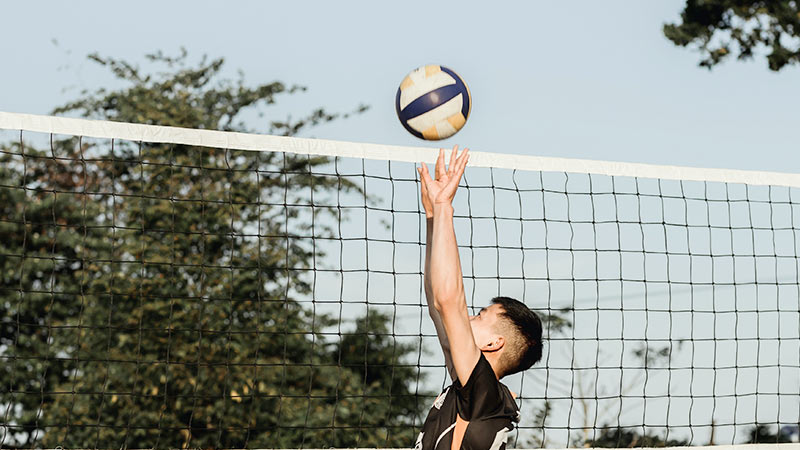
A throw in volleyball is a ball-handling fault that happens when a player catches, holds, or pushes the ball instead of hitting it cleanly.
Many new players hear the whistle, see the referee lift a hand, and lose a point without knowing why. Even players with years of experience sometimes get called for a throw during a set or a tip.
Knowing how this rule works can save your team points and help you build better technique. In this post, you will learn what a throw is, what the rules say, where the call happens most often, how referees judge it, and how indoor and beach volleyball treat it differently. You will also find simple tips to keep your contacts clean and avoid the call.
What Is a Throw in Volleyball?
A throw is called when the ball comes to rest on a player’s hands, arms, or body for too long before it leaves. Volleyball is a rebound game. Every contact must be a quick hit, and the ball should bounce off the player rather than be carried or guided.
You may hear the same fault described with other names. Common terms include:
- Catch: the ball stops or rests in the player’s hands.
- Lift: the player scoops the ball upward with open hands or palms.
- Carry: the player moves with the ball and pushes it along for a moment.
- Held ball: the ball stays in contact longer than a normal hit allows.
All of these describe the same basic problem. The player controlled the ball by holding it instead of hitting it. When the referee sees this, the rally ends, and the other team wins the point.
Is There a Throw-In in Volleyball?
Some people search for a “throw-in” in volleyball because they know the term from soccer. In soccer, a throw-in restarts play after the ball crosses the sideline. Volleyball has no such restart.
When the ball goes out of bounds in volleyball, the rally ends and a point is awarded. Play then starts again with a serve, which is the only way to put the ball into play.
The serve toss is not a throw either. A server tosses or releases the ball and then hits it with one hand or arm. So when a coach or referee talks about a “throw” in volleyball, they mean the ball-handling fault, not a way to restart the game.
What the Official Rules Say About Throwing
Under international indoor rules, the ball must be hit, not caught or thrown. It can rebound in any direction, and a player may touch it with any part of the body. What a player cannot do is hold it, even for a short moment.
The rules list a catch as a fault in playing the ball. When it happens, the opposing team scores a point and earns the right to serve. With rally scoring, every throw call costs your team a point.
There is one area where the rules give a little more room. On a team’s first contact, such as receiving a serve or digging an attack, the ball may touch several parts of the body in a row, as long as it happens during one action. This allows a double touch on a hard-driven ball. It does not allow a catch, so holding or throwing the ball is still a fault on the first contact.
School, club, and youth leagues may follow their own rulebooks, but all of the major rulebooks treat catching or throwing the ball as illegal.
Common Situations Where a Throw Is Called
A throw can happen on almost any contact, but some skills lead to the call more often than others.
Setting
The overhand set is the most common source of throw calls. A setter uses the fingertips of both hands to push the ball toward a hitter. If the ball sinks into the palms, sits in the hands, or is released late, the referee may call a lift or carry.
Tips and Dinks
When an attacker tips the ball over the block, the contact must be quick. Guiding the ball with an open hand or following it for a long time can be ruled a throw.
Overhand Digs and Serve Receive
A clean overhand pass is legal, but a slow, scooping motion is not. Digging a ball with open palms and lifting it upward is a common way to get called.
One-Handed Saves
A player chasing a ball near the floor may try to scoop it with one hand. If the hand cups under the ball and carries it, that is a lift.
Blocking and Joust Plays
A blocker who grabs or pushes the ball instead of letting it rebound can be called for a throw. In a joust, two opposing players push on the ball above the net at the same time. Under international indoor rules, an extended contact in a joust is not a fault, and play continues.
How Referees Judge and Signal a Throw
A throw call is a judgment call. There is no exact time limit, so the referee watches the whole motion and decides whether the ball rebounded cleanly or came to rest.
Signs a referee looks for include:
- The ball sinking into the palms instead of touching the fingertips
- Hands moving down with the ball before pushing it back up
- A visible pause or delayed release
- The ball changing direction while it stays on the hands
To signal a throw, the referee slowly lifts the forearm with the palm facing up. This is the standard signal for a catch, lift, or carry. The referee then points to the team that will serve next.
Because judgment plays a large role, calls can differ between referees and levels of play. Learn what your referees tend to allow and adjust early in the match.
Throw Rules in Indoor and Beach Volleyball
The basic rule is the same in both versions: the ball must be hit, not held. Beach volleyball is stricter in a few areas.
Hand setting on the beach is judged more closely, and many beach players bump set to avoid the risk. A hand set that crosses the net must travel forward or backward in line with the shoulders.
Open-hand tips are not allowed in beach volleyball. Attackers use the knuckles or a stiff-fingered poke instead.
One exception exists: when defending a hard-driven attack, a beach player may hold the ball briefly in an overhand motion with the fingers.
Indoor play gives more room on overhand sets and allows open-hand tips, as long as the contact is quick.
How to Avoid a Throw Call
Clean ball handling comes from good habits built in practice. These tips can help keep your contacts legal.
- Shape your hands early. Form a window with your thumbs and index fingers above your forehead before the ball arrives.
- Use your fingertips, not your palms. If you feel the ball hit your palms, the contact is too deep.
- Contact the ball above your forehead. Letting it drop to your face or chest makes a held ball more likely.
- Get your feet under the ball. Square up to your target so you do not have to reach or lean.
- Push with your whole body. Extend your legs, arms, and wrists together in one smooth motion.
- Release the ball quickly. Think of the contact as a fast rebound, and do not pull the ball down first.
- Use a forearm pass when in doubt. On hard serves or low balls, a platform pass is safer.
- Practice against a wall. Repeated wall sets build soft hands and a clean release.
Ask a coach or teammate to watch your sets and tell you when the ball sits too long in your hands.
Why the Throw Rule Matters
The throw rule keeps volleyball a game of quick rebounds. If players could catch and throw the ball, they could aim it with great accuracy and slow the pace of play.
The rule pushes players to build real passing and setting skill, and it keeps the game fair for both teams. Clean handling also makes the game easier for referees and fans to follow.
Conclusion
A throw in volleyball happens when a player catches, holds, lifts, or carries the ball instead of hitting it cleanly.
This ball-handling fault ends the rally and gives the other team a point and the serve. The call is most common on overhand sets, tips, and scooping digs.
Referees judge it by watching for a pause, a deep palm contact, or a delayed release. Beach volleyball applies the rule more strictly than indoor play.
By using your fingertips, contacting the ball above your forehead, moving your feet, and releasing quickly, you can keep your contacts clean and avoid this call.