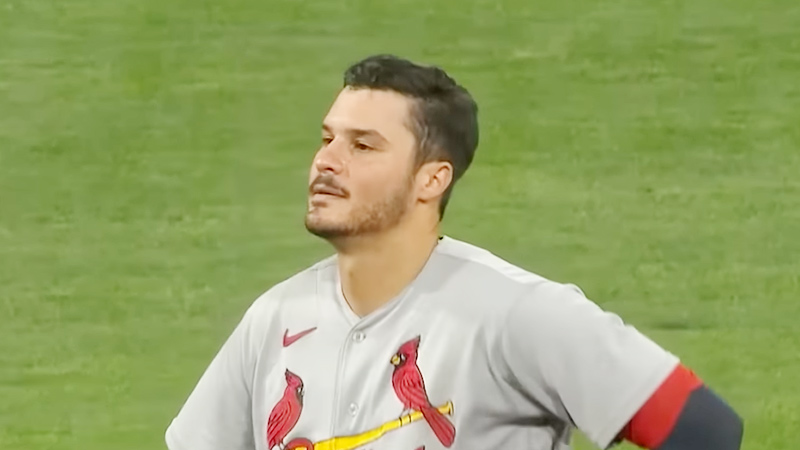
Few players in modern baseball have owned third base quite like Nolan Arenado. The diving stops, the strong throws across the diamond and the steady bat have made him one of the most recognizable names in the game.
As his fame has grown, so has fan curiosity about the man behind the glove, and one question keeps coming up: what ethnicity is Nolan Arenado?
The Short Answer
Nolan Arenado is Hispanic, specifically of Cuban and Puerto Rican descent. His father, Fernando Arenado, was born in Cuba. His mother, Millie Arenado, has Puerto Rican family roots. Nolan himself was born in Newport Beach, California, and is an American citizen.
In other words, his ethnicity is Cuban American and Puerto Rican, while his nationality is American. Many fans use those terms interchangeably, but they mean different things, and we will unpack that difference below.
Nolan Arenado at a Glance
If you only have a minute, this table covers the essentials of his background.
| Detail | Answer |
|---|---|
| Full name | Nolan James Arenado |
| Born | April 16, 1991 |
| Birthplace | Newport Beach, California |
| Ethnicity | Hispanic / Latino (Cuban and Puerto Rican descent) |
| Nationality | American |
| Father | Fernando Arenado, born in Cuba |
| Mother | Millie Arenado, Puerto Rican heritage |
| Position | Third baseman |
| MLB debut | 2013, Colorado Rockies |
| Signature honor | Gold Glove Award in each of his first 10 seasons (2013–2022) |
Meet the Arenado Family
Arenado’s heritage starts at home. His parents brought two distinct Caribbean cultures into one Southern California household, and both helped shape the person and the player he became.
His Father: Fernando Arenado and the Cuban Roots
Fernando Arenado was born in Cuba and later made his way to the United States, joining the many Cuban families who built new lives in America during the second half of the 20th century. Like so many Cuban immigrants of that era, he carried the island’s traditions, food and family values with him.
That Cuban identity passed down to his sons. Nolan has spoken with pride about his Cuban heritage over the years, and family meals and gatherings have long served as a living link to his father’s homeland.
His Mother: Millie Arenado and the Puerto Rican Roots
Millie Arenado brought Puerto Rican heritage into the family. Puerto Rico has its own distinct culture, music and cuisine, and it holds a special place in baseball history. Through his mother, Nolan carries a direct connection to an island that has produced some of the sport’s greatest stars.
A Baseball Family
Baseball runs deep in the Arenado household. Nolan’s younger brother, Jonah, also played professional baseball, and his cousin Josh Fuentes reached the major leagues with the Colorado Rockies, the same club where Nolan first made his name. For the Arenados, the game has always been a family affair.
Born and Raised in Southern California
Although his roots trace back to the Caribbean, Arenado is a Southern California kid through and through. He was born on April 16, 1991, in Newport Beach and grew up in Orange County.
He starred at El Toro High School in Lake Forest, where his glove work and powerful arm caught the attention of scouts. The Colorado Rockies selected him in the second round of the 2009 MLB Draft. He worked his way through the minor leagues and made his big league debut in 2013.
Growing up in Southern California also placed him in one of the most diverse regions in the country, where Latino heritage is a familiar part of everyday life. That setting let him grow up fully American while staying close to the Cuban and Puerto Rican traditions of his family.
Ethnicity, Nationality and Citizenship: Clearing Up the Confusion
Questions about Arenado’s background often blend three different ideas. Here is a simple breakdown.
- Ethnicity describes shared ancestry, culture, language and traditions. Arenado’s ethnicity is Hispanic or Latino, with Cuban and Puerto Rican ancestry.
- Nationality describes the country a person belongs to. Arenado’s nationality is American.
- Citizenship describes legal status. Arenado is a U.S. citizen by birth.
Both “Hispanic” and “Latino” fit him. Hispanic points to Spanish-speaking heritage, while Latino points to Latin American and Caribbean heritage, and his family background checks both boxes.
There is also an interesting twist on his mother’s side. Puerto Rico is a U.S. territory, and people born there have held U.S. citizenship since 1917. So a Puerto Rican background is both a distinct cultural identity and, legally, part of the American story.
Put simply, Nolan Arenado is an American baseball player with proud Cuban and Puerto Rican heritage. Both halves of that sentence are true at the same time.
Part of a Proud Baseball Lineage
Arenado’s heritage links him to two of the most influential baseball cultures anywhere.
The Cuban Baseball Tradition
Cuba has sent generations of standout players to the major leagues. Hall of Famers Tony Pérez, Minnie Miñoso and Tony Oliva helped shape the modern game, and later stars such as Rafael Palmeiro, José Abreu and Yordan Alvarez carried that tradition forward. Cuban American players born in the United States add another chapter to the story, and Arenado ranks among the most decorated of them.
The Puerto Rican Baseball Tradition
Puerto Rico’s baseball history is just as remarkable. Roberto Clemente, Orlando Cepeda, Roberto Alomar, Iván Rodríguez and Edgar Martínez all earned plaques in Cooperstown. Clemente remains a towering figure, honored each year through MLB’s Roberto Clemente Award.
Arenado even shared a clubhouse with one of the island’s modern icons. After a trade sent him to the St. Louis Cardinals before the 2021 season, he played alongside Yadier Molina, the Puerto Rican catcher whose leadership and defense made him a franchise legend.
Team USA or Puerto Rico? The World Baseball Classic Question
The World Baseball Classic put Arenado’s heritage in the spotlight. Classic eligibility rules often extend to a player’s family heritage, which gave him more than one possible team.
Ahead of the 2017 tournament, he openly weighed suiting up for Puerto Rico, a nod to his mother’s roots. In the end, he chose Team USA, and the decision paid off. The Americans won the 2017 World Baseball Classic, giving Arenado an international title to go with his trophy case of Gold Gloves.
He returned to Team USA for the 2023 Classic, when the club reached the championship game before falling to Japan.
Choosing Team USA did not mean stepping away from his heritage. Many players with multicultural backgrounds face the same decision, and representing the country where you were born and raised can sit comfortably alongside pride in your family’s roots.
A Career Built on Defense and Consistency
Heritage is only part of the story. Arenado is also one of the finest defensive third basemen of his generation. He spent eight seasons with the Colorado Rockies, then joined the St. Louis Cardinals in a 2021 trade, and his résumé speaks for itself:
- Gold Gloves: He won the award in each of his first 10 major league seasons (2013–2022), making him the first infielder ever to open a career that way.
- Platinum Gloves: He has earned multiple Platinum Glove Awards, which go to the best overall defender in each league.
- Power: He led the National League in home runs three times (2015, 2016 and 2018) and in RBIs twice (2015 and 2016).
- All-Star nods: He has been selected to the All-Star Game eight times.
That combination of elite defense and run production is why his name comes up in conversations about the best third basemen in baseball history.
Why His Background Matters to Fans
For many fans, Arenado’s story is about more than statistics. It mirrors the experience of millions of American families with roots in Latin America and the Caribbean.
- Representation: Young players from Cuban American and Puerto Rican families can see their own background reflected in one of the game’s biggest stars.
- A classic American story: A father who came to the United States from Cuba raised a son who became one of the best players in Major League Baseball.
- A bridge between cultures: Arenado shows that you can be fully American and fully proud of your family’s heritage at the same time.
Each fall, MLB celebrates Hispanic Heritage Month and the Latino players who have shaped the sport. Arenado, with roots in two of baseball’s richest traditions, fits naturally into that celebration.
The Bottom Line
So, what ethnicity is Nolan Arenado? He is Hispanic, with Cuban roots through his father, Fernando, and Puerto Rican roots through his mother, Millie.
He was born and raised in Newport Beach, California, and he is an American citizen who has proudly worn the Team USA jersey on the international stage.
His story blends immigrant grit, Caribbean culture and Southern California upbringing into one of the most impressive careers in modern baseball.
The next time you watch him range to his right and fire a strike across the diamond, you will know there is a rich family history behind every play.