Bam Adebayo is Nigerian-American, reflecting a multicultural heritage that combines his father’s Nigerian Yoruba roots with his mother’s African-American background.
Born Edrice Femi Adebayo, his identity is deeply anchored in West African traditions, specifically through his surname, which translates to “the crown meets joy”.
Although he was raised in the United States by his mother, Marilyn Blount, and identifies culturally as American, Adebayo has publicly embraced his paternal ancestry.
This blend of identities positions him as a prominent figure within the African diaspora, representing both his American upbringing and his rich Nigerian lineage.
The Paternal Side: Understanding Bam’s Yoruba Heritage
The paternal lineage of Edrice Femi Adebayo is rooted in Nigeria, specifically within the Yoruba ethnic group. This heritage comes from his father, John Adebayo, who was a native of the West African nation.
To understand the depth of this connection, one must look at the cultural and linguistic frameworks that define the Yoruba people and how they manifest in the NBA star’s life today.
Who are the Yoruba People of West Africa?
The Yoruba people represent one of the largest and most influential ethno-linguistic groups in West Africa.
Primarily concentrated in southwestern Nigeria, the Yoruba have a history that spans over a millennium, characterized by complex social structures, urbanized kingdoms, and a deep reverence for ancestral lineage.
By identifying as Yoruba, Bam Adebayo aligns himself with a culture known for its artistic achievements, philosophy, and a global presence facilitated by the diaspora.
His father’s background ensures that a significant portion of his identity is tied to this specific cultural history, providing a direct link to the Nigerian landscape even though Bam was born in the United States.
The Power of a Name: Femi and Adebayo Explained
One of the most visible indicators of Bam’s ethnicity is his legal name, Edrice Femi Adebayo. In Yoruba culture, naming is a sacred act, often reflecting the circumstances of a child’s birth or the aspirations of the family.
The name “Femi” is a traditional Yoruba name that carries the beautiful meaning of “Love me”. This personal identifier serves as a constant reminder of his paternal roots.
Furthermore, his surname, “Adebayo,” provides a regal context to his identity, translating to “the crown meets joy”. This linguistic connection is a vital part of how he honors his ancestry, showing that his lineage is literally woven into his signature and public persona.
Maternal Roots and the Impact of His African-American Upbringing
While his paternal side connects him to West Africa, his maternal side is rooted in the African-American experience. His mother, Marilyn Blount, is African-American and played the most significant role in his formative years.
The cultural environment provided by his mother shaped his daily life, values, and his initial understanding of his place in the world as a young man growing up in the United States.
| Cultural Category | Details and Background |
|---|---|
| Maternal Ethnicity | African-American |
| Mother’s Name | Marilyn Blount |
| Birthplace | Newark, New Jersey |
| Hometown | Pinetown, North Carolina |
| Primary Upbringing | Raised in a single-parent household |
The early life of Bam Adebayo was defined by the strength of his mother, who raised him in Newark, New Jersey, before moving to the small town of Pinetown, North Carolina.
Because his father was largely absent during his youth, the cultural environment Bam navigated was primarily African-American. This upbringing instilled in him a specific set of American values and a deep connection to the African-American community.
His story is one of resilience, moving from the challenges of a single-parent home to the heights of professional sports, all while carrying the traditions of his mother’s heritage.
Global Identity: Why Bam Adebayo Represents Team USA
A common point of confusion regarding Bam Adebayo’s ethnicity is his international sporting allegiance. Despite his strong Nigerian ties, he identifies culturally as American.
This distinction is crucial for understanding how modern athletes navigate dual identities in an increasingly globalized world.
He has chosen to represent the United States on the world stage, a decision that reflects his birthplace and the country where he developed his craft.
Olympic Success and American Loyalty
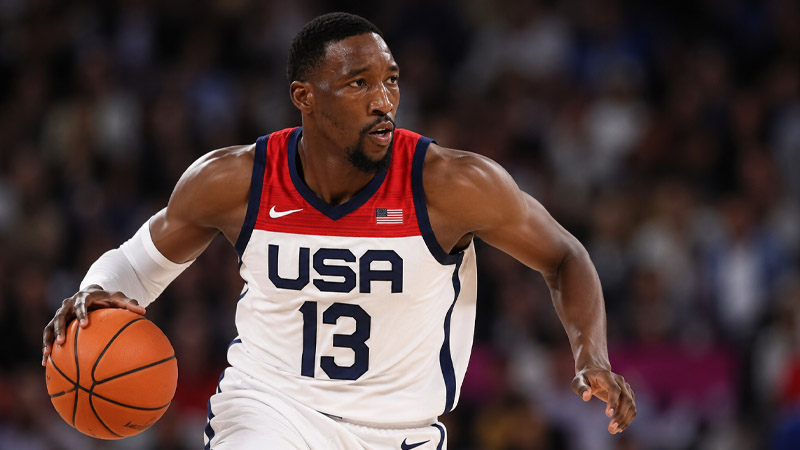
Adebayo’s commitment to USA Basketball has been highly successful, resulting in gold medals at both the Tokyo and Paris Olympic Games. By playing for the United States rather than the Nigerian national team, he reinforces his primary cultural identification as an American.
This choice does not negate his Nigerian ethnicity; rather, it highlights the complexity of the immigrant and diaspora experience. He is an American citizen by birth and culture, but his biological and ancestral makeup remains Nigerian-American.
His success on the U.S. team has made him a household name across the country, serving as a point of pride for both his American and Nigerian fans.
Connecting with the Global African Diaspora
Despite representing the U.S. in the Olympics, Adebayo has not turned his back on his West African roots. As an adult, he has actively explored and embraced his Nigerian heritage.
He frequently uses his platform on social media to honor his ancestry and celebrate his Yoruba background. This proactive approach to identity has turned him into a significant role model for the African diaspora.
He demonstrates that it is possible to be fully American—contributing to the nation’s success and identifying with its culture—while simultaneously holding deep pride and knowledge of one’s ancestral origins in Africa.
The Professional Journey of a Nigerian-American Icon
The rise of Bam Adebayo in the NBA is a testament to the diverse backgrounds that make up the league today.
His journey from North Carolina to the Miami Heat is a narrative of hard work that mirrors the stories of many first-generation Americans who strive to honor their family’s sacrifices.
Mastering the Game at the University of Kentucky
Before becoming an NBA star, Adebayo made a name for himself at the University of Kentucky. It was during his collegiate years that the world began to see the combination of his American basketball schooling and his unique physical profile.
His time in Kentucky served as a bridge between his humble beginnings in Pinetown and the professional spotlight.
Even then, his name “Edrice” and the nickname “Bam” began to circulate, but it was his work ethic—often attributed to the lessons learned from his mother—that set him apart.
Establishing a Legacy with the Miami Heat
Since being drafted by the Miami Heat, Adebayo has become a cornerstone of the franchise. His defensive versatility and leadership on the court have made him one of the elite big men in the league.
However, off the court, he has become increasingly vocal about his heritage. He has used his success to bridge the gap between his distant relationship with his father and his current pride in the Adebayo name.
By flourishing in a high-pressure professional environment, he provides a blueprint for how young athletes of mixed ethnicity can navigate their public and private identities with grace and authority.
Frequently Asked Questions About Bam Adebayo’s Background
Is Bam Adebayo’s father from Nigeria?
Yes, his father, John Adebayo, was a native of Nigeria and belonged to the Yoruba ethnic group.
What does the name “Femi” mean?
“Femi” is a traditional Yoruba name that translates to “Love me” in English.
What is the meaning of the surname “Adebayo”?
The surname “Adebayo” has a regal meaning in the Yoruba language: “the crown meets joy”.
Does Bam Adebayo play for the Nigerian National Team?
No, he identifies culturally as American and plays internationally for USA Basketball, having won gold medals in Tokyo and Paris.
Who raised Bam Adebayo?
He was raised primarily by his mother, Marilyn Blount, who is African-American, in New Jersey and North Carolina.
What is Bam Adebayo’s full legal name?
His full legal name is Edrice Femi Adebayo, which reflects his Nigerian paternal lineage.
Conclusion: A Modern Symbol of Multiculturalism
The story of Bam Adebayo’s ethnicity is more than just a list of origins; it is a narrative of a modern American identity. By balancing his African-American upbringing with a burgeoning pride in his Yoruba roots, he represents the best of both worlds.
He remains a quintessential American success story—raised by a resilient single mother to become an Olympic gold medalist—yet he refuses to let his ancestral history fade into the background.
His embrace of the name “Adebayo” ensures that whenever “the crown meets joy” on the basketball court, the rich history of the Yoruba people is celebrated alongside his American achievements.
For fans and members of the diaspora alike, Bam Adebayo stands as a powerful reminder that identity is not a choice between two worlds, but a beautiful fusion of all the cultures that make us who we are.
Through his actions and his pride, he continues to inspire a global audience to explore their own roots while striving for excellence in their chosen fields.